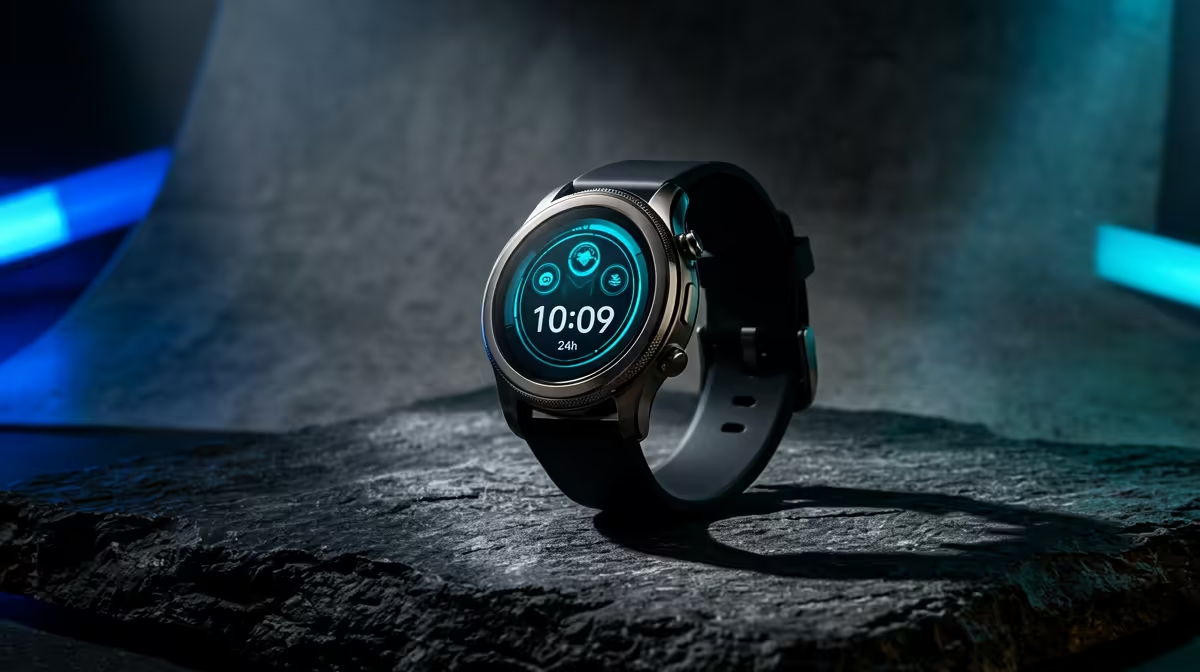
A budget smartwatch should be treated as a notification companion in a home-security setup, not the security system itself. The supplied factpacks do not verify a suitable smartwatch, so no model or price can be recommended from that evidence. Start with camera, router and alert compatibility, then verify wearable support on the live manufacturer and retailer pages.
Trace the alert from sensor to wrist
Confirm that the security app can send actionable notifications to the phone and that the watch mirrors them reliably. Some wearables show only a short text alert; others may display an image or allow a quick response. Check Android or iPhone requirements, operating-system support, battery life with frequent notifications and whether vibration is strong enough to notice. A watch cannot compensate for weak Wi-Fi or poorly placed cameras.
The Tapo C212 Wi-Fi camera is a verified reference at R451, although it is not a complete security solution. Protect the associated account with a unique password and multi-factor authentication where available. Limit shared access, keep camera software current and test alerts on mobile data as well as home Wi-Fi. Do not expose indoor footage on a watch face where other people can view it.
Reserve most of the project spend for locks, lighting, correctly placed cameras, storage and network stability. Choose the wearable only after the security app works well on the phone. A simpler watch with dependable notifications may be more useful than a feature-heavy model that needs daily charging or loses support quickly.
Improving connected home alerts? > Verify the wearable against the security app, then compare compatible network equipment with Evetech.