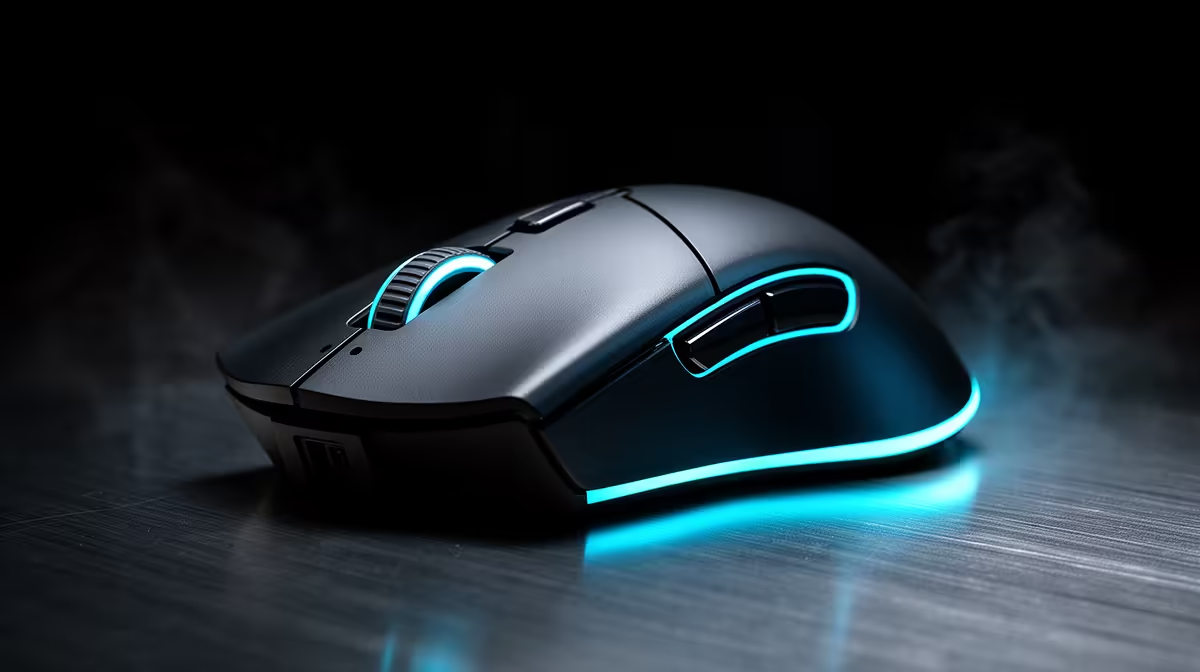
The cursor skips across the screen, then behaves when you plug the same mouse in by cable. That narrows the problem to battery, radio path or receiver. A wireless mouse stutter checklist works best from the desk outward: power first, dongle position next, then other radios and the tracking surface.
Quick Answer
Charge the mouse, move its receiver onto a USB extension near the pad and keep it away from USB 3 drives. Test a USB 2 port, pause nearby 2.4GHz devices and clean the sensor plus mousepad. In Evetech's July 2026 catalogue, gaming mice sat at a R699 median; complete the free interference checks before replacing one.
🔋 Start with power and onboard settings
Charge the battery to full or fit a fresh cell. Disable decorative lighting for the test and confirm the mouse has not entered a low-power Bluetooth mode. Some models show a warning long before they stop working.
Connect by cable and repeat fast circles in a drawing app. A clean wired trace gives the radio path a clear place in the investigation. A wired skip sends you toward the sensor, surface, USB or software instead.
Save the current DPI and polling rate before resetting the profile. Set a common polling value such as 1000Hz for the first comparison. Very high polling can expose a weak USB path or CPU scheduling issue, while a low value can make motion look rough even when the radio sends every report.
Evetech's gaming-mouse range includes wired and wireless designs, which can help after you identify the connection behind the fault.
📡 Bring the receiver onto the desk
Place the dongle on a short extension within 20cm to 50cm of the mouse. Move it away from the rear metal panel, a high-speed USB hub and external SSD cables. Use a direct USB 2 port for one run.
Keep the extension where the mouse cannot strike it. Test the same wide sweeps and game scene. If the stutter disappears, label the cable and leave the receiver there.
🌐 Quiet the radio area for one pass
Pause Bluetooth devices, move a phone away and switch the PC to 5GHz Wi-Fi where coverage allows it. Keep the router out of the immediate desk corner. Reconnect one wireless device at a time after the mouse runs clean.
Update mouse and receiver firmware with a wired connection if the maker provides it. Re-pair the receiver afterward and restore your DPI profile. Leave polling rate at a common value for the first test, then raise it once the link is stable.
Open Task Manager during the skip and look for a process that pins one CPU core or storage at 100%. A system hitch can freeze the cursor and game together. If audio, animation and mouse all pause at once, investigate the PC before treating the receiver as the only suspect.
🧽 Check the sensor and surface
A hair across the sensor lens can look like packet loss. Switch the mouse off and clear the opening with a soft dry brush. Wipe the pad and test a plain matte surface. Glass, glossy wood and patterned fabric can confuse some sensors.
Check lift-off behaviour by raising one edge of the mouse a few millimetres. A warped pad or missing skate can tilt the sensor and create dropouts during a swipe. Replace damaged skates as a full matched set so the mouse sits level.
Try another PC with the receiver on the desk. A clean result points to the first system or radio environment. A fault that follows the mouse on two surfaces and two computers supports a device assessment.
Write down which condition changes the trace: cable, desk-side receiver, another surface or another PC. That small grid turns a vague "it stutters" report into a test a support team can repeat.
Keep a short screen recording of the broken trace beside the grid. It gives the next technician the same symptom you saw.
Use Evetech's mouse best-seller page for replacement options after the checklist gives you that evidence.
Frequently Asked Questions
What is the first check for wireless mouse stutter?
Charge the mouse and move the receiver onto an extension near the mousepad.
Can low battery make a wireless mouse stutter?
Yes. Voltage drop or an aggressive power-saving mode can interrupt a stable link before the mouse shuts down.
Does receiver distance cause stutter?
Distance plus metal and USB interference can force packet retries. A desk-side receiver shortens the path.
Can nearby wireless devices interfere?
Yes. Routers, Bluetooth devices and other 2.4GHz receivers can crowd the area.
Does the mousepad cause stutter?
A dirty sensor or reflective, glass or heavily patterned surface can create tracking skips that resemble interference.
When should you suspect the mouse itself?
Suspect it when the fault follows the device through another receiver position, surface and computer.
Choosing a wireless mouse after the cross-PC test?
Compare receiver, wired fallback and shape across Evetech's mouse range, then give the new dongle a clean desk-side position from day one.