



How to make a new SSD your primary drive
A primary drive is the one your PC boots from, so install or clone Windows onto the new SSD, then set it first in the BIOS boot order. Afterwards, move your user folders and save locations across.
Read moreWear nitrile gloves and eye protection, wash prints in isopropyl alcohol, then cure them under UV light. Uncured resin is a skin irritant, so work in a ventilated room. Never pour resin or dirty alcohol down a drain; cure the waste first.

Resin prints come off the plate coated in sticky liquid that irritates skin, so cleaning resin prints safely is a routine worth getting right from day one. Put on nitrile gloves and eye protection, wash the part in isopropyl alcohol for a few minutes, dry it, then cure it under UV light. Keep leftover waste out of the drain.
Wash each print in clean isopropyl alcohol (90 percent or higher) for two to five minutes, dry it fully, then cure it for roughly two to five minutes under a UV lamp. Budget about R150 to R400 for a 5 litre tub of alcohol and around R100 for a box of nitrile gloves. Never pour dirty alcohol or liquid resin down a sink.
Uncured resin is a skin irritant, and repeated contact can trigger allergies that persist for life. Treat every surface it touches as contaminated. Use nitrile gloves, not thin latex or vinyl, and change them if they rip or get soaked. Wear safety glasses, because a splash of resin or alcohol in the eye is painful and avoidable.
Choose a workspace carefully. Resin fumes and alcohol vapour build up in small rooms, so open a window or work in a garage or on a balcony. Sharing a digs or res space means you should avoid printing next to your bed or desk, and keep the vat and wash container away from food, pets and children.
Cover the table with newspaper or a silicone mat and keep paper towels, a brush and a bin bag within reach. Wipe spills straight away, then clean the area with alcohol. Printers and spare parts for a resin setup are listed under 3D printers and accessories.
After the print finishes, let it drip on the plate for a few minutes. Remove it with a plastic scraper, never a metal blade pointed at your hand. Place it in a sealed tub of isopropyl alcohol and agitate it gently. A soft brush helps in crevices and around small details.
Use two containers if you can: a first dirty wash and a second clean rinse. The dirty one removes most of the resin, and the clean one stops the cloudy residue that makes surfaces tacky. Leave prints in for two to five minutes. Soaking for ten minutes or more can make thin parts brittle or cloudy.
Lift the print out and dry it with a paper towel or a gentle blast of air. Make sure alcohol has evaporated from holes and hollow sections before curing. Wet surfaces under UV light turn white and chalky.
Choose a high alcohol concentration. Diluted 70 percent mixes dry slowly and clean poorly. If you also print in plastic, keep a separate set of tools and browse 3D printing resin for the liquid side of the hobby, or the filament selection for spools, rather than mixing the two workflows.
Cure the dry print under a UV lamp or in a cure station until the surface feels hard and no longer tacky. Two to five minutes is typical for small parts, and rotating the model ensures even cure. Sunlight works in summer, but it cures unevenly and is hard to time. Over-curing makes parts brittle, so stop when the surface feels firm.
Disposal is where many beginners slip. Do not pour liquid resin or dirty alcohol into sinks, toilets or storm drains. Leave used alcohol in a clear, sealed container in sunlight until the dissolved resin settles and cures into a solid, then pour off the clear alcohol for reuse. Bin the cured solids with general waste, and ask your municipality about hazardous waste drop-off points for anything else.
Add a separate bin for gloves, towels and failed prints. Cure them under UV first. Store resin bottles away from direct sunlight and from heat, since unexpected curing in the bottle wastes expensive material.
Nitrile gloves, eye protection, isopropyl alcohol in a sealed container, a soft brush, paper towels and a UV light for curing. Keep everything together in one dedicated spot.
A few minutes in clean alcohol, with a soft brush for crevices, is usually enough. Leaving prints soaking too long can make thin parts brittle or cloudy.
Dry the print, then place it under a UV lamp or in a cure station until the surface feels hard. Sunlight works in summer but cures unevenly.
Uncured resin irritates skin and can cause allergic reactions that worsen over time. Wear gloves, wash skin with soap and water and keep it away from pets.
Chemical and hardware suppliers sell it, usually in 5 litre tubs at a better price per litre. Buy a high concentration, since diluted alcohol cleans poorly.
Yes. Resin and alcohol fumes build up in small rooms, so open a window and avoid printing in a bedroom. A cabinet with an extraction fan is better still.
Ready to set up a safer resin workspace? Browse Evetech's 3D printing resin and printer categories to find the supplies for a tidy, well-organised print station.
Nitrile gloves, eye protection, isopropyl alcohol in a sealed container, a soft brush, paper towels and a UV light for curing. Keep everything together in one dedicated spot.
A few minutes in clean alcohol, with a soft brush for crevices, is usually enough. Leaving prints soaking too long can make thin parts brittle or cloudy.
Dry the print, then place it under a UV lamp or in a cure station until the surface feels hard. Sunlight works in summer but cures unevenly.
Uncured resin irritates skin and can cause allergic reactions that worsen over time. Wear gloves, wash skin with soap and water and keep it away from pets.
Chemical and hardware suppliers sell it, usually in 5 litre tubs at a better price per litre. Buy a high concentration, since diluted alcohol cleans poorly.
Yes. Resin and alcohol fumes build up in small rooms, so open a window and avoid printing in a bedroom. A cabinet with an extraction fan is better still.
A primary drive is the one your PC boots from, so install or clone Windows onto the new SSD, then set it first in the BIOS boot order. Afterwards, move your user folders and save locations across.
Read more
Download Creality Print from Creality's official site, run the installer, then pick your printer model. The installer is a large file, so use fibre rather than a capped South African LTE bundle. Sign in to Creality Cloud only for its model library and remote tools.
Read more
After a fall, check whether the laptop is still running behind a black screen: shine a torch at the display and plug in an external monitor. A picture on the monitor means a damaged panel or cable. Switch off if you smell burning, and back up your data.
Read more
A Lenovo that will not turn on usually has a flat battery, a charger fault or a frozen power state. Check the charger and socket, then try the forced reset or the small Novo pinhole button that many Lenovo models carry beside the power button.
Read more
Download the touchpad driver from Lenovo's support site using your exact machine type, then install it and restart. Remove the old device first in Device Manager if the pad is misbehaving. Windows Update is a fallback, not the first choice.
Read more
A flickering laptop screen is usually a graphics driver glitch, a wrong refresh rate or a power-saving feature, though a worn hinge cable also causes it. Update the display driver, reset the refresh rate and test an external monitor to split software from hardware.
Read more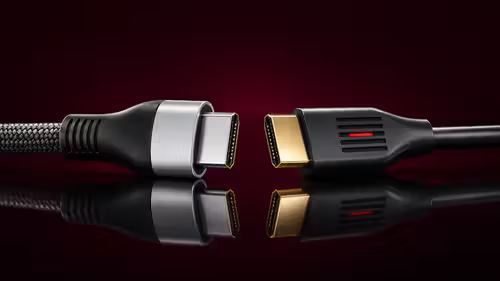
Yes: the Promate ProLink4K60 cables carry 18Gbps for 4K at 60Hz, while the Promate PrimeLink8K-300 carries 48Gbps. In a small flat, a lounge TV and a desk monitor can each run a different one.
The RTX 3070 Ti is a newer, faster tier than the RX 5700 XT and adds ray tracing and DLSS, which the Radeon lacks. It also draws more power, near 290W against 225W, so check the PSU and case airflow.
The GTX 1660 Ti laptop GPU has 6GB and usually outpaces the RX 5500M, but both vary a lot with each laptop's power limit. You cannot upgrade either, so compare the exact laptop model, its cooling and its memory configuration before paying.

Put both buds back in the case, forget them on your phone, then reset them so they pair to each other first. Many sets pair the left and right buds before the phone sees them. A missed reset leaves one bud silent or the pair in a loop.
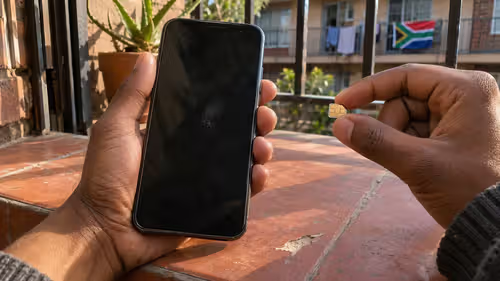
Restart the phone, reseat the physical SIM, then cross-test with another compatible handset or SIM. Use a spare compatible phone or ask your South African network to test the card before replacing hardware.
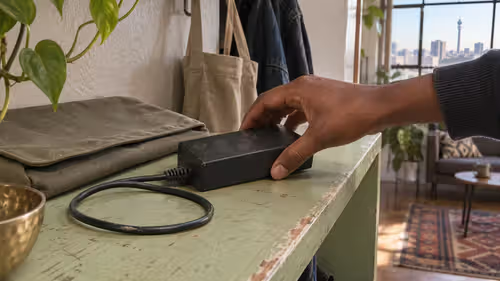
Use the full laptop model or machine type to look up the approved Lenovo charger and compare its plug and electrical ratings. Check the approved part and the intended workload before spending money on a replacement adapter.
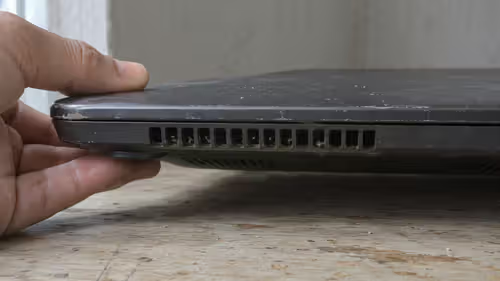
Open Task Manager and check CPU usage, then test the laptop on a hard surface with the vents clear. Check workload and airflow before buying a cooling pad or replacing the laptop.
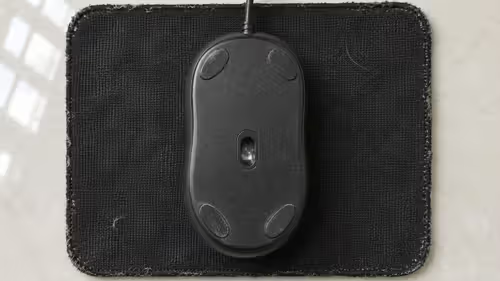
Test your mouse on a matte pad or plain paper, then check the sensor and try a direct USB connection. Use a surface you already own to isolate the problem before shopping for a new mouse.
The RTX 4090 is the faster, more expensive card; both carry 24GB, but the 4090 draws about 450W against roughly 355W. The 4090 uses a 12VHPWR connector and a very large cooler, so check PSU cabling and case space first.
The RTX 2070 Super is far quicker than an RX 580 8GB, so this is a question of ambition rather than rivalry. An RX 580 handles 1080p esports well. The 2070 Super reaches 1440p and ray tracing, but asks for a stronger power supply.
A GTX 670 is a 2012 desktop card that needs a power supply, a slot and a big cooler, while Vega 8 is integrated graphics inside a Ryzen chip. In raw speed the 670 can still compete, but its drivers and power appetite make Vega 8 the sensible modern option.
Bone conduction is better for awareness, earbuds are better for sound. Bone conduction sends vibration through your cheekbones and leaves your ears open, which suits Cape Town road runners who must hear traffic. Earbuds seal the ear and win on bass and noise blocking.