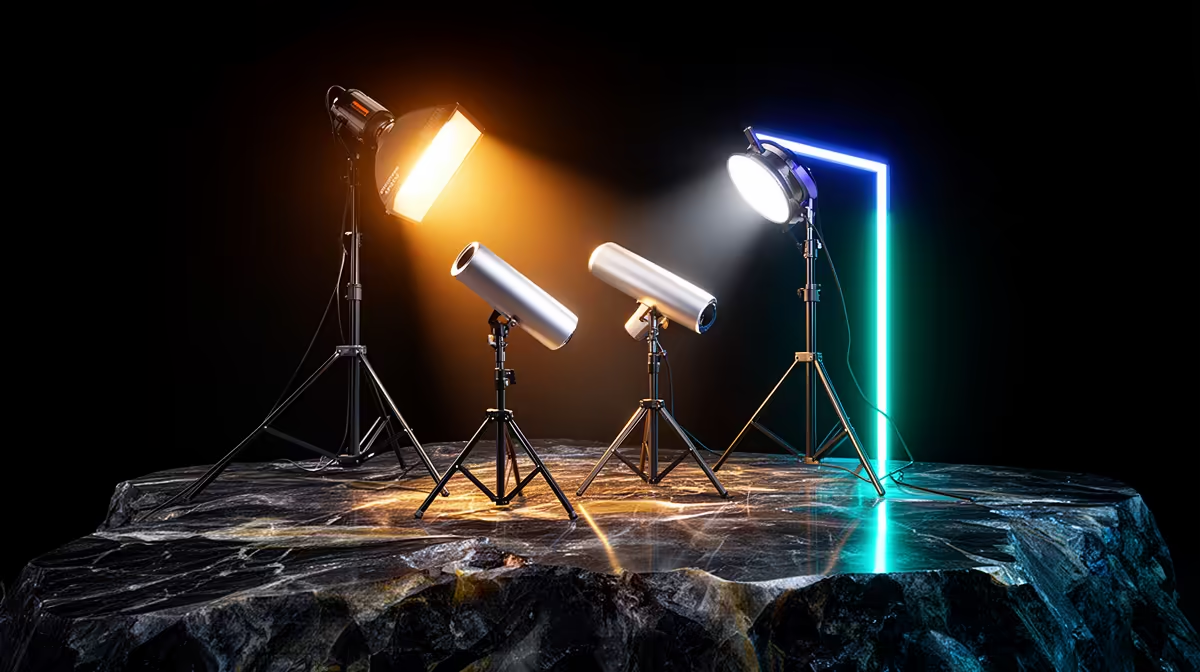
Most beginner photography studios fail before the camera is even switched on. The backdrop is up, the camera is on a tripod, and then the question hits: what lights go where, and what exactly needs to be purchased first? Essential lighting accessories for a beginner photography studio are not mysterious, but buying in the right order matters. Start wrong and you own three items that do not work together. Start right and the first R2000 to R3000 you spend covers the core of a functional, flexible home studio setup.
Quick Answer
Two softboxes, a pair of 199cm light stands, daylight 45W CFL bulbs, and at least one sandbag per stand gives you a complete starter kit. Together they produce soft, controllable light for portraits and product work for under R3000 before adding a backdrop.
🔧 The Core Kit: What to Buy and Why
Softboxes Over Bare Bulbs
A bare CFL bulb produces hard light with sharp shadow edges that rarely flatters portrait subjects and makes product photography look amateurish. A softbox stretches that same bulb output over a larger surface area, which softens the shadow gradient and wraps light more gently around three-dimensional subjects.
Two softboxes give you a key and fill combination: the key as your primary, brighter source on one side, the fill on the opposite side at reduced intensity to lift the shadow without eliminating it. That interplay between the two is what creates depth in a portrait. A flat, directionless image usually means either no fill at all, or both lights at equal power from the same direction.
The size of the softbox affects how soft the light appears. A 60 by 60cm box at close range produces softer shadows than a 40 by 40cm unit. Larger boxes cost more but the quality difference is real, particularly for headshot and beauty work where shadow gradients show clearly.
Stands: 199cm Is the Working Height
A 199cm stand at full extension places the centre of a mounted softbox at roughly 180 to 200cm from the floor, slightly above eye level for most standing subjects. That height produces a natural downward shadow on the nose and chin that reads as daylight-like on camera. Two stands cover the key and fill positions; add a third only once you genuinely need a background or hair light.
⚡ Bulbs and Their Practical Output
Daylight 45W CFL bulbs output roughly 2000 to 2500 lumens, white-balance cleanly at 5500K, and draw less current than incandescent equivalents. For portraits at ISO 400 to 800 with a lens at f/5.6, a single 45W CFL inside a medium softbox produces workable exposures at 60 to 90cm.
Match the bulbs in both softboxes. Mixing different brands or wattages introduces subtle colour temperature differences between key and fill, which shows as a slight cast on one side of the face. Two identical bulbs remove that variable entirely. Some softbox systems also accept two-bulb adapters later, doubling output without replacing the modifier.
💰 Sandbags: The Overlooked Essential
Every list of studio accessories leaves out sandbags and every beginner eventually learns why they matter the hard way. A 199cm stand with a softbox mounted at full height is a top-heavy object. The moment someone catches a power cable with a foot or brushes past the leg, the stand goes over. A softbox landing on a hard floor rarely survives intact. A CFL bulb definitely does not.
A 2 to 5kg sandbag draped over the lowest leg of each stand dramatically lowers the centre of gravity. The stand becomes genuinely stable under the kind of incidental bumps a working home studio produces. Two sandbags per session is the professional standard; one per stand is the minimum. At their price point they are among the highest value-to-outcome purchases in a studio setup.
🎯 Putting It Together Under R3000
A realistic starter kit at South African market prices looks like this: two softboxes with bulb sockets, two 45W daylight CFL bulbs, two 199cm stands, and two sandbags. That assembly typically costs between R2200 and R2800, with the softbox tier being the main price variable, leaving room in a R3000 budget for a basic clamp or backdrop support if the backdrop is the immediate next step.
What you do not need to buy first: a backdrop system, a reflector, or a hair light. Those are valid additions once the core kit is producing images that reveal what is actually missing. Two controlled soft sources tell you quickly whether the problem is lighting, background, or camera settings.
Frequently Asked Questions
What should a beginner buy first for a home photography studio?
One softbox with a 45W daylight bulb and a stand. A single quality key light on a stable support does more for portrait quality than any other single accessory. Everything else, the fill, the background light, the sandbags, builds from that starting point. If the budget only covers one softbox well, buy one softbox well rather than two compromised ones.
How many stands does a beginner studio actually need?
Two covers the key and fill positions essential for most portrait and product work. A third stand becomes useful once you add a background or hair light, but that is typically a later upgrade. Buy two stands that can hold the weight of your softboxes safely and extend to 199cm; add the third when a specific shot requirement demands it.
Why softboxes over umbrellas at the beginner stage?
Softboxes contain the light output within the modifier and direct it toward the subject. Umbrellas scatter light broadly in all directions, which illuminates the whole room rather than the subject specifically. In a small room, an umbrella lights the walls and ceiling and reflects back into the scene, reducing contrast and making precise shadow control difficult. Softboxes give the beginner more predictable results faster.
Can a beginner studio work without sandbags?
Technically yes, until the first stand gets knocked over. A R900 CFL bulb shattering on a floor is a fast way to understand why sandbags exist. A 2 to 5kg sandbag on each stand costs a fraction of replacing a bulb or softbox and makes the studio genuinely safe for people moving around in it. Treat them as non-optional.
Is it realistic to build a starter studio under R3000 in South Africa?
Yes. Two medium softboxes, two 45W daylight bulbs, two 199cm stands, and two sandbags land at R2200 to R2800 at local pricing, leaving a buffer for a fabric backdrop. The resulting setup handles portrait headshots, product photography, and social content without premium gear.
Ready to build your beginner photography studio from the right foundation?
Browse the studio lighting range including softboxes, stands, daylight CFL bulbs, and sandbags to put together a complete starter kit that actually works.