First Monitor for a Mobile Gamer Moving to PC
Quick Answer
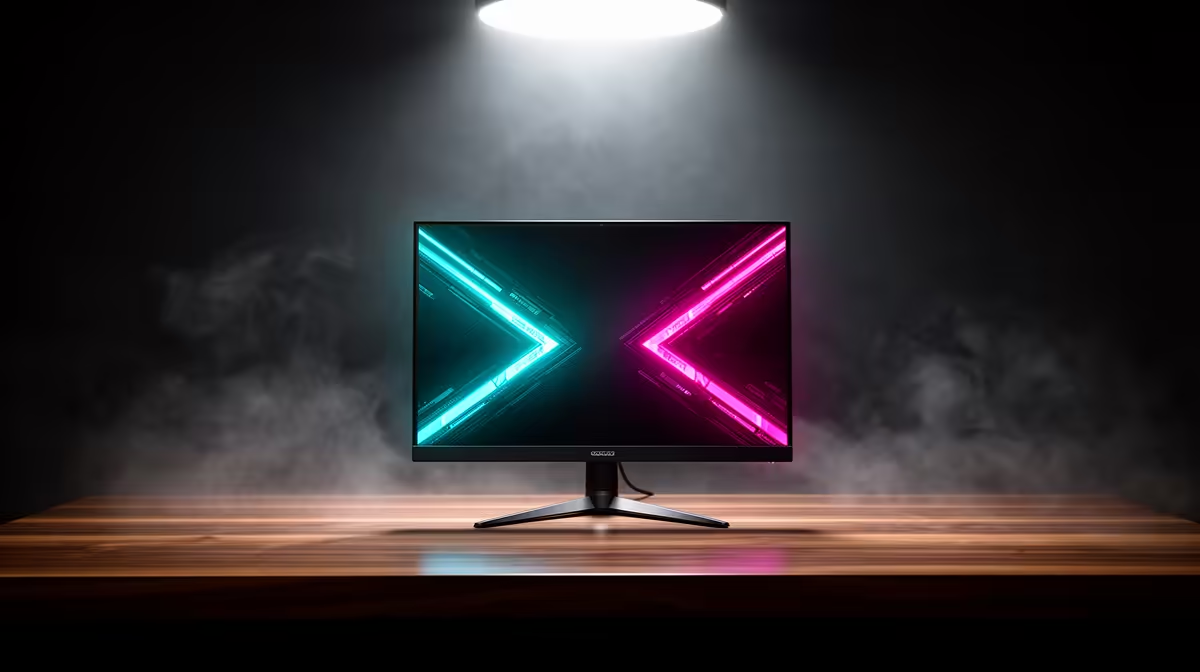
Your first PC monitor should make the jump from a phone feel easy. Start with a 24-inch 1080p screen or a 27-inch 1440p screen, aim for 144Hz or more, and make adaptive sync part of the shortlist.
Choose 1080p when you want strong frame rates from an entry GPU and a compact desk. Choose 1440p when you have a capable midrange GPU, sit a little further back, and want sharper games and desktop text.
Ignore the urge to buy the largest panel with the loudest specification sheet. Clean motion, readable menus and a stand that puts the screen at the right height will improve every session.
Why PC Feels Different From Mobile
A phone packs its pixels into a small screen held close to your face. Touch input also keeps your eyes centred on the action. A desktop monitor fills more of your view, while a mouse or controller sits away from the display.
That makes viewing distance, screen height and motion behaviour matter more. You will also see frame-rate changes, weak contrast and blurred movement more clearly on a larger panel.
Give yourself a week to adapt. The first evening can make even a sensible 27-inch monitor feel enormous.
Pick the Size Before the Specification Sheet
A 24-inch 1080p monitor is the forgiving choice for a shallow desk. Text remains comfortable at normal scaling, games are easy for a modest GPU to drive, and the whole screen stays within your view.
A 27-inch 1440p monitor gives you more working room and finer detail. It suits a desk deep enough to place the panel about an arm's length away. The extra pixels ask more of the graphics card, so check recent results for the games you play.
A 32-inch screen can work, but it needs space. Sitting too close makes you scan the corners with your head, which gets tiring in fast matches.
Match Resolution to the PC
Mobile games tend to hide the hardware choices from you. PC games expose them. Resolution, texture quality, ray tracing and upscaling all affect the delivered frame rate.
For an entry gaming PC, 1080p leaves useful performance room. You can raise settings in story games or chase higher frame rates in competitive titles without asking the GPU to render 1440p.
For a midrange build, 1440p is a strong long-term match. You gain sharper edges and a cleaner desktop, then use High settings or a quality upscaling mode when a demanding game needs help.
Buy for the PC you own or plan to build soon. A future upgrade has little value if today's games feel heavy.
Refresh Rate Is the Upgrade You Feel
A 144Hz panel updates more than twice as often as a 60Hz panel. Pointer movement looks cleaner, camera turns feel more connected, and fast games become easier to track.
You do not need a locked 144 frames per second in every game. Adaptive sync lets the monitor follow the GPU across its supported range, reducing tearing and the judder that can appear when frames arrive unevenly.
Set the chosen refresh rate in Windows after connecting the monitor. Many first-time PC players leave a high-refresh screen at 60Hz because the cable was plugged in and never checked.
Do Not Shop by the 1ms Claim
Response-time labels rarely tell the whole story. A quoted 1ms result can come from one transition, an aggressive mode with bright trails, or backlight strobing that changes brightness.
Look for reviews that test several refresh rates. You want a balanced overdrive setting with little blur and little overshoot, including at the lower frame rates common in demanding games.
If two monitors are close, favour the one with cleaner measured motion and a usable stand. Those benefits stay with you after the box has gone.
IPS and VA in Plain Language
IPS panels tend to keep colours consistent across the screen and offer many fast gaming choices. Dark scenes can look grey in a dim room because native contrast is limited.
VA panels tend to deliver deeper black. Some models show dark smearing during movement, so measured response matters more than the panel label.
Your room can settle the choice. IPS is a comfortable fit for bright mixed use. A well-tested VA panel suits darker games and evening play when contrast carries more weight.
Make the Desk Part of the Decision
Place the top of the display around eye level and keep the centre in front of you. A height-adjustable stand makes that easy. A tilt-only stand may need a solid riser.
Check the depth of the feet as well as the screen size. Gaming stands can occupy the space where you want the keyboard or phone.
Speakers are handy for clips and calls, but a headset will give clearer game audio. Spend on the panel and stand before treating built-in sound as a deciding feature.
Check the Connections
DisplayPort is the normal route from a desktop graphics card to a high-refresh monitor. HDMI may suit a laptop or console, but the supported resolution and refresh can differ by input.
Confirm that the box includes the cable you need. Then check the monitor menu, Windows display settings and GPU control panel after setup.
If you use a console beside the PC, verify its required 120Hz timing and adaptive-sync support on the exact HDMI input. A headline maximum over DisplayPort does not promise the same mode over HDMI.
Build a Shortlist You Can Understand
Browse the PC monitor range, then use the monitor best sellers to see the screen sizes and refresh classes other buyers are comparing.
Put one 24-inch 1080p option beside one 27-inch 1440p option. Write down resolution, refresh rate, adaptive-sync support, stand movement, inputs and warranty. That comparison will tell you more than a row of badges.
FAQ
Should your first PC monitor be 1080p or 1440p?
Choose 1080p for an entry GPU, a compact desk and high frame-rate value. Choose 1440p for a midrange GPU, a 27-inch panel and sharper mixed use.
Does refresh rate matter when you are new to PC gaming?
Yes. The smoother pointer and camera response is easy to feel, even before you develop strong preferences about graphics settings.
Should you buy the monitor before the GPU?
Plan them together. Resolution sets much of the gaming workload, so the screen and graphics card should suit the same performance target.
Compare one 24-inch 1080p monitor with one 27-inch 1440p model, then choose the screen your desk and gaming PC can support with ease.