You’re in the final circle, squad wiped, it’s a 1v1 for the win. You line up the perfect shot and… your frames drop. The screen stutters. It’s not lag, it’s your rig gasping for air. A gaming PC overheating is more than an annoyance; it’s a performance killer that can damage your components. But don't stress, we're here to walk you through the ultimate fix guide to get your temperatures—and your K/D ratio—back under control.
First, Why is Your Gaming PC Overheating?
Before we start fixing things, let's understand the enemy. When your PC's core components (like the CPU and GPU) get too hot, they automatically slow down to prevent damage. This is called "thermal throttling," and it's the culprit behind your sudden frame drops. A gaming PC overheating is usually caused by one of these common issues:
- Dust Buildup: The number one cause. Dust clogs fans and insulates components, trapping heat inside your case.
- Poor Airflow: Your PC needs to breathe. Bad cable management or poorly placed fans can create hot spots where air can't circulate.
- Dried Thermal Paste: This crucial material helps transfer heat from your CPU to its cooler. Over time, it can dry out and become ineffective.
- Failing Fans: A dead or dying fan is a one-way ticket to high temps, especially during marathon sessions in graphically intense games on a PC built for Cyberpunk 2077.
Your Step-by-Step Guide to Fixing an Overheating PC 🔧
Ready to get your hands dirty? These practical steps will solve most PC overheating issues and restore your gaming performance.
Step 1: Banish the Dust Bunnies
This is the easiest and most effective fix. Power down your PC, unplug everything, and take it to a well-ventilated area.
- Open your side panel.
- Use short, controlled bursts of compressed air to blow dust out of your fans, heatsinks, and case filters.
- Pay special attention to the GPU fans and the CPU cooler's radiator fins.
- Wipe down the inside of the case with a microfibre cloth.
Pro Cleaning Tip 💨
Never use a vacuum cleaner inside your PC! The static electricity it generates can permanently fry your sensitive components. Always use compressed air and hold the fans in place with your finger while you spray them to prevent them from over-spinning.
Step 2: Optimise Your Airflow
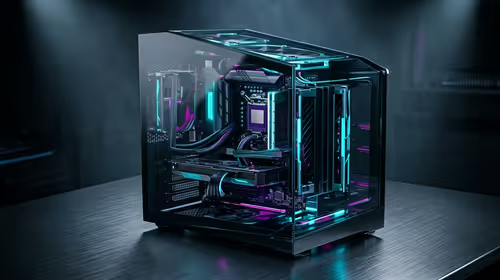
A clean PC with bad airflow is still a hot PC. Check that your fans are set up for a clear path of air—typically intake from the front and bottom, and exhaust out the top and back. Tidy up your cables using zip ties to clear up space. A well-ventilated case is crucial for staying cool during those long build battles on a Fortnite-ready gaming PC.
Step 3: Re-evaluate Your Thermal Paste
If your PC is more than a few years old and still running hot after a deep clean, it might be time to replace the thermal paste. This is a more advanced step, but there are countless guides online to walk you through it. A fresh application can dramatically lower CPU temperatures, which is vital for maintaining performance during extended heists on a machine configured for GTA V.
Step 4: Tweak Your Software Settings
Sometimes the fix is digital. Use software like MSI Afterburner to create a custom fan curve, making your fans spin faster as temperatures rise. Also, check your Task Manager for background processes that might be hogging resources and generating extra heat. Even a powerful Minecraft gaming PC can benefit from a well-optimised system.
When Cleaning Isn't Enough: Time for an Upgrade? ✨
If you've tried everything and your PC still sounds like a jet engine, your components might just be outmatched. The stock cooler that came with your CPU might not be enough for the intense firefights in Call of Duty: Warzone 2.0.
For competitive titles where every single frame counts, like on a Counter-Strike 2 gaming PC, upgrading to a better air cooler or an All-In-One (AIO) liquid cooler can make a world of difference. The same goes for the chaotic team fights you'll find on an Overwatch 2 gaming PC.
For truly demanding simulations on a Microsoft Flight Simulator PC, a high-airflow case and premium cooling aren't just nice-to-haves... they're essential. Don't let an overheating PC be the reason you don't get your chicken dinner on a rig built for PUBG.
Ready for a Cooler, Faster Gaming Experience?
An overheating PC is a bottleneck on your performance. A professionally built machine from Evetech ensures optimal airflow and cooling right out of the box. Design your ultimate, cool-running gaming rig today and leave thermal throttling in the dust.