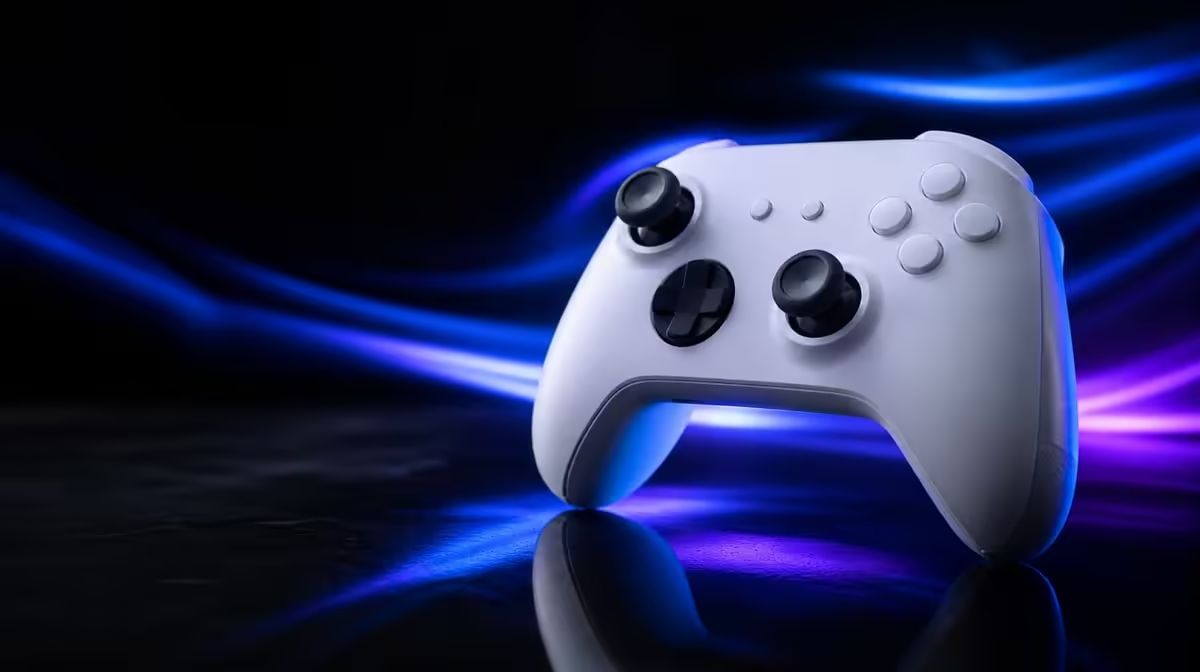
Reducing controller report spacing can improve one stage of PC input, but it cannot guarantee the lowest total delay. Use 1000Hz PC polling to reduce input lag only after stabilising the game, display and connection used for comparison.
Quick Answer
The R1,499 GameSir G7 Pro can use a 1000Hz report cadence on PC, creating nominal one-millisecond intervals. Enable the correct computer mode, hold the rest of the system constant and judge repeated actions without calling that interval total latency.
⚙️ Establish a stable PC baseline
Choose wired or 2.4GHz PC use and keep that route unchanged through the test. Confirm ordinary controls before adjusting polling.
Use a repeatable scene with stable frame pacing and the same display settings. Close unnecessary background work that changes between runs.
Choose a training or offline area where network activity and other players do not dominate the response. The goal is to observe the local input path.
Warm up before recording results. Learning the drill during the first rate can create a false advantage for the setting tested later.
Record the game, frame conditions, connection, sensitivity, trigger position and macro map.
Add display refresh and frame cap to the note. These downstream conditions shape when a controller report can become visible.
Use the default macro layout and a consistent trigger mode. A new rear command or shorter physical pull can overwhelm the smaller polling difference.
Compare suitable options in Evetech's gaming controller range.
⏱️ Select and confirm 1000Hz
1000Hz means up to one thousand reports per second, with one millisecond between opportunities.
Confirm the rate in the PC setup. Do not extend the claim to Xbox or Android.
If the desired selection does not appear, return to the known PC connection and ordinary stable profile. Change one variable at a time rather than rebuilding the entire setup.
The G7 Pro can be wired or 2.4GHz on PC. Test the route intended for play and do not assume identical behaviour without observing it.
Run a lower-rate baseline where another option is available, then select 1000Hz without changing the game or display.
Document the actual comparison values. "High versus low" is less useful later than a note containing the selected rates and nominal intervals.
Restart the PC once and confirm that 1000Hz remains selected before the timed drill begins.
Evetech's gaming accessories category can frame the remaining input chain.
🧪 Compare repeated actions
Use a rhythm input, direction-change drill or rapid action that can be repeated. Run several sets and alternate the order of rates.
Collect more than the best result. Average consistency, missed actions and the spread between runs reveal whether the mode remains dependable.
Rest between sets when hand tension grows. Fatigue can add more variation than the report interval being examined.
Record missed actions, consistency and subjective feel. Warm-up or fatigue should not decide the result.
A one-millisecond report interval does not include game processing, rendering or display response. Keep those stages in the conclusion.
Frame pacing can remain uneven even when average frame rate looks high. Watch the chosen scene and solve obvious instability before judging the controller.
Physical input begins before polling. A trigger stop can shorten finger travel, while TMR modules read stick position. Keep those changes out of the rate comparison.
TMR sticks influence sensing, while trigger stops change physical travel. Neither is the polling rate.
🗂️ Save the lowest reliable setup
Choose the highest supported rate that remains stable in the intended game and PC environment.
If 1000Hz and another rate feel the same, record that honestly. The technical interval can be correct without creating a noticeable personal gain.
If 1000Hz improves repeatability, name the drill and connection that produced the result. Avoid a universal claim about every game.
Create a short evidence table with setting, report interval, three-run result and notes on frame stability. The structure prevents a single exciting attempt from becoming the conclusion.
Run the same table on another day with the order reversed. A preference that survives warm-up, fatigue and setting order has a stronger basis.
Restart and confirm the setting returns. Save a short recovery note.
Repeat after changing to another title. A slower game may reveal less benefit while still functioning correctly.
Keep platform scope visible in every saved profile. Xbox remains wired and Android uses Bluetooth, but neither receives the stated PC polling claim.
If the controller changes from 2.4GHz to cable on PC, treat that as a new comparison. Do not assign the result to polling alone when the route also changed.
At R1,499, 1000Hz can lead the value case for a PC competitor, while Xbox and Android buyers should prioritise their platform features.
Score polling alongside TMR sensing, trigger control, macros and comfort. The right purchase addresses the weakest part of the player's actual setup.
End with a recovery drill: restart, reconnect, confirm 1000Hz, open the stable scene and complete one reference run. If any step is unclear, update the setup note.
The G7 Pro's one-millisecond report opportunity is valuable when the complete PC can expose it. It remains one measured timing improvement inside a longer path, not a guarantee of the lowest possible response.
Review Evetech's popular accessories after the result is documented.
Frequently Asked Questions
What interval does 1000Hz polling target?
It corresponds to one millisecond between input-report opportunities.
Which G7 Pro platform supports that rate?
The 1000Hz feature applies to PC.
Can 1000Hz produce the lowest total lag by itself?
No. Game, rendering, frame and display timing remain.
What should be stabilised before comparing polling?
Keep the connection, game scene, frame conditions, display and controller profile constant.
Does a one-millisecond report interval equal one-millisecond latency?
No. It describes one stage of a longer path.
Will slower games benefit as much as competitive titles?
Not necessarily. Games with infrequent decisions may reveal less practical difference.
How should players judge the result?
Use repeated controlled actions and choose the stable mode that improves or preserves consistency.
Ready to reduce one timing window without ignoring the rest?
Compare Evetech's PC controllers and test the G7 Pro at 1000Hz inside a stable game and display setup.