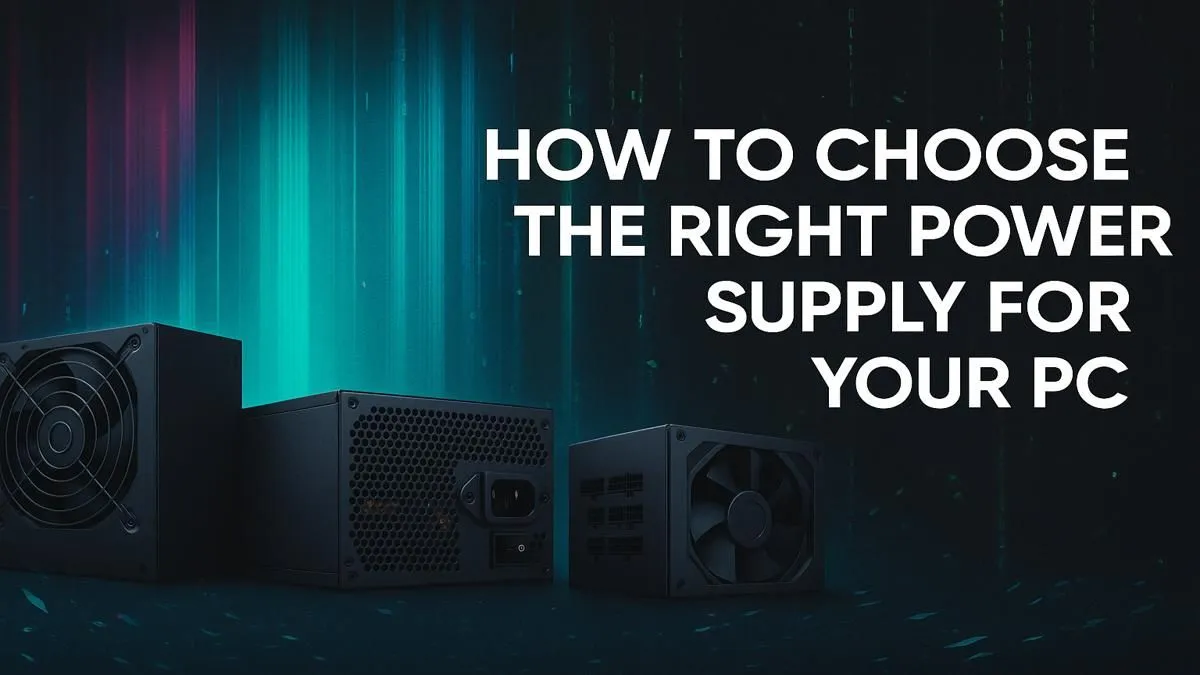
So, you’re building a new PC in South Africa. You’ve picked out a beastly graphics card and a lightning-fast CPU. But what about the heart of your rig? The Power Supply Unit (PSU) is the unsung hero of every stable, high-performance machine. Skimping on it is a rookie mistake that can lead to crashes, component damage, and major buyer’s remorse. This guide will show you exactly how to choose a power supply that’s perfect for your build. ⚡
Why Choosing the Right Power Supply is Crucial
Think of a PSU as the foundation of your PC. A weak foundation can bring the whole structure crashing down, no matter how impressive the rest of it looks. A quality power supply delivers clean, stable power, protecting your expensive components from voltage fluctuations that are all too common. It’s the difference between smooth, uninterrupted gaming sessions and frustrating random shutdowns in the middle of a match.
For a demanding rig built to handle the neon-drenched streets of Night City, a reliable PSU isn't just a recommendation; it's a necessity. A cheap, unrated unit can't provide the consistent power needed for a high-end GPU, leading to performance throttling or even failure. Investing in a good power supply is investing in the longevity and stability of your entire system. This is a core part of any good PC builder's guide.
Understanding Key Power Supply Specs
Navigating the world of PSUs can feel like learning a new language. Wattage, efficiency ratings, modularity… what does it all mean? Let's break down the essentials you need to know when choosing a power supply, making the process simple and straightforward.
Wattage: How Much Power Do You Really Need?
The first number everyone sees is the wattage (W). It’s tempting to think bigger is always better, but overkill can be a waste of money. The key is to find the sweet spot. Your total wattage requirement is mainly determined by your CPU and Graphics Card (GPU).
A simple way to estimate is to use an online PSU calculator. For a typical mid-range build designed for competitive esports titles like Counter-Strike 2, a quality 550W to 650W unit is often plenty. A rig for a less demanding but hugely popular game like Fortnite can run perfectly on a reliable 500W PSU. It's wise to add about 20-30% headroom above your calculated peak load to ensure the PSU runs efficiently and you have room for future upgrades.
Efficiency Rating: What Do 80 Plus Ratings Mean?
You’ll see labels like "80 Plus Bronze," "Gold," or "Platinum" on PSUs. This isn't just marketing fluff. The 80 Plus certification measures how efficiently a PSU converts AC power from your wall socket into DC power for your components. An 80 Plus Gold unit, for example, must be at least 87% efficient at 100% load.
Why does this matter in SA?
- Lower Electricity Bills: A more efficient PSU wastes less energy as heat. With Eskom's rising tariffs, every watt saved helps your wallet.
- Cooler & Quieter Operation: Less wasted heat means the PSU's fan doesn't have to work as hard, resulting in a quieter PC. For a high-end system running something as demanding as Microsoft Flight Simulator, a Gold or Platinum rated PSU is a smart choice for stable, cool performance.
Modularity: Untangling the Cable Mess
Modularity refers to how the cables are attached to the PSU itself. This choice directly impacts your building experience and the final look of your PC.
- Non-Modular: All cables are permanently attached. It's the cheapest option but can lead to a mess of unused cables cluttering your case and impeding airflow.
- Semi-Modular: Essential cables (like the 24-pin motherboard and 8-pin CPU power) are attached, while others (PCIe, SATA) are detachable. This offers a great balance of cost and convenience.
- Fully-Modular: Every single cable is detachable. You only plug in what you need, making for the cleanest builds and best possible airflow. This is ideal for compact cases or for gamers who want a tidy, professional-looking rig to play games like Overwatch 2.
Builder's Pro Tip 🔧
Always check your case specifications for PSU form factor compatibility! Most standard towers use ATX power supplies, but smaller, compact cases often require an SFX or SFX-L unit. Forcing an ATX PSU into an SFX-only case is a classic first-time builder mistake that can be easily avoided with a quick check of the product page.
Your Step-by-Step Guide to Choosing a Power Supply
Feeling more confident? Here’s a simple checklist to follow. This ultimate PC builder's guide simplifies how to choose a power supply into four easy steps.
- Calculate Your Wattage: Add up the power draw of your core components, especially your CPU and GPU. For a powerful rig designed to dominate in Call of Duty: Warzone, you'll need to account for a power-hungry GPU. Add 20-30% headroom for safety and future upgrades.
- Select an Efficiency Rating: For most builds, an 80 Plus Bronze or Gold unit offers the best performance for the price. If you're building a budget-friendly PC for games like Minecraft, a Bronze-rated PSU is a fantastic and reliable choice.
- Decide on Modularity: This comes down to your budget and how much you care about cable management. A semi-modular PSU is the go-to recommendation for most builders creating systems for titles like Grand Theft Auto V, offering a clean result without the premium price of a fully-modular unit.
- Stick with Reputable Brands: Don't be tempted by a generic, no-name PSU with a high wattage rating for a suspiciously low price. Stick to trusted brands known for quality components and solid warranties. A good power supply is the bedrock of a stable system, whether you're playing PUBG or tackling creative work. 🚀
Ready to Power Up Your Build?
Choosing the right power supply is the first step to a stable, reliable, and powerful PC. Don't let it be an afterthought. Browse our wide range of PC Power Supplies and find the perfect heart for your new gaming rig.