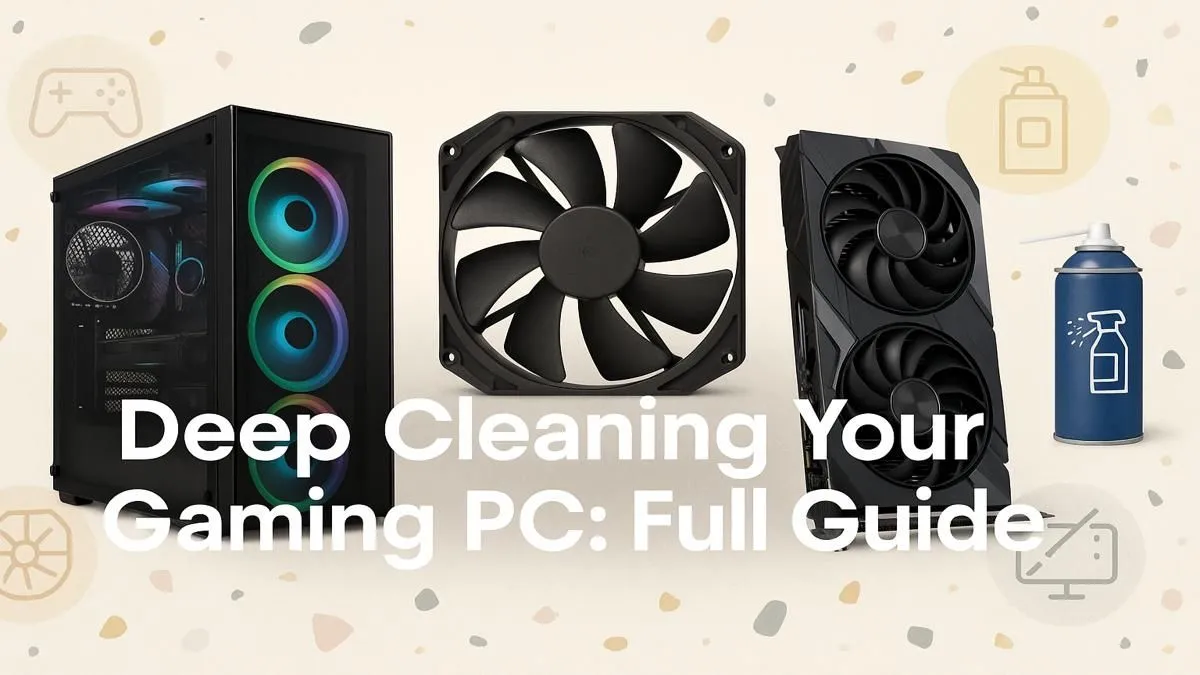
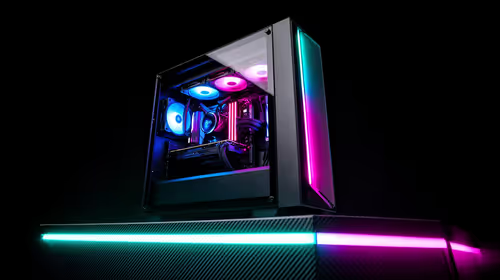
Are your frame rates dropping in the middle of a clutch Warzone match? Before you blame your ISP, look at your rig. Dust, the arch-nemesis of every South African PC gamer, might be choking your performance. Learning how to clean a gaming PC isn't just about aesthetics; it's about reclaiming lost power and keeping your investment running cool and quiet for years.
Why You Need to Clean Your Gaming PC
Think of dust as a thick, unwanted blanket suffocating your precious components. It clogs fans, insulates heat sinks, and forces your system to work harder, leading to:
- Higher Temperatures: Heat is the number one enemy of performance and longevity. A dusty PC runs hotter, which can cause thermal throttling—your CPU and GPU slowing themselves down to avoid damage.
- More Noise: As your fans spin faster to fight the heat, your "silent" rig starts to roar.
- Shorter Lifespan: Consistent high temperatures can degrade components over time, leading to premature failure.
Regularly cleaning your gaming PC ensures you get every drop of performance you paid for. Even if you've scored one of the best gaming PC deals, dust doesn't discriminate. ✨
Gearing Up: Your PC Cleaning Toolkit
You don't need a high-tech lab to get this done. A basic kit will do the job perfectly.
The Essentials:
- Compressed Air: A can of compressed air is your main weapon for blasting dust out of tight spaces.
- Microfibre Cloths: For wiping down surfaces without leaving lint or scratches.
- Isopropyl Alcohol (90%+): Perfect for cleaning stubborn grime off non-porous surfaces (like fan blades), but use it sparingly.
- Cotton Swabs & Small Brushes: For getting into the nooks and crannies.
Pro Tip: Ditch the Cans ⚡
For a long-term, eco-friendly solution, consider investing in an electric air duster. It's a bit of an upfront cost but saves you money on disposable cans and delivers a more consistent, powerful stream of air without any freezing liquid propellants.
The Ultimate Guide to Deep Cleaning Your PC
Ready to get hands-on? Let's walk through the deep cleaning process step-by-step. This procedure is universal, whether you're cleaning a beast from our PCs above R20k range or a more compact build.
Step 1: Power Down and Prep Your Space
Safety first! Shut down your PC completely, switch off the power supply unit (PSU) at the back, and unplug all cables. Move your case to a well-lit, ventilated area—your garage or balcony is ideal, as this will get dusty. Ground yourself by touching a metal object to discharge any static electricity.
Step 2: The Exterior and Dust Filters
Start with the easy part. Use a microfibre cloth to wipe down the outside of your case. Most modern cases have removable dust filters (front, top, and bottom). Slide or pop them out and give them a thorough clean. You can rinse them with water, but make sure they are 100% dry before putting them back.
Step 3: Inside the Belly of the Beast 🔧
Open up your case by removing the side panels. Now, grab your compressed air.
- Technique: Use short, controlled bursts. Never hold the can upside down.
- Direction: Work from the top of the case downwards, blowing the dust out and away from the components.
- Fans: Gently hold the fan blades with your finger to stop them from spinning while you clean them. Free-spinning them with compressed air can damage the bearings.
Focus on the major dust traps: the CPU cooler's heatsink, the GPU fans, and any case fans. This is vital for all machines, from high-end rigs to the most efficient budget gaming PCs.
Step 4: Component-Specific Attention
With the bulk of the dust gone, it's time for detail work.
- Graphics Card (GPU): Wipe the plastic shroud and fan blades carefully with a microfibre cloth. Use a cotton swab lightly dampened with isopropyl alcohol for any stubborn spots on the blades.
- Motherboard & RAM: A very gentle blast of air is usually enough here. Avoid touching the circuitry.
- Power Supply (PSU): Blow air through the PSU's fan grille to clear out any dust buildup.
PC Cleaning Mistakes Every Gamer Should Avoid
Knowing what not to do is just as important as knowing how to clean a gaming PC. Avoid these common pitfalls:
- Never Use a Vacuum Cleaner: Standard vacuums generate a massive amount of static electricity, which can instantly fry your sensitive components. Just don't do it.
- Don't Spray Liquids Directly: Never spray cleaners or alcohol directly onto any part of your PC. Always apply a small amount to your cloth first.
- Avoid Wiping the Motherboard: Unless you're an expert, stick to compressed air for the motherboard to avoid dislodging small components.
A clean PC is a happy PC. But if after all this effort, your rig still isn't hitting the performance numbers you want, it might be a sign that it's time for an upgrade. Sometimes, the best solution is a fresh start with expertly assembled hardware. We have some incredible pre-built PC deals that are ready to go right out of the box. This is also true for more affordable options, as many of the excellent PCs under R20k pack a serious punch for their price. 🚀
Ready for a Dust-Free Domination?
A clean rig is a fast rig. But if your PC is still struggling to keep up, it might be time for a fresh start. Explore Evetech's massive range of PC deals and find a new powerhouse to conquer your favourite games.