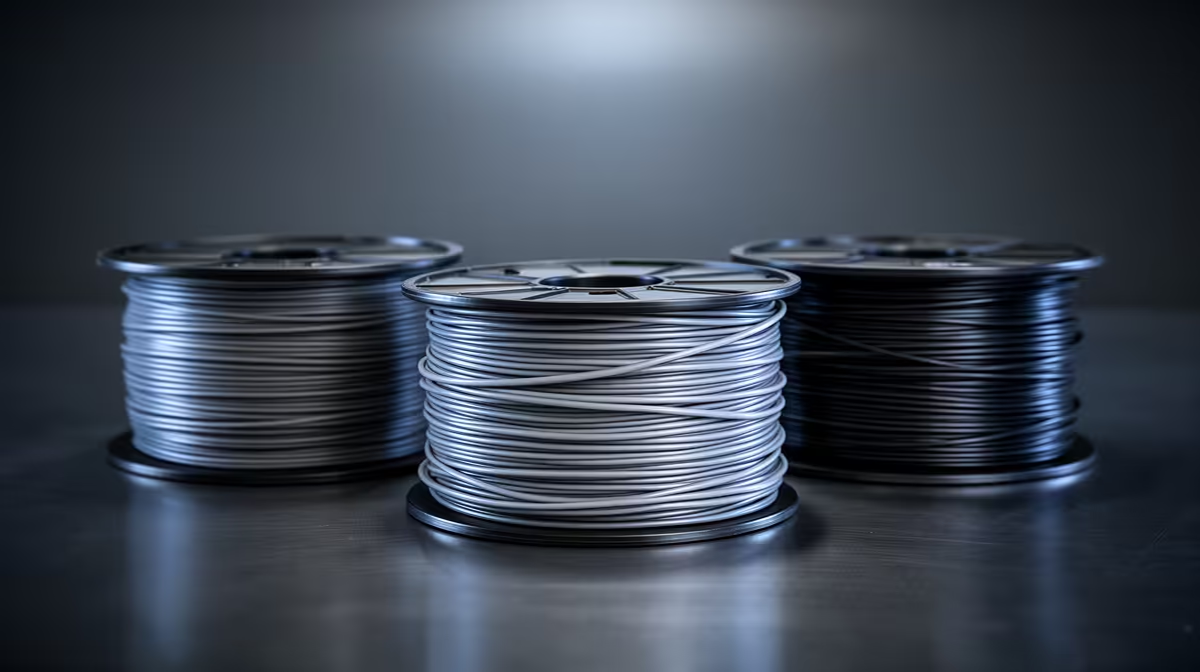
Wet filament is the quiet saboteur behind most stringing, popping and weak layer bonds, and the fix is almost always heat plus time rather than a new spool. Drying filament properly means matching the temperature to the plastic so you pull moisture out without softening or deforming the spool. PLA wants a gentle 45 to 55C, while ABS and ASA tolerate 75C, and getting this right is what separates clean prints from a stringy mess in a Cape Town summer.
Quick Answer
Dry PLA at 45 to 55C, PETG at 65C, TPU at 70C, and ABS or ASA at 75C, holding each for roughly 4 to 8 hours depending on spool size and how wet the filament is. TPU and nylon absorb water fastest, so treat them as needing a dry cycle even straight off a fresh roll.
The temperature and time chart by material
The number that matters most is the glass transition point of each plastic. Stay safely below it and you evaporate trapped water; go over it and the spool sags or fuses. Here is the working chart, with longer times for fuller 1kg spools or filament that has been open for weeks.
PLA: 45 to 55C for 6 to 8 hours
PLA has the lowest heat tolerance of the common materials, so keep it at the bottom of the range. Around 45C for 6 hours suits a partly used spool, while a soaked 1kg roll can take the full 8 hours closer to 55C. Push past 60C and PLA starts to soften and the spool can deform on the reel.
PETG: 65C for 6 to 8 hours
PETG is more forgiving and holds shape well at 65C. If you are seeing fine hairs between parts or a faint crackle as it extrudes, that is moisture flashing to steam, and a single overnight-length cycle usually clears it.
TPU: 70C for 4 to 8 hours
Flexible TPU is one of the thirstiest filaments and will pull water out of humid air within hours. Dry it at 70C and store it sealed the moment it cools. If prints feel rough or the surface looks bubbled, moisture is almost always the cause before you blame the printer.
ABS and ASA: 75C for 6 to 8 hours
ABS and ASA take the most heat and benefit from the highest setting at 75C. ASA in particular is popular for parts that live outdoors in strong SA sun, and dry filament here means fewer layer cracks and a more even matte finish.
Choosing a dryer over the oven method
A dedicated filament dryer holds a steady low temperature far better than a household oven, where the thermostat can swing 20C either side of the dial and quietly cook a PLA spool. A purpose-built unit also lets you print straight from the heated chamber for thirsty materials. The 3D printer and accessory range at Evetech is a sensible place to match a dryer to the materials you run most.
For makers who only print occasionally, a convection oven on its lowest setting can work in a pinch, but place the spool away from the elements and verify the real temperature with a separate thermometer before trusting the dial.
Storage is half the battle
Drying is pointless if the spool re-absorbs moisture overnight. Seal cooled filament in an airtight box with fresh silica gel, and keep the most sensitive materials, nylon and TPU, in sealed storage between every print session. A small humidity card inside the box tells you at a glance when it is time for another cycle. The accessories section at Evetech is a practical stop when you are stocking up on silica gel and sealed storage containers in one go.
Frequently Asked Questions
How do I know if my filament is wet?
Listen and look. Popping or crackling sounds as the filament extrudes, fine stringing between parts, a rough or bubbled surface, and weak layer adhesion all point to moisture. If a previously reliable spool suddenly prints badly, water is the first suspect.
Can I dry filament too long or too hot?
Too hot is the real risk. Exceeding a material's softening point deforms the spool or fuses the windings, especially with PLA above 60C. Drying for a few extra hours at the correct temperature does no harm, so when in doubt keep the heat conservative and extend the time.
Does South Africa's humidity really affect printing?
Yes. Coastal cities like Cape Town and Durban have high ambient humidity, and an open spool can absorb enough moisture in a single humid week to ruin print quality. A regular drying schedule is worth far more here than in a dry inland climate.
How often should I dry filament?
Dry any spool that has been open and exposed for more than a week or two, and dry TPU and nylon before nearly every session. Sealed storage with silica gel stretches the interval considerably, so good storage reduces how often you need to run the dryer.