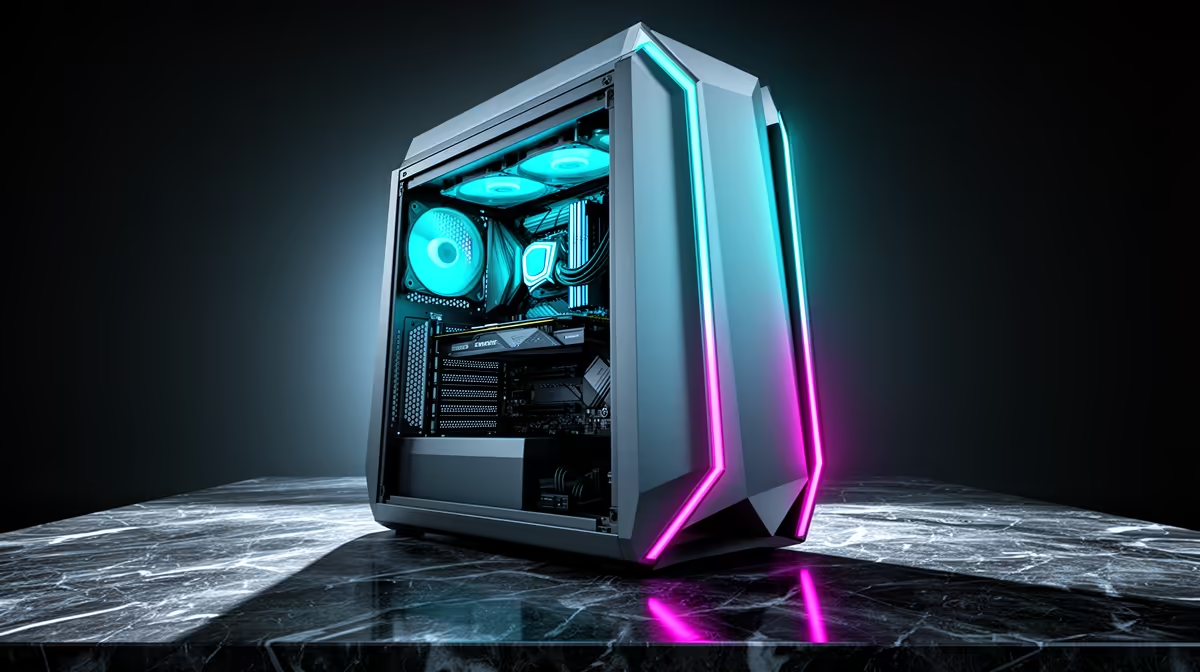
If DDR5 build is tearing, the cure is almost always syncing the GPU to the panel - VRR, V-Sync or a frame cap - rather than buying new hardware.
Quick Answer
To stop screen tearing on DDR5 build, enable adaptive sync (G-Sync or FreeSync) in the GPU driver, turn on the monitor's VRR setting, and cap frames a few fps below the panel's refresh - for example 141 fps on a 144Hz display. These steps remove tearing without adding noticeable input lag.
Cable, port and refresh checks for DDR5 build
Confirm the panel is running at its full refresh in Windows display settings, not a default 60Hz. Use a DisplayPort 1.4 or HDMI 2.1 cable rated for your resolution and refresh, since an underspecified cable can cap refresh and reintroduce tearing on DDR5 build.
Frame caps and V-Sync that suit DDR5 build
Cap frames a few fps under the refresh ceiling - 141 on 144Hz, 237 on 240Hz - so the GPU stays inside the VRR window. Pair the cap with low-latency V-Sync only if a thin tearing line persists at the very top of the screen.
Per-game settings that keep DDR5 build tear-free
Use each game's built-in frame limiter or borderless-fullscreen mode where exclusive fullscreen misbehaves with VRR. On DDR5 build, match the in-game cap to your driver cap so the two do not fight and re-introduce a tearing line.
FAQ
Can the cable cause tearing on DDR5 build?
Indirectly, yes. A cable that cannot carry your full resolution and refresh forces the panel to a lower mode, which can bring tearing back. Use a certified DisplayPort 1.4 or HDMI 2.1 cable for DDR5 build.
Does V-Sync alone fix tearing on DDR5 build?
V-Sync removes tearing but can add input lag and stutter if frame rate dips below refresh. On %s, adaptive sync plus a frame cap is smoother, with V-Sync left as a backup for the top edge of the screen.
Why does tearing return after a driver update on DDR5 build?
Updates sometimes reset VRR or refresh settings to default. After updating, re-check that adaptive sync is on in the driver and the monitor menu, and that DDR5 build is still running at full refresh in Windows.
Check the cable and full refresh in Windows, then enable VRR to keep DDR5 build tear-free.