So, you’ve got the brain of your new PC sitting in its box… that shiny, powerful CPU. It’s an awesome feeling, right? For many first-time builders in South Africa, that excitement is mixed with a bit of dread. What if you bend a pin? What if you mess it up? Relax. This guide on how to install a CPU is here to walk you through the process, step-by-step, ensuring your PC's heart starts beating strong.
Before You Begin: Your CPU Installation Checklist
Getting this right starts with having the right gear. Before you even touch that processor, make sure your battle station is prepped. A smooth CPU installation depends on preparation. You don’t need a massive toolkit, just the essentials:
- Your CPU and Motherboard: Make sure they're compatible! (e.g., an AMD AM5 CPU needs an AM5 motherboard).
- An Anti-Static Wrist Strap: Essential for protecting your components from static discharge.
- Thermal Paste: Your CPU cooler might come with it pre-applied, but having a tube of quality paste is always a good idea.
- A Clean, Well-Lit Workspace: You need to see what you’re doing, especially with those tiny alignment markers.
This simple checklist is the same foundation we use, whether we're putting together affordable budget gaming PCs or high-end beasts.
How to Install a CPU: The Core Steps 🔧
Alright, let's get to the main event. Take a deep breath. This process is more about being careful than being complicated. We'll cover both Intel and AMD installations, as the core principles are very similar.
Step 1: Prepare the Motherboard
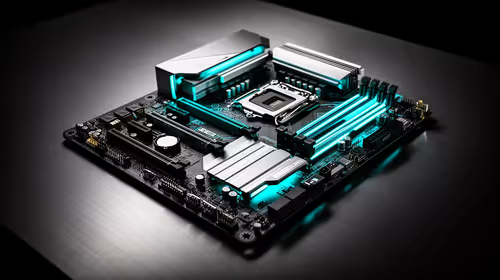
Place your motherboard on top of its anti-static bag on a flat, stable surface. Locate the CPU socket—it’s a big square covered by a plastic plate and held down by a metal lever, called the retention arm.
Push the retention arm down and away from the socket to release it. For most modern sockets, the arm will pop up, and the metal bracket (the load plate) will lift with it. The plastic cover will often pop right off. Don't throw it away; keep it safe in case you need to store the motherboard later.
Step 2: Align and Place the CPU
This is the most critical part of installing a CPU. Look closely at your CPU and the empty socket. You'll notice alignment markers.
- Intel CPUs have two small notches on their sides that line up with two tabs in the socket.
- AMD CPUs have a small golden triangle in one corner that must line up with a triangle marked on the socket frame.
Once you’ve found the markers, you’re ready.
Handle With Care! ✨
Never touch the gold pins or pads on the bottom of the CPU. The oils from your fingers can interfere with the connection. Always hold the processor by its edges. This simple habit prevents a world of troubleshooting headaches later on.
Gently lower the CPU straight down into the socket. Don’t force it, press it, or slide it. If it’s aligned correctly, it will drop into place perfectly. This is a vital step for all builds, from rigs designed for casual gaming to powerful PCs over R20,000 where every component's integrity is paramount.
Step 3: Secure the CPU
With the CPU seated, gently lower the load plate back over it. Then, push the retention arm back down and tuck it under the hook to lock everything in place. You might need to apply a bit of firm pressure to secure the lever—this is normal! It’s designed to hold the CPU tightly. The successful completion of your CPU installation is just a click away.
The proper installation of the CPU is a foundational skill for anyone building their own machine, whether it’s for systems under the R20k mark or for top-tier rigs.
The Finishing Touch: Applying Thermal Paste
With the CPU locked in, the final step before adding the cooler is applying thermal paste. This compound fills microscopic gaps between the CPU and the cooler, ensuring efficient heat transfer. Getting this right is key to unlocking the performance seen in the best gaming PC deals.
Simply squeeze a small, pea-sized dot of thermal paste onto the centre of the CPU's silver lid (the Integrated Heat Spreader). That's it! When you install the cooler, the pressure will spread the paste evenly.
Feeling Overwhelmed? There's Another Way 🚀
Look, we get it. Learning how to install a CPU is a rewarding rite of passage, but it's not for everyone. If the thought of bent pins or static shocks is giving you grey hairs, there's no shame in letting the pros handle it. That's why we have a wide range of expertly assembled pre-built PC deals, built, tested, and ready to game right out of the box.
Build Done... or Just Beginning?
Mastering a CPU installation is a massive win for any builder. Whether you're ready to pair your new processor with the perfect components or decide a pro build is the smarter play, we've got you covered. Explore our massive range of PC components and deals and find everything you need to conquer your world.