So, you’ve got your hands on the Intel Core i9-14900KF, a silicon monster that eats benchmarks for breakfast. Lekker! But here in South Africa, our summer heat and surprise an unexpected outage can turn this powerhouse into a pocket-sized sun. Effective i9-14900KF cooling isn't just a nice-to-have; it's the only way to guarantee you get the face-melting performance you paid for without your PC sounding like a jet engine. 🚀
Understanding the Heat: Why Your 14900KF Runs Hot
Before we dive into solutions, let's understand the problem. The i9-14900KF achieves its incredible speeds by drawing a significant amount of power, and where there's power, there's heat. When a CPU gets too hot, it automatically slows itself down to prevent damage—a process called thermal throttling. For a gamer, this means sudden frame drops and a frustrating experience.
Proper i9-14900KF cooling ensures your processor stays in its optimal temperature range. This isn't just about performance; it's about protecting your investment. When you buy CPU processors online, especially high-end Intel CPU models, planning your cooling strategy from the start is crucial.
Cooling Showdown: Air Coolers vs. Liquid AIOs ❄️
When it comes to taming this beast, you have two main choices. There’s no single "best" answer, as it depends on your case, budget, and performance goals.
High-Performance Air Coolers
Don't underestimate modern air coolers. Top-tier models from brands like Noctua or be quiet! can handle the 14900KF at stock speeds just fine.
- Pros: Extremely reliable (no pump to fail), simpler installation, and often quieter at idle.
- Cons: Can be massive, potentially blocking RAM slots or looking bulky. May struggle with heavy overclocking in a warm room.
All-in-One (AIO) Liquid Coolers
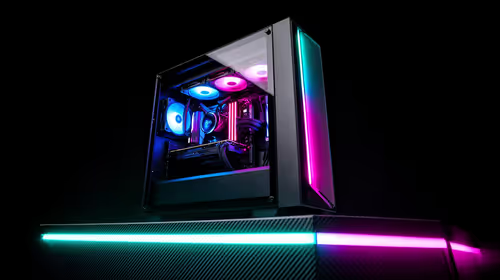
For most South African enthusiasts aiming for peak performance, an AIO is the way to go. These sealed liquid cooling loops are incredibly efficient at moving heat away from the CPU and exhausting it from the case.
- Pros: Superior cooling performance, especially for overclocking. Sleeker look inside your case.
- Cons: More complex, with a pump as a potential point of failure.
For the 14900KF, we strongly recommend a 360mm or larger AIO to give you enough thermal headroom. A robust AIO is key to an effective i9-14900KF cooling setup that unlocks its full potential.
Thermal Paste 101 🔧
Don't reuse old thermal paste! When installing your new cooler, always clean both the CPU and the cooler base with isopropyl alcohol. Apply a pea-sized dot of high-quality thermal paste (like Thermal Grizzly Kryonaut or Arctic MX-4) to the centre of the CPU. The mounting pressure will spread it evenly for optimal heat transfer.
Beyond the Cooler: Your PC Case is Part of the System
Your CPU cooler doesn't work in a vacuum. A great cooler in a stuffy, closed-off case is like having air-con in a room with no windows. Here’s what else you need to optimise:
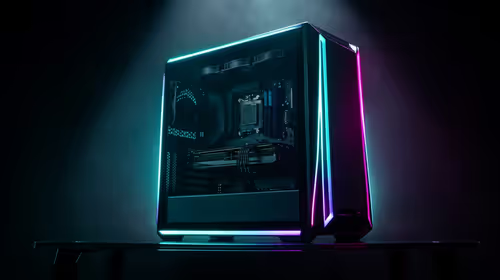
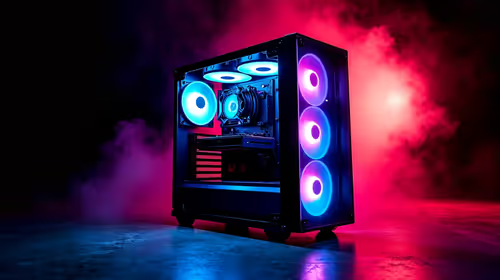
- Case Airflow: Choose a case with a mesh front panel. This allows your intake fans to breathe freely. A standard setup of three intake fans at the front and one exhaust at the back works wonders.
- Fan Curves: Head into your BIOS and set a custom fan curve. This tells your fans to spin up more aggressively as CPU temperatures rise, keeping things cool before they become a problem.
- Undervolting (For the Pros): Feeling adventurous? Undervolting reduces the voltage sent to the CPU without sacrificing clock speed. This can significantly lower temperatures and power consumption.
These cooling principles are universal. While an Intel Core i7 is less demanding, good airflow is still key. Even as we look towards the efficiency of future chips like the Intel Core Ultra 9 series for laptops, the fundamental physics of heat transfer remain the same.
Ultimately, the goal of any good i9-14900KF cooling strategy is to create a stable, high-performance system that won't buckle under the pressure of a Johannesburg summer day. ✨
Ready to Build a Cool & Powerful Rig?
Taming the i9-14900KF is the final step to unlocking its true potential. Whether you need a top-tier cooler or the processor itself, we've got you covered. Explore our massive range of CPU coolers and build a PC that beats the heat.