


Clean Gaming Keyboard: Guide for Dusty & Humid Conditions
Clean gaming keyboard quickly and safely in dusty or humid conditions with step-by-step tips, tool checklist, and maintenance routines to prevent corrosion and switch failure. 🧼💨
Read moreMastering PCIe slot placement is key to unlocking your PC's true power. This guide demystifies 5.0 vs 4.0 slots, helping you avoid crippling bottlenecks and ensure your GPU and SSDs run at peak speed. Get the most from your build! 🚀💻

You've just unboxed that beastly new graphics card? Lekker! Before you slot it in, pause for a second. Picking the wrong port can seriously throttle your performance, leaving precious frames on the table. Getting your PCIe slot placement right is one of the easiest... and most overlooked... ways to maximise your new PCIe 5.0 or 4.0 build's power. Let's make sure you’re getting every bit of performance you paid for. 🚀
Think of your motherboard's PCIe lanes as data highways. Your CPU has a limited number of these super-fast highways (usually 16 or 24) that connect directly to it. The top, metal-reinforced PCIe slot is almost always wired to use 16 of these direct lanes, giving your graphics card the fastest, most direct route to the processor.
Other slots often run through the motherboard's chipset, which is like a secondary B-road. It's slower and has to share its bandwidth with other components like USB ports, SATA drives, and Wi-Fi. Correct PCIe slot placement ensures your most demanding component—the GPU—gets the express lane.
The golden rule for any PC build is simple: your primary graphics card goes in the top-most, full-length x16 slot. No exceptions. Plugging a powerful RTX 40-series card into a lower x8 or x4 slot is like forcing a Formula 1 car to drive through peak Sandton traffic... it just can't reach its full speed.
This principle applies across the board, from budget-friendly builds to high-end rigs. Whether you're comparing cheap Intel & AMD based motherboards or top-tier models, the top slot is always engineered for maximum graphics performance. Using it correctly is a free performance boost you can't afford to miss.
Your motherboard manual is your best friend. It contains a detailed diagram showing exactly how the PCIe lanes are distributed. It will tell you if plugging an NVMe SSD into a specific M.2 slot will "steal" lanes from your GPU slot, potentially dropping it from x16 to x8 speed. A quick five-minute read can save you hours of troubleshooting later.
So, the GPU is sorted. But what about other cards, like a capture card or a super-fast NVMe SSD on an adapter? This is where things get interesting. Populating other PCIe or M.2 slots can sometimes split the lanes from the primary GPU slot.
For example, many modern Intel motherboards are packed with M.2 slots for lightning-fast storage. However, using the second or third M.2 slot might disable certain SATA ports or reduce the bandwidth of a lower PCIe slot. Similarly, knowing the optimal PCIe slot placement on the latest AMD motherboards ensures your Gen5 NVMe drive and GPU can both run at their peak potential without interfering with each other. Always check that manual to confirm your board's specific layout. ✨
With PCIe 5.0 motherboards now available, you might wonder if the rules have changed. For now, not really. A PCIe 5.0 slot offers double the bandwidth of a 4.0 slot, but current graphics cards can't even fully saturate a PCIe 4.0 x16 connection for gaming.
The real advantage of a PCIe 5.0 build is future-proofing. When next-generation GPUs and even faster NVMe drives arrive, you'll be ready. The core principle remains the same, though: your main GPU still belongs in that top x16 slot, regardless of the generation, to guarantee maximum performance.
Ready to Build it Right? Your motherboard is the foundation of your entire rig. The right PCIe slot placement is just the start. To unlock your PC's true potential, you need a board that matches your ambition and your components. Browse our massive range of motherboards and find the perfect backbone for your ultimate build.
Yes, absolutely. For maximum performance, always install your primary graphics card in the top-most x16 slot, as it connects directly to the CPU with the most bandwidth.
Yes, you can. PCIe is backward and forward compatible. A PCIe 4.0 GPU will work perfectly in a 5.0 slot, but it will only run at PCIe 4.0 speeds.
The primary difference is bandwidth. PCIe 5.0 offers double the data transfer rate of PCIe 4.0 per lane, enabling faster performance for next-gen GPUs and NVMe SSDs.
Check your motherboard manual. The fastest slot is typically the one closest to the CPU, physically reinforced, and labeled as x16. This provides the most direct PCIe lanes.
Yes. Placing a high-end GPU in a slower x8 or x4 slot can starve it of bandwidth, creating a significant performance bottleneck and limiting your gaming frame rates.
M.2 NVMe SSDs use PCIe lanes for their incredible speed but connect via M.2 slots on the motherboard, not the larger physical PCIe slots used for GPUs or expansion cards.
Clean gaming keyboard quickly and safely in dusty or humid conditions with step-by-step tips, tool checklist, and maintenance routines to prevent corrosion and switch failure. 🧼💨
Read more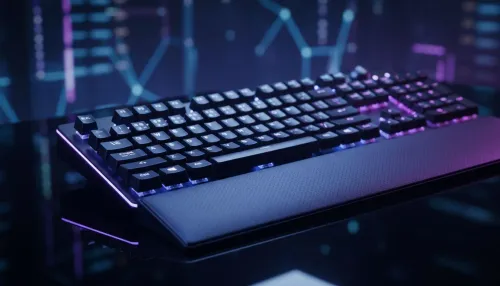
Best gaming keyboard features to prioritize when building a high-end setup: mechanical switches, low latency, hot-swap, RGB, macros, durability and ergonomics 🎮⌨️
Read more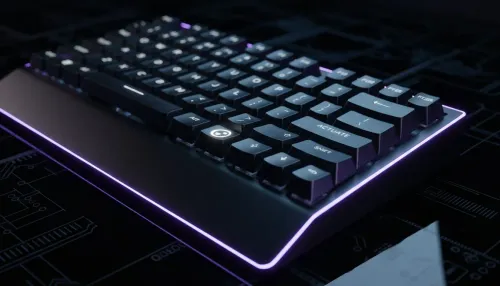
Custom actuation point keyboard setup guide: learn to set per-key actuation on your analog gaming keyboard for faster, precise inputs and better control 🎮⚙️
Read more
Cable management for home entertainment helps you eliminate cable clutter quickly and safely. Learn routing, concealment, and product picks to tidy your setup fast 📺🔌
Read more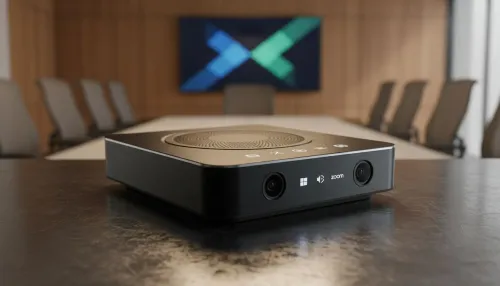
conference room setup Microsoft Teams Zoom: Upgrade AV, camera, mic, and network to ensure seamless meetings, clear audio, and crisp video 🎯🔧
Read more
• Audit setup • Link accounts • Configure ViewBoard • Test workflows Integrate Google Workspace with ViewSonic ViewBoard to enable secure SSO, calendar and Drive sync, and smooth collaborative whiteboarding 🔗📋
Read more
Discover webcams that automatically adjust light and color for crystal-clear video calls 🎥✨. Boost your streaming quality today!
Read more
Discover webcams that blend into your workflow 🎯 Capture moments while you work, stream, or create. Upgrade your setup with smart, multitasking tech!
Read more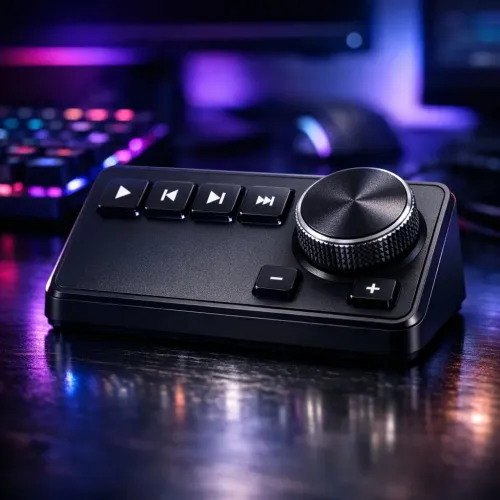
Dedicated media keys give streamers one-touch control to mute, switch scenes, clip highlights, and adjust audio — cutting task time and boosting consistency 🎛️⚡
Read more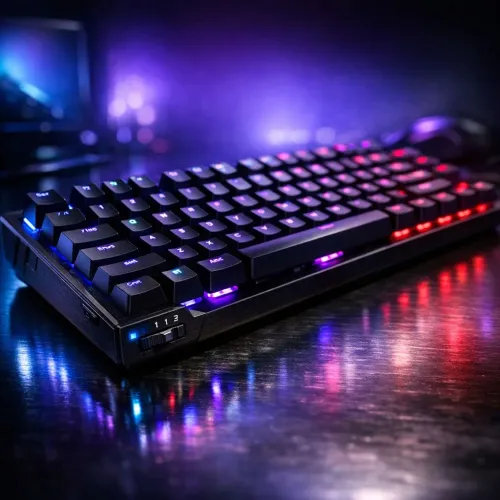
Checklist: 1) Map keyboard actuation depth to genres 2) Step-by-step adjust settings 3) Test and tune for performance 🎮⌨️ Learn keyboard actuation depth for FPS, MOBA, RTS, and RPG to improve response and accuracy.
Read more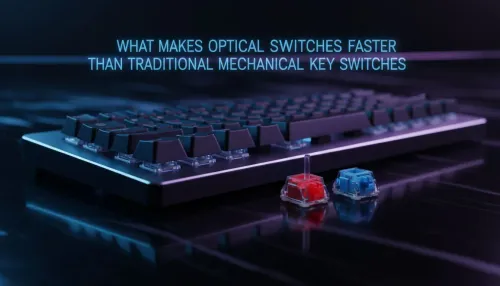
Optical switches deliver faster actuation and lower latency than traditional mechanical switches, using light-based triggers and minimal debounce to boost gaming and typing performance ⚡⌨️
Read more Clean gaming keyboard quickly and safely in dusty or humid conditions with step-by-step tips, tool checklist, and maintenance routines to prevent corrosion and switch failure. 🧼💨
Read more