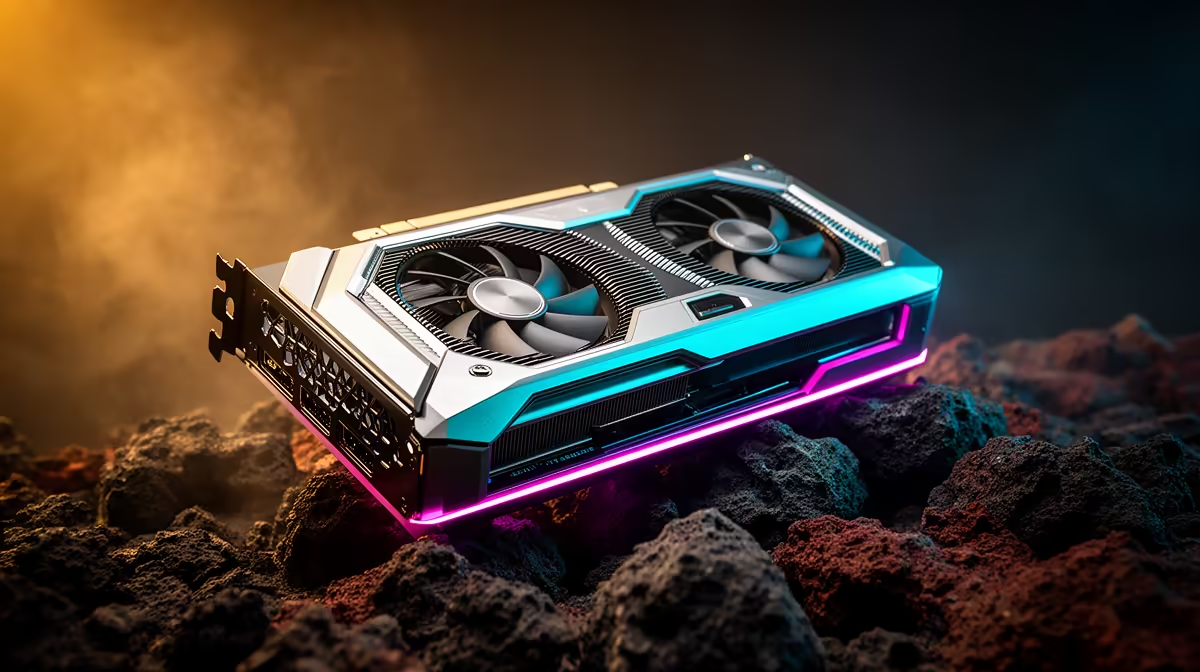
The RX 9060 XT undervolt lives inside AMD Software: Adrenalin, where a lower GPU voltage can reduce heat and fan noise without changing how your games look. RDNA 4 is efficient at stock, so expect a refinement rather than a rescue. The aim is a profile you can forget about while playing.
Quick Answer
Open Adrenalin's performance tuning panel, save the default state, enable manual GPU tuning and lower voltage in small steps. Test every step at the card's normal resolution before touching memory or maximum frequency. The R13,299 median in Evetech's graphics-card data, measured as of July 2026, gives the RX 9060 XT a clear local reference point.
📝 Capture the Adrenalin baseline
Reset tuning controls to default and run a game that loads the RX 9060 XT for at least twenty minutes. Record average clock, voltage, board power, GPU temperature, hotspot temperature and fan speed. If your room is warmer than usual, note it.
Use the same save point or built-in benchmark for each comparison. Keep FSR, frame generation and the frame cap unchanged so the workload remains consistent. A changing render load can make a weak profile look successful.
Evetech's broad graphics card range shows the surrounding choices, while the dedicated RX 9060 XT category is the place to compare board sizes and coolers.
🎚️ Lower voltage without chasing a number
Enable manual GPU controls and reduce voltage by one small increment. Apply the setting and repeat your test. If clocks, frame times and image quality hold, take another small step. Stop when you see a driver timeout, game crash, black screen or visual artifact, then return to the last stable value and add a little margin.
Leave maximum frequency at its stock position during this process. Combining an overclock with the undervolt makes the cause of a failure harder to identify. Memory tuning deserves a separate profile and test cycle.
The 8GB and 16GB cards use the same method. Memory capacity affects texture headroom; it does not supply a universal core-voltage setting. Board design and the individual chip still decide stability.
🎮 Test FSR and native rendering
An undervolt should remain stable across different workloads. Test one title at native resolution and another using FSR. Upscaling changes the work per rendered frame and can move the operating point. If you use frame generation, include it in a later daily-use test after the base profile passes.
Watch low-frame performance. A profile that posts the same average while producing uneven frame times needs more margin. Also test menus or uncapped light scenes, since very high clocks during a light load can reveal a different failure.
Check the GPU best-seller list for a wider view of cooler types. Reduced voltage works best when the case still provides clean intake air and a clear exhaust path.
💾 Save, label and revisit
Adrenalin can reset tuning after a driver recovery or update. Save a profile with the tested date and keep a note of the game set used to prove it. After software changes, confirm that the values loaded and run a brief stability pass.
Do not enable the profile at startup on the first day. Use it through several sessions, a cold boot and sleep recovery. A daily undervolt should behave like stock hardware, with lower heat as the quiet reward.
If instability appears weeks later during a new game, raise the voltage one step and retest. Different engines stress different parts of the GPU, and a little spare margin is worth more than the final few watts.
Export the working profile before reinstalling a driver. Keep that file beside a short note listing the games and temperatures from the final test, so the profile has context when you return to it months later.
Check the Windows event log after a suspicious freeze. A driver timeout supports the case for more voltage, while an unrelated application error may point elsewhere. This stops the GPU curve from taking the blame for every crash.
Frequently Asked Questions
Where do you undervolt an RX 9060 XT in Adrenalin?
Use the Performance and Tuning area, switch the GPU controls to manual and save the default profile before editing voltage.
How much power does undervolting save on an RX 9060 XT?
It varies with the card, clock target and workload. Measure the same warm game scene before and after tuning.
Does undervolting an RX 9060 XT affect FSR performance?
A stable profile should keep performance close to stock. Test FSR modes you use because they change the rendering load.
Is RX 9060 XT undervolting reversible if it causes crashes?
Yes. Reset the tuning controls to defaults or load the saved stock profile.
Can you undervolt and overclock an RX 9060 XT at the same time?
Yes, but find and test the undervolt first. Add frequency or memory changes in a separate step.
Ready to make an RX 9060 XT run calmer?
Compare Radeon cooler designs at Evetech, then use Adrenalin to tune the card from a measured stock state.