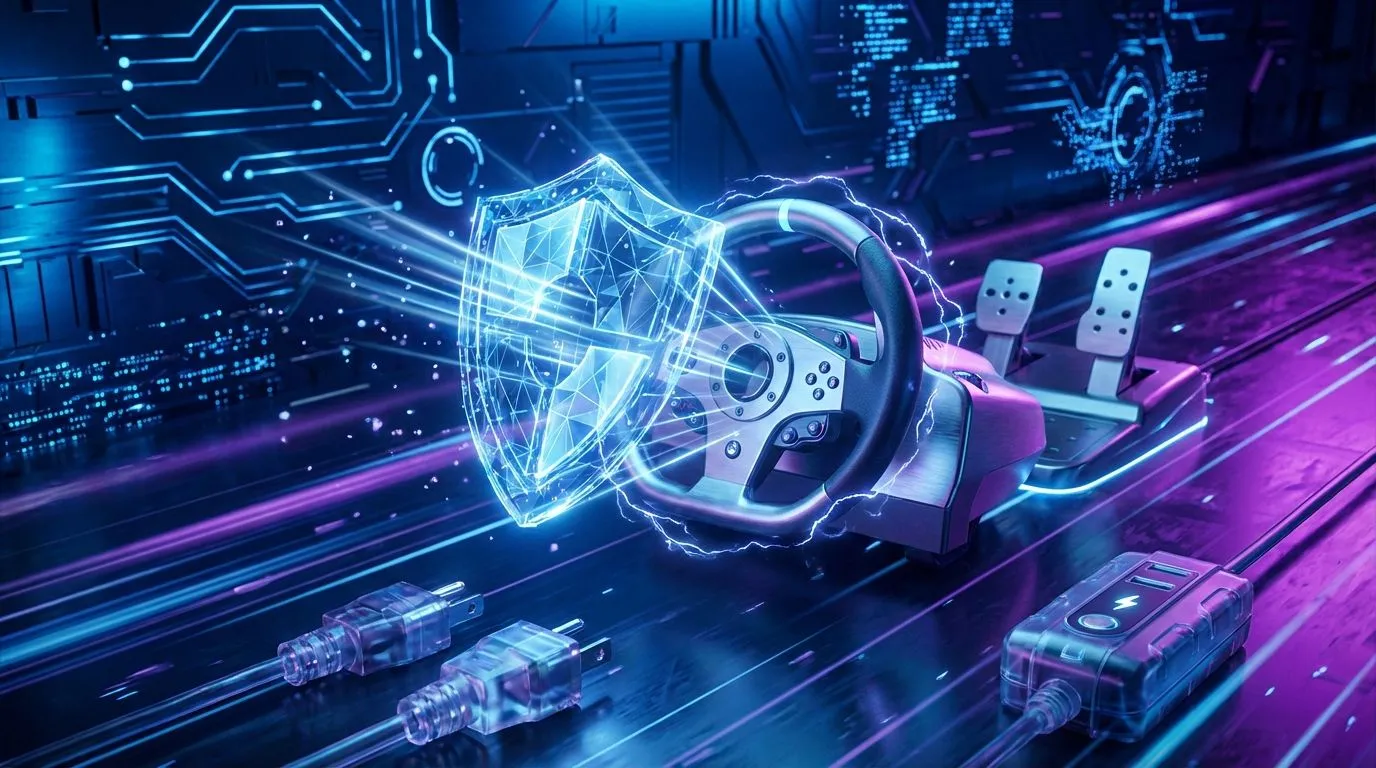
You’ve just spent hours dialling in your setup for that perfect lap at Kyalami. There’s a faint pop. Your R20,000 direct drive wheel is dead. In South Africa, this isn't a hypothetical nightmare; it's a real risk. Effective sim racing surge protection isn't a luxury—it's essential insurance for your high-tech passion.
Why Your Multi-Plug Isn't Enough ⚡
Let's be clear: that cheap, white multi-plug strip from the grocery store is not a surge protector. It's just a power splitter. It offers zero defence against the voltage spikes and electrical noise common during grid instability. A proper surge protector is designed to absorb and divert excess voltage, acting as a crucial shield for the sensitive microelectronics inside your PC, wheel, and pedals. Without this, you’re leaving the fate of your complete sim racing setup to chance.
A real surge protector has a specific energy absorption rating, measured in joules. The higher the joule rating, the more punishment it can take before failing, offering better protection for your gear.
Key Features of Real Sim Racing Surge Protection
When you’re safeguarding thousands of Rands worth of equipment, you need to look beyond the price tag. Here are the critical specs to understand when choosing the right power protection for your racing setup.
Joules Rating: Your Rig's First Defence
As mentioned, the joule rating indicates how much energy the surge protector can absorb. For a typical sim rig—including a gaming PC, monitor, and wheel base—look for a rating of at least 1,000 joules. For more complex setups with multiple screens or high-end components, aiming for 2,000+ joules is a wise investment. Think of it as a health bar for your protector; each surge it absorbs depletes it slightly.
Clamping Voltage: The Lower, The Better
This is the voltage level at which the surge protector kicks in and starts redirecting the excess power. A lower clamping voltage means it reacts faster to a surge, offering quicker protection. For sensitive electronics like your high-end Thrustmaster wheel, a lower clamping voltage (ideally under 400V) is crucial to prevent damage.
Check for a Warranty 🛡️
Many reputable surge protector brands offer a 'Connected Equipment Warranty'. This is a policy where the manufacturer will pay to replace or repair any equipment damaged by a surge while connected to their product. It's a massive vote of confidence in their own hardware and adds an extra layer of peace of mind for your investment.
The Ultimate Defence: Surge Protector vs. UPS
While a good surge protector defends against spikes, it can't do anything about brownouts (dips in power) or blackouts. That’s where an Uninterruptible Power Supply (UPS) comes in. A UPS is essentially a big battery that provides clean, consistent power and gives you enough time to safely shut down your PC during an outage.
For the serious sim racer, a UPS is the ultimate form of sim racing surge protection. It not only shields against surges but also prevents data corruption or hardware damage from a sudden shutdown mid-race. Once you've invested in a premium Playseat racing cockpit and the electronics to match, a UPS is the final piece of the puzzle to ensure your rig lasts for years to come. 🏎️
Don't let unstable power put the brakes on your virtual racing career. A small investment in proper surge protection today can save you from a massive, heartbreaking expense tomorrow.
Ready to Build a Bulletproof Rig?
Protecting your gear is just as important as choosing it. From wheels to cockpits, we have everything you need to build and safeguard your ultimate driving simulator. Explore our complete Sim Racing range and race with total peace of mind.