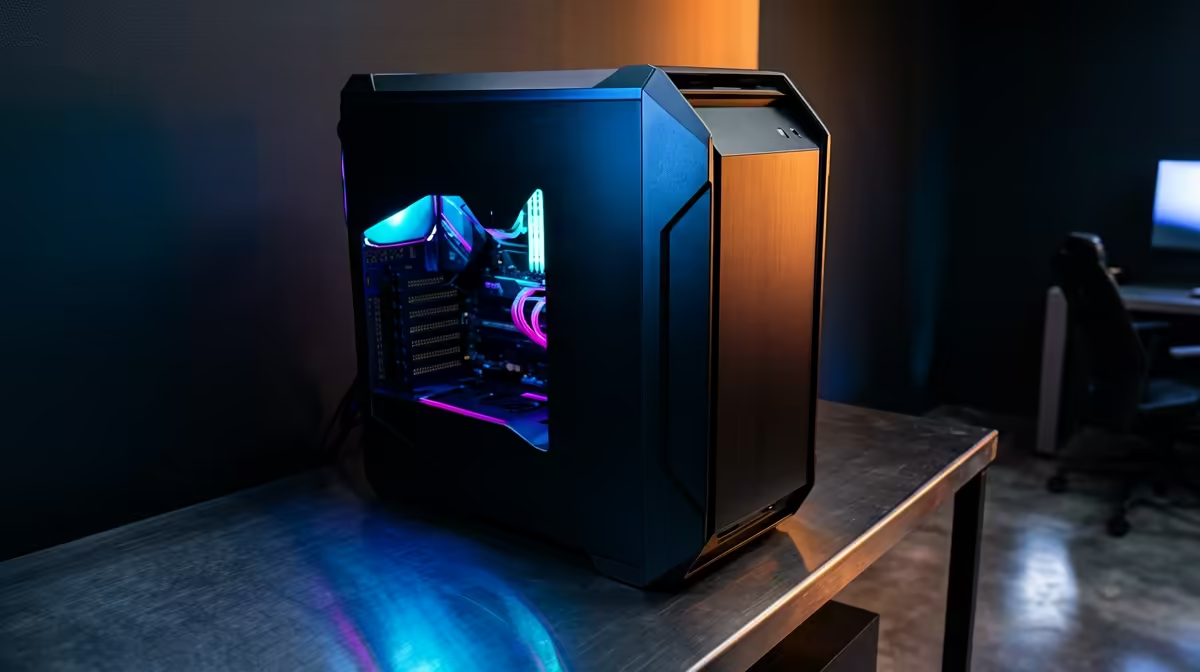
You’ve just finished your dream PC build. The RGB is glowing, the fans are whispering, and you’re ready to slice up some 4K footage. But then it happens… Premiere Pro starts stuttering, DaVinci Resolve crashes, and your timeline feels like it’s stuck in mud. Before you throw your mouse across the room, take a breath. This guide to video editing PC troubleshooting is here to help you diagnose and fix the common issues South African creators face.
Diagnosing Common Software Bottlenecks
Before you start swapping out hardware, let's look at the software. Often, the simplest fix is hiding in a settings menu. In our experience, nine times out of ten, frustrating performance issues aren't due to a faulty component but a simple software setting that needs a tweak.
First, check your GPU drivers. Both NVIDIA and AMD release "Studio" drivers optimised for creative applications. If you're using the "Game Ready" driver, switching can provide a massive stability boost. Next, dive into your editing software. Are you using proxies for your 4K or 8K footage? Editing raw, high-resolution files directly puts immense strain on your system, causing lag on even the most powerful machines.
Finally, clear your media cache! Over time, your software builds up a mountain of temporary files that can slow things down. A quick cache clear can feel like a brand-new start.
Quick Cache Clear ⚡
In Adobe Premiere Pro, go to Edit > Preferences > Media Cache. Click "Delete..." next to "Remove Media Cache Files" to safely clear out old temporary files. In DaVinci Resolve, you can manage this under Playback > Delete Render Cache. Making this a monthly habit can prevent performance creep.
Uncovering Hardware Hiccups in Your Build
If software tweaks don't solve the problem, it’s time to look at the hardware. A common culprit in video editing PC troubleshooting is RAM. Did you enable the XMP (Extreme Memory Profile) or DOCP (Direct Overclock Profile) in your BIOS? Without it, your expensive high-speed RAM might be running at its slowest default speed.
Storage is another major factor. Editing directly from a traditional hard drive (HDD) is a recipe for frustration. Your system needs to read and write massive files constantly, and an NVMe SSD is essential for a smooth workflow. Even many of the best PCs under R20,000 now come with a fast SSD as the primary drive for this very reason. Also, monitor your temperatures. If your CPU or GPU gets too hot, it will "throttle" or slow itself down to prevent damage, causing your performance to plummet during renders.
Optimising Your Rig for Smooth Edits 🔧
Getting the most out of your components often requires a bit of fine-tuning. For Windows users, make sure your Power Plan is set to "High Performance" or "Ultimate Performance". This ensures your CPU isn't down-clocking itself to save power when you need it most.
The choice between processor brands can also impact your workflow. A CPU with many cores, like those found in the latest AMD Ryzen PC deals, excels at rendering and exporting your final video. On the other hand, a CPU with strong single-core speed and integrated graphics with Quick Sync technology, a feature in many of the current Intel PC deals, can offer incredibly smooth timeline scrubbing and playback, especially with H.264 and H.265 footage.
Ultimately, effective video editing PC troubleshooting involves understanding where the bottleneck is. Is it during the edit, or during the export? Answering that question will tell you whether to prioritise single-core speed or multi-core power for your next upgrade.
Tired of Troubleshooting? Build a Beast. 🚀 A stable, powerful editing rig is the foundation of any creator's workflow. If you'd rather spend your time creating than diagnosing, let our experts build a machine optimised for you from day one. Explore our Custom PC Builder and design the ultimate video editing PC today.