So, you're speccing out a new PC build, and the "PCIe 5.0" label is calling your name. It promises next-level speed, but your wallet is asking a very South African question: is it worth the hefty price tag? With tempting international deals online, you’re stuck wondering about the real PCIe 5.0 vs 4.0 price in South Africa, and whether it’s smarter to import or buy local. Let's break it down, boet.
The Real-World Speed: PCIe 5.0 vs 4.0
Before we even talk price, what are you actually paying for? In simple terms, Peripheral Component Interconnect Express (PCIe) is the super-fast lane on your motherboard that connects your graphics card and SSD to your CPU. Each generation doubles the speed of the last.
- PCIe 4.0: Offers a bandwidth of up to 64 GB/s.
- PCIe 5.0: Doubles that to a massive 128 GB/s.
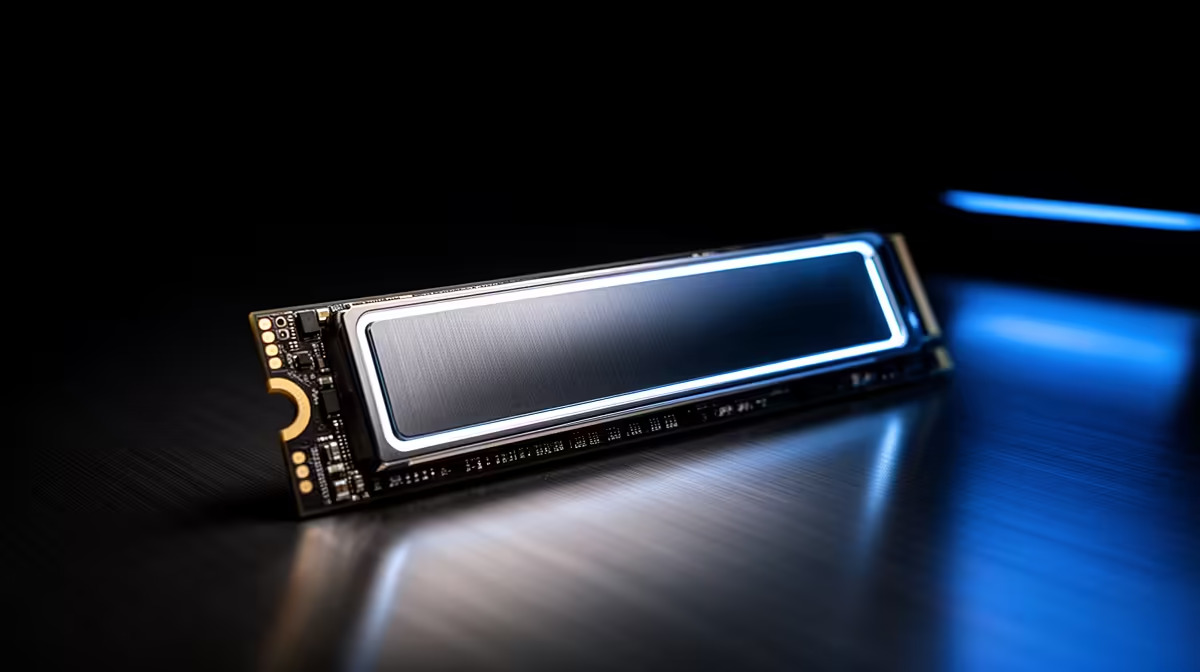
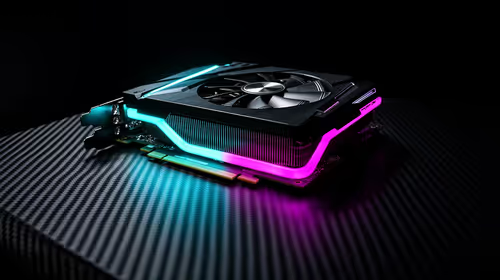
For gamers, here’s the kicker: even the mighty NVIDIA RTX 4090 doesn't fully saturate a PCIe 4.0 slot. The performance difference in gaming between a 4.0 and 5.0 slot is currently almost zero. The main benefit today is for ultra-fast Gen5 NVMe SSDs, which can be a huge plus for video editors or data scientists, but overkill for loading your next game of Apex. 🚀
Unpacking the PCIe 5.0 vs 4.0 Price in South Africa
This is where the decision gets serious. Locally, motherboards and SSDs with PCIe 5.0 support carry a significant premium. You might be looking at thousands of Rands more for a feature you won't fully use for years.
Then comes the import temptation. You see a motherboard online for what looks like a steal... but is it?
Let's do the math:
- The "Cheap" Price: The listed dollar or euro price.
- Shipping: Often R500-R1000+, depending on the courier.
- Import Duties & VAT: This is the big one. Expect to add roughly 15-20% on top of the item and shipping cost. Suddenly, your "deal" is gone.
- No Local Warranty: If that board is dead on arrival, you’re facing a costly and lengthy international RMA process. Buying local means peace of mind and quick support.
For most builders, sticking with proven PCIe 4.0 technology from a selection of budget-friendly motherboards is the smartest financial move you can make.
Check Your Workload 🔧
Before you spend extra on a PCIe 5.0 motherboard, analyse your daily tasks. Are you transferring massive 100GB+ files regularly? If not, the money you save by choosing a solid PCIe 4.0 board could be better invested in a faster CPU, more RAM, or a better graphics card—upgrades you'll actually feel every day.
So, Who Should Consider PCIe 5.0?
While PCIe 4.0 is the champion for value, PCIe 5.0 isn't useless. It’s simply a forward-looking investment for a specific type of user.
The Future-Proofer
If you upgrade your components every few years and want a motherboard that will support the fastest possible GPUs and SSDs in 2026 and beyond, then a PCIe 5.0 board makes sense. Both the latest Intel motherboards and many high-end AM5 boards offer this, giving you a strong foundation for future tech.
The High-End Professional
If your livelihood depends on workflow speed—like 8K video editing or complex simulations—the time saved by a Gen5 SSD could justify the cost. For these power users, exploring compatible AMD motherboards with multiple PCIe 5.0 slots for both storage and graphics is a valid strategy.
For everyone else? PCIe 4.0 hits the sweet spot of incredible performance and sensible South African pricing. ✨ It’s powerful, mature, and won't leave your bank account crying.
Ready to Build Smarter, Not Harder?
The PCIe 5.0 vs 4.0 debate in South Africa is all about value. For unmatched performance that respects your budget, PCIe 4.0 is the clear winner for gamers and everyday users. Explore our huge range of PC components and find the perfect parts for a powerful, practical build today.