


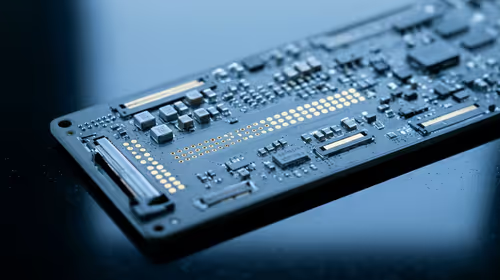
Hot-Swappable PCB Architecture in Modern Keyboards: Guide
Learn hot-swappable PCB architecture in modern keyboards—what it is, how sockets and traces work, and how to pick the right board. Speed up swaps, reduce risk, and upgrade faster 🔧⚡
Read moreWondering if a 13-inch laptop beats larger screens for travel, study, and hybrid work? Compare portability, comfort, battery, and ergonomics—then pick the right size for your day-to-day 😊✈️

Packing a laptop for a Joburg airport run or a quick Gauteng coffee shop session feels simple… until weight, battery, and screen comfort start arguing. That is where the 13-inch laptop vs larger screen debate gets real. For South African gamers, students, and hybrid workers, the best travel choice is not always the biggest display. It is the one you can carry, use comfortably, and charge without drama.
A 13-inch laptop for travel usually slips into smaller bags, feels lighter in hand, and is easier to open on a tray table or crowded bus. Larger screens can be brilliant, sure, but they ask for more space. If you travel often, that matters more than many buyers expect.
The main advantage of a compact machine is convenience. Less bulk means less shoulder strain and less friction in daily use. A smaller laptop also tends to be easier to place in tight spaces, from airport lounges to dorm desks.
That said, bigger screens do help with multitasking. If you edit photos, work in spreadsheets, or keep Discord open while gaming, extra screen real estate is valuable. The trade-off is simple. You gain comfort at the desk, but you lose some travel ease. For many buyers, that is the whole decision.
If you are browsing premium portable options, you can compare current MacBooks under R30,000 and see where compact models sit in the mix.
For travel, screen size should match your routine. A 13-inch machine suits frequent flyers, commuters, and students who move between classes and home. A 14-inch or 15-inch laptop can be the sweet spot if you still want portability but need more room for work or creative tasks.
If your budget stretches a little further, MacBooks under R28,449 are worth checking for balance between price and portability.
Keep your charger, cable, and a compact mouse in a separate pouch. Small habits make a bigger laptop feel less bulky, and they save you from rummaging through your backpack at OR Tambo.
Screen size is only one part of the story. Performance, memory, and battery life shape the experience every day. A well-specced compact laptop can feel faster and more practical than a larger, heavier model with weaker internals.
For example, if you want more headroom for creative apps or heavier multitasking, 16GB MacBook options are a sensible place to start. If you prefer a bigger panel for work and media, 15.3-inch 16GB models bring extra room without going fully massive.
A larger laptop earns its keep if you do long editing sessions, run multiple windows, or simply hate squinting. It is also better when the laptop mostly stays at home. In that case, portability becomes less important than comfort.
If you want to shop by chip generation, Apple M5 MacBooks are a good way to explore newer performance options. For a broader view, browse the full MacBook range and compare sizes side by side.
The best travel laptop is the one that fits your routine. If you move often, a 13-inch model is usually the safer bet. If your laptop lives on a desk more than in a backpack, bigger wins. That is the honest answer. Not glamorous, but useful.
Ready to Find Your Perfect Match? The Mac vs Windows debate is complex, but for maximum power, choice, and value in South Africa, Windows is hard to beat. Explore our massive range of laptop specials and find the perfect machine to conquer your world.
Yes. A 13-inch laptop is easier to carry, fits bags better, and usually pairs with solid battery life. For travel, weight and portability matter most.
They can. Larger screen real estate helps with spreadsheets, multitasking, and side-by-side work. If you work plugged in most of the day, size can pay off.
For studying, a 13-inch laptop often works well for lectures, research, and documents. If you do lots of reading or long assignments, screen comfort may favor larger.
Hybrid work favors flexibility: 13-inch for mobility and quick setups, larger screens if you need more detail. Many people choose 13-inch plus an external monitor.
Pick 13-inch if you travel frequently or prioritize lightweight commuting. Pick 15-inch if you do desk-heavy work and want fewer compromises on readability.
A 13-inch laptop is typically lighter and smaller, making it easier for trains, flights, and daily bag carry. Larger models trade portability for comfort.
Not always. Regret usually happens when you rely on fine text, multitasking, or detailed dashboards. If that sounds like you, consider 15-inch+ or use an external display.
Learn hot-swappable PCB architecture in modern keyboards—what it is, how sockets and traces work, and how to pick the right board. Speed up swaps, reduce risk, and upgrade faster 🔧⚡
Read more
Mechanical switch lifespan explained—what the 50 million keystroke rating really means, plus tips to extend switch life and reduce double-press issues 🔧⌨️
Read more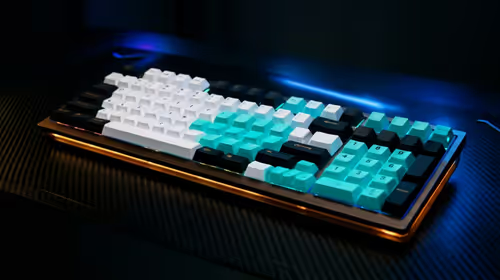
60-percent vs full-size mechanical keyboard layouts—learn what each layout includes, who it suits, and how to choose the right fit 🧩⌨️ for typing, gaming, and productivity.
Read more
Double injection keycaps last far longer than standard printed keycaps in most setups. Learn typical lifespan ranges, what shortens them, and how to maximize durability for smoother daily typing and gaming 😊⌨️
Read more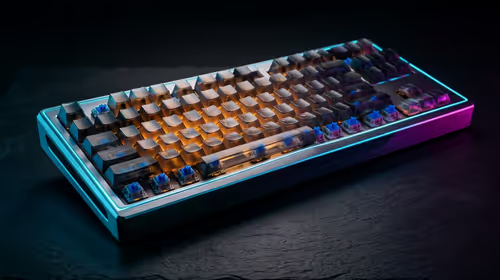
Full-key anti-ghosting: does it stop missed inputs during fast-paced gaming? We break down latency, polling, and key matrix limits so you can buy smarter 🎮⚡
Read more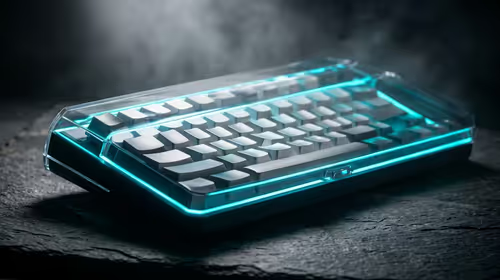
Protect mechanical keyboard switches from South African dust and summer humidity with practical cleaning and storage habits. Keep your switches smooth, reduce failures, and extend lifespan. 🌬️💧
Read more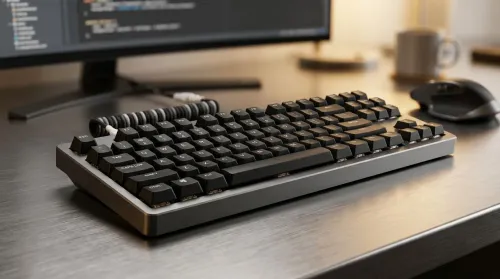
Wondering if a TKL wireless mechanical keyboard is worth it for everyday productivity? We break down latency, battery life, comfort, and workflow gains for real work. ⚡⌨️
Maximise battery life on a fanless 15-inch laptop using efficiency core architecture. Cut idle drain, tune power profiles, and improve thermals for longer runtime. 🔋⚙️
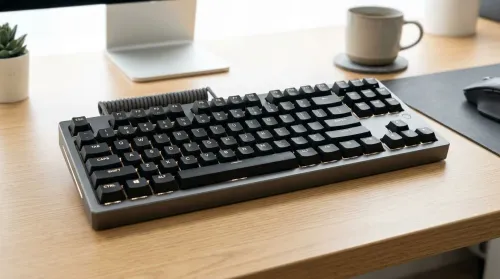
Learn how to reduce desk clutter with a TKL wireless keyboard using fewer cables, smart placement, and tidy essentials. Get a faster, calmer workspace with better ergonomics. ✅🧼
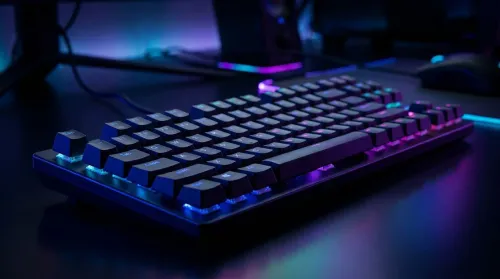
RGB keyboard lighting too distracting? Learn how to manage backlight modes, set brightness, and reduce distraction for focus and productivity 😌🖱️
Are themed gaming keyboards worth the extra cost? Compare build quality, switch options, features, and resale value to find the best fit for your setup 🎮⌨️
Full-Size vs Tenkeyless mechanical keyboards for gaming: find out if a smaller layout truly improves aim, speed, and comfort. We break down layout, desk space, latency-feel, and keybinds 🎮⌨️

Dedicated media rollers vs function key shortcuts: learn which setup gives you better workflow control, faster media access, and fewer mistakes. 🖱️🎧

Best Mechanical Switch Type for Gaming: Clicky vs Linear vs Tactile. Find your feel, speed, and noise balance with practical guidance for FPS, MOBA, and productivity 😄🎮
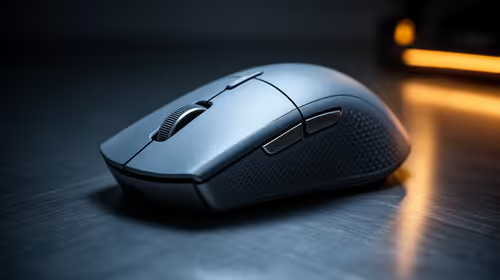
Direct mouse answer: Mouse not keeping up with your work? Everything that matters about dual-mode 2.4GHz + BT 5.0: DPI behaviour, channel switching, battery curves and per-app button mapping. Covers when 2.4GHz USB wins (low-latency desk) and when BT 5.0 wins (laptop, d
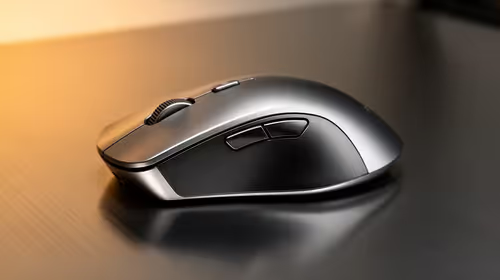
Plain wireless mouse guide: Mouse not keeping up with your work? Everything that matters about wireless productivity mouse: DPI behaviour, channel switching, battery curves and per-app button mapping. Includes DPI tuning tips, channel switch shortcuts, and ZAR-aware fea
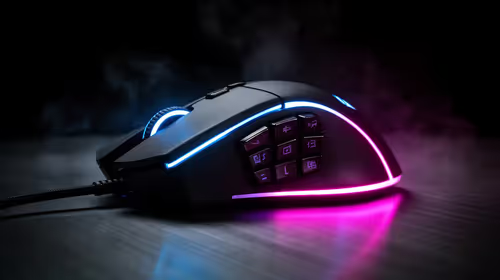
Real productivity numbers: Set up your wireless mouse in this order: everything that matters about wireless productivity mouse: DPI behaviour, channel switching, battery curves and per-app button mapping. Includes DPI tuning tips, channel switch shortcuts, and ZAR-aware
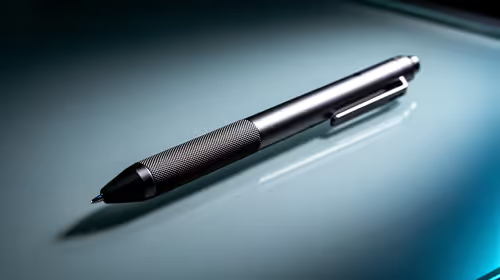
Pen not feeling like paper? Stylus lag and skipping usually trace to old drivers, dirty nibs, or display refresh mismatches, not the pen itself. Covers pressure curve tuning, tilt thresholds, nib swap timing, and SA pricing brackets.