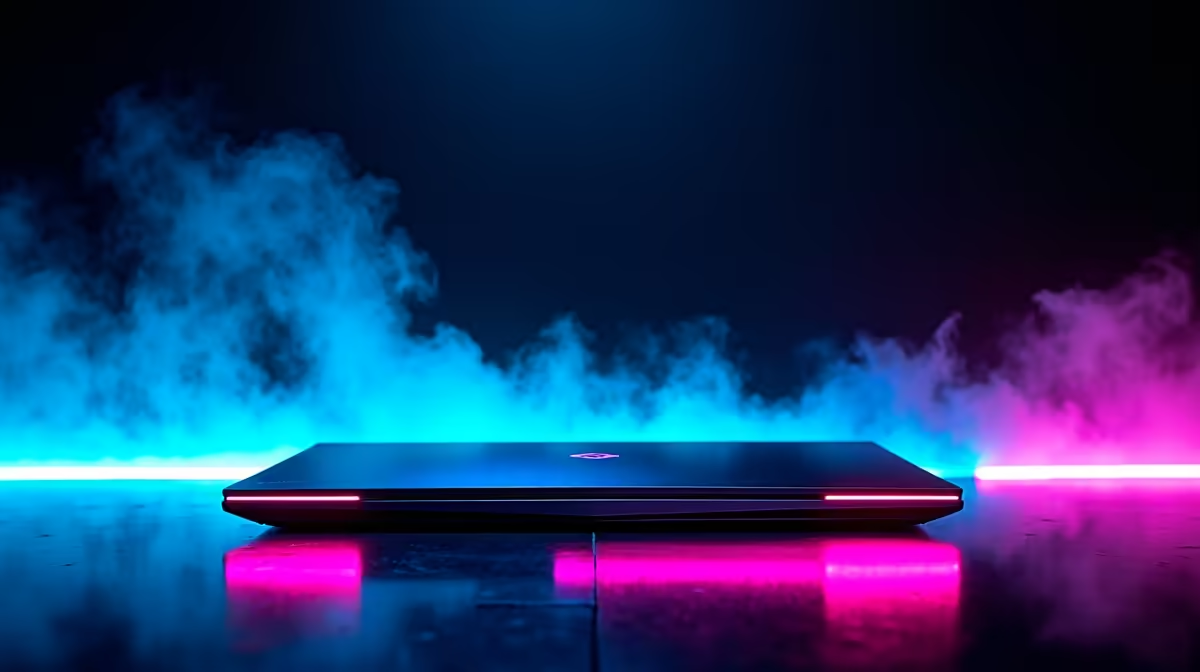
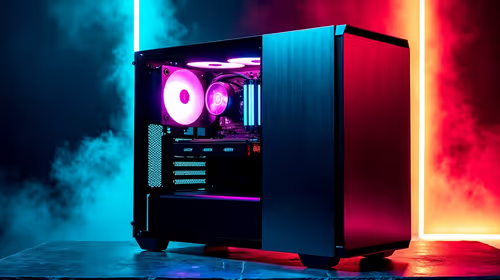
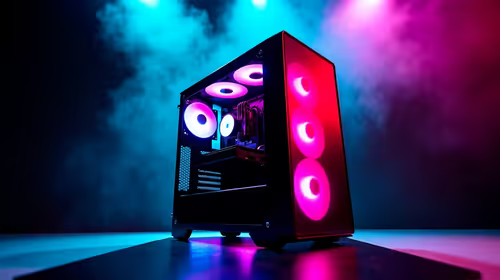
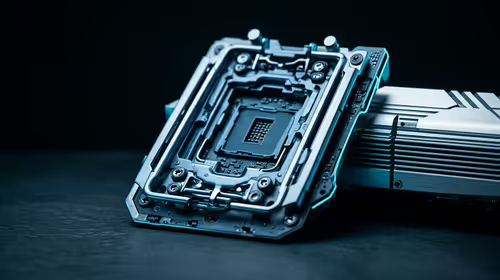
So, you’re ready to upgrade your gaming rig. The age-old question has always been laptop or desktop, but in 2025, it’s more specific. A new challenger has entered the ring: the colossal 18-inch gaming laptop. It promises desktop-level power without the tower. But can this portable beast truly replace a dedicated gaming PC in South Africa? Let’s plug in and find out which machine will dominate your gaming sessions this year.
The New King of Portability?
For years, choosing a gaming laptop meant compromising on screen size and, often, raw power. Not anymore. The modern 18-inch gaming laptop is a different breed of machine entirely. Packed with high-end components, these behemoths are designed to deliver a no-compromise experience that directly challenges the traditional desktop setup.
The performance gap is shrinking fast, thanks to incredibly efficient mobile processors and GPUs. Top-tier models featuring powerful components from both Intel and AMD are closing in on their desktop counterparts. You can find a huge variety of cutting-edge AMD Ryzen laptop deals that deliver breathtaking speeds for both gaming and content creation, proving that portable power is no longer a myth.
18-Inch Gaming Laptop vs Desktop: The Head-to-Head
When you compare an 18-inch gaming laptop vs a desktop, the decision isn't just about power… it's about your entire gaming lifestyle. Let's break down the key differences.
Performance and Cooling ❄️
A desktop PC will almost always have a slight edge in raw performance and thermal management. A larger case means more airflow, bigger fans, and the space for liquid cooling solutions. This allows components to run at their absolute peak for longer.
However, 18-inch laptops have seriously upped their cooling game with advanced vapour chambers and multi-fan setups. For the vast majority of gaming scenarios, a high-end portable rig loaded with the latest silicon from powerful Intel laptops offers more than enough horsepower to run demanding AAA titles on high settings without breaking a sweat.
Upgradability and Future-Proofing 🔧
This is the desktop's undisputed home turf. With a PC tower, you can swap out nearly every component—from the CPU and GPU to the motherboard and power supply. This modularity means you can upgrade your system piece by piece over many years.
A gaming laptop is a self-contained unit. While you can typically upgrade the RAM and storage, the CPU and GPU are soldered to the motherboard. This means you’re essentially locked into the core performance for the life of the device, making it crucial to check out the best gaming laptop deals to get the most powerful configuration you can afford from the get-go.
Optimise Your Laptop's Power Plan ⚡
In Windows, go to 'Power Options' and create a custom power plan. For gaming, set the 'Minimum processor state' and 'Maximum processor state' to 100% when plugged in. This ensures your CPU doesn't throttle itself to save power, giving you maximum performance when you need it most. Just remember to switch back to 'Balanced' when you're on battery!
Reliable Everyday Performance
Here’s where the 18-inch laptop shines, even if it's not exactly 'lap-friendly'. It's a portable battle station you can take to a friend's house, a LAN, or just move from your desk to the couch. For South Africans, there's another massive advantage: a built-in battery. It’s an uninterruptible power supply (UPS) and a high-performance PC rolled into one. A desktop, on the other hand, is firmly planted wherever you set it up.
So, Which Rig is Right for You?
The final verdict in the 18-inch gaming laptop vs desktop debate comes down to your personal needs and budget.
Choose an 18-Inch Gaming Laptop If:
- You value portability and need a machine for LAN parties, travel, or university.
- You want a powerful, all-in-one solution without the hassle of picking separate components and peripherals.
- You have limited space for a full tower setup.
The incredible performance of modern GeForce RTX gaming laptops means you're not sacrificing much in the way of graphical fidelity.
Stick with a Gaming Desktop If:
- You are a tinkerer who loves upgrading and customising your hardware.
- You demand the absolute maximum performance for competitive esports or 4K streaming.
- Long-term value and upgradability are your top priorities.
- You're on a tighter budget initially, as you can find excellent entry-level performance in more affordable builds, while even some older gaming laptops under R20k can offer a great starting point in the portable space.
The line has blurred, but the choice is clearer than ever. It's no longer about which is "better," but which is better for you.
Ready to Find Your Perfect Match?
Whether you're Team Portable Powerhouse or Team Desktop Dominator, the perfect gaming machine is waiting for you. The gap has never been smaller. Explore our massive range of gaming laptop specials and find the perfect rig to conquer your world.