Quick Answer
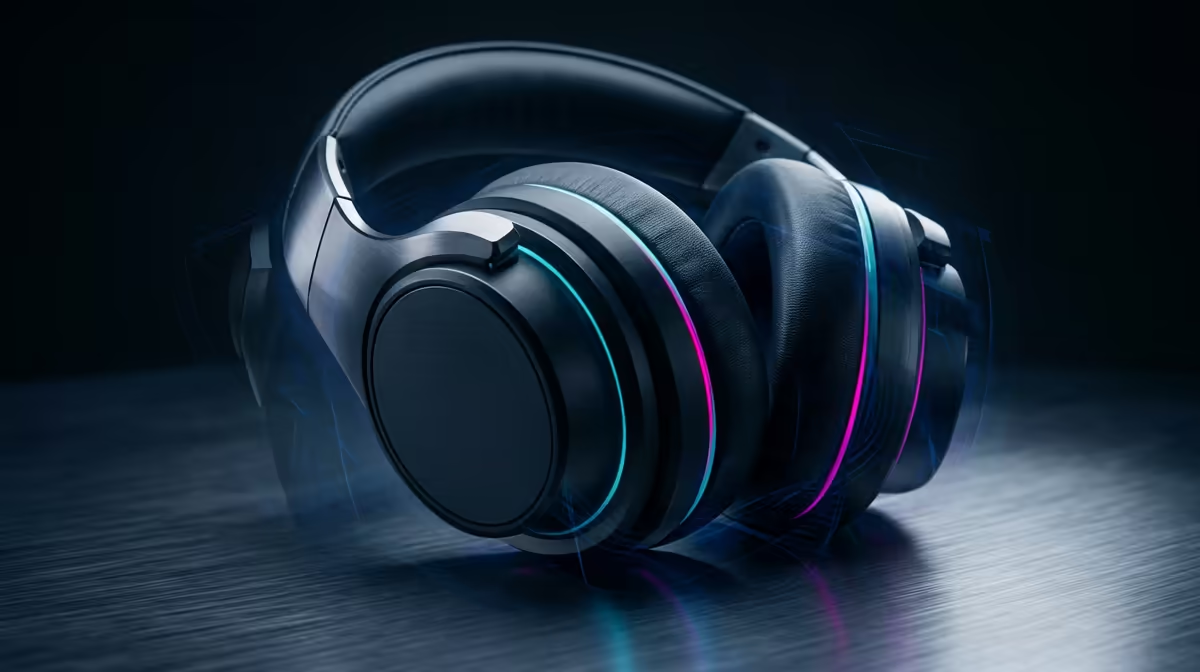
Use 2.4 GHz for gaming audio: it delivers 1 to 5 ms latency, imperceptible during play. Use Bluetooth for casual listening, calls, and mobile use, where its 15 to 40 ms latency is unnoticeable. Never use Bluetooth for competitive multiplayer gaming where audio cues (footsteps, reloads, directional sounds) are tactically critical.
Why 2.4 GHz Wins for Competitive Gaming 🎮
The 2.4 GHz radio in a gaming headset uses a proprietary protocol over a dedicated USB nano-receiver. This private channel delivers consistent audio with 1 to 5 ms end-to-end latency. At 144 Hz gaming, one frame lasts 6.9 ms: an audio cue in under 5 ms arrives within the same frame the visual event occurs. This synchronisation matters when tracking footsteps in Battlefield 2042 or callouts in Valorant, where a 35 ms Bluetooth delay means you hear the sound just after the visual moment has passed. For FPS titles played at SA online leagues or LAN competitions, 2.4 GHz is non-negotiable.
When Bluetooth Is the Right Choice 📱
Bluetooth excels where latency is imperceptible: listening to Spotify during a study session, watching Netflix on a laptop, or taking a WhatsApp call. In these uses, 15 to 40 ms delay is undetectable when there is no synchronised visual reference. Bluetooth also pairs with devices lacking USB ports (tablets, smartphones, smart TVs), making it the correct mode for multi-device households. Battery life extends noticeably on Bluetooth compared to 2.4 GHz because the radio polling rate is lower. For SA students switching between evening gaming and daytime campus use, Bluetooth mode means the headset doubles as a listening device without carrying the dongle.
Codec Quality: Where Bluetooth Closes the Gap on Fidelity 🔊
For pure audio fidelity (not latency), high-quality Bluetooth codecs like aptX HD, LDAC, and the newer LC3 codec deliver near-lossless stereo audio. If your phone supports LDAC (most Sony Android devices and recent Samsung Galaxy flagships) and your headset also supports it, music playback via Bluetooth can exceed most compressed 2.4 GHz protocols in quality. The catch is that these high-quality codecs still carry 15 to 40 ms delay, so fidelity gains do not fix the latency problem for gaming.
Check Your Phone's Bluetooth Codec in Developer Options ⚡
On Android, enable Developer Options (tap Build Number 7 times in About Phone), then find Bluetooth Audio Codec in Developer Options. Select aptX HD or LDAC if your headset supports it for noticeably richer music and call audio. SA users with Samsung Galaxy A-series or S-series phones from 2022 onward typically have LDAC support available with compatible headsets.
FAQ
Does Bluetooth 5.0 have lower latency than Bluetooth 4.2?
Bluetooth 5.0 improves range and bandwidth but does not fundamentally reduce audio latency for standard A2DP audio profiles. Latency reduction requires the LE Audio profile with LC3 codec, which is Bluetooth 5.2 and above.
Can I switch from Bluetooth to 2.4 GHz mid-session?
Yes. Most dual-wireless gaming headsets include a mode-select button that transitions between channels in under 3 seconds without losing pairing information. The audio briefly mutes during the switch.
Is 2.4 GHz headset audio affected by other 2.4 GHz devices nearby?
Proprietary gaming receivers use frequency-hopping spread spectrum, which automatically avoids conflicting channels. Standard Bluetooth also uses hopping but is more susceptible to congestion in environments with many simultaneous Bluetooth devices.
Need a headset that excels in both gaming precision and everyday versatility?
Evetech's range of dual-wireless gaming headsets covers both 2.4 GHz and Bluetooth, with options suited to every gaming and lifestyle need.