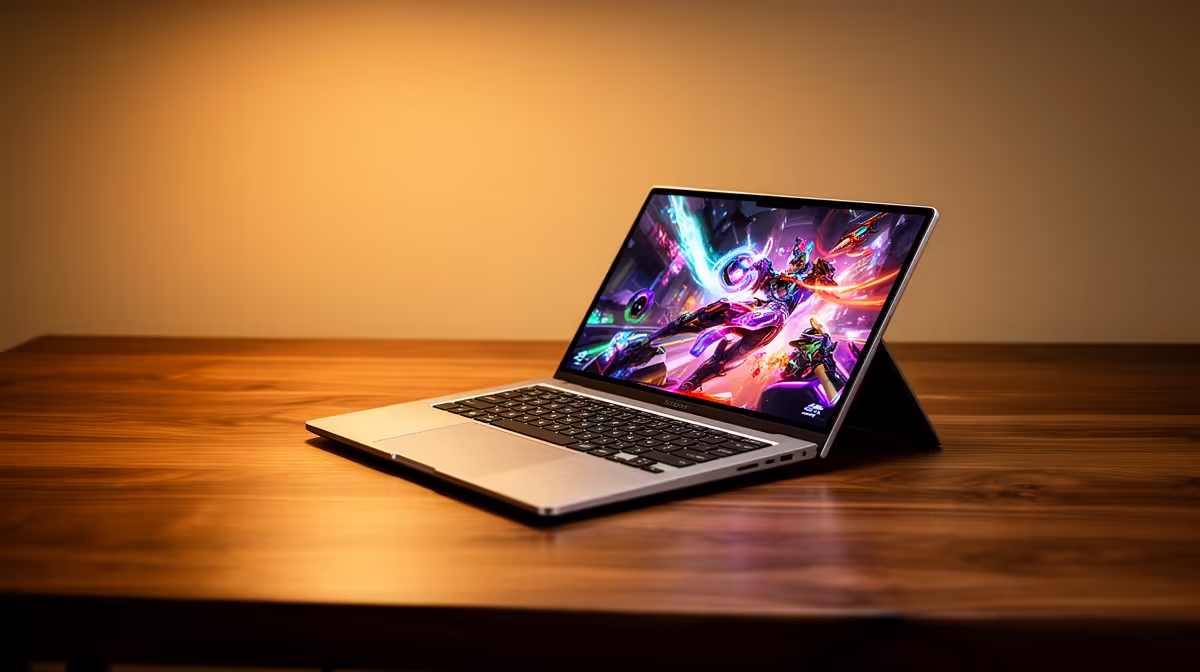
ASUS Vivobook S14 OLED at R10,719 suits a podcast creator who wants a sharp OLED screen for editing timelines, show notes, and guest research on one portable laptop. A 2-in-1 is only worth paying extra for if touch notes, tablet mode, or stylus planning are central to your recording routine; for most local podcast desks, a strong standard laptop gives better value for recording, editing, uploads, and admin.
Best laptop value for a podcast desk
The ASUS Vivobook S14 OLED at R10,719 is the easiest creative pick here because the OLED display helps when trimming audio clips, reading waveforms, checking thumbnails, and keeping episode notes open beside your recording app. It gives the desk a premium screen without forcing the whole budget into a convertible hinge.
If CPU headroom matters more, the Lenovo IdeaPad Slim 3 i7 at R13,400 is a sensible step up for heavier browser sessions, export queues, and multitasking while preparing an episode. The ASUS Vivobook X1504VA i7 at R13,999 also fits that role when you want an i7 machine for the same production workflow, especially if the laptop will double as the main work computer.
Creator desk setup for South African podcasting
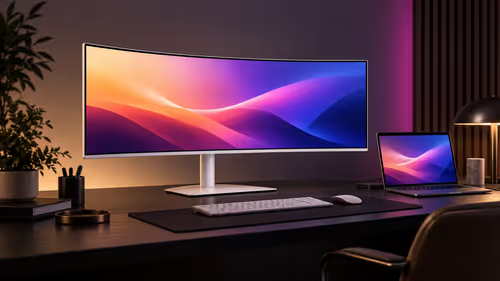
On a small creator desk with a USB microphone, headphones, notes, and a router nearby, a normal clamshell can be cleaner than a 2-in-1 because it stays open at a stable angle and leaves fewer reasons to move the screen during a take. The ASUS ExpertBook P1503 i5 at R9,858 is the budget-minded option for planning scripts, recording voice tracks, and uploading finished episodes.
The Lenovo LOQ RTX3050 at R9,500 is useful if the same machine will also handle light video edits or visual content for clips, because RTX3050 graphics are the standout spec in this list. The ASUS ExpertBook P5405 at R12,700 is the more business-like choice when the laptop needs to live between recording, invoicing, email, and episode scheduling.
Ready to choose the right laptop?
Use ASUS ExpertBook P1503 i5 at R9,858 as the podcast recording desk benchmark, then check whether its listed spec matches the space, workload, and upgrade path.