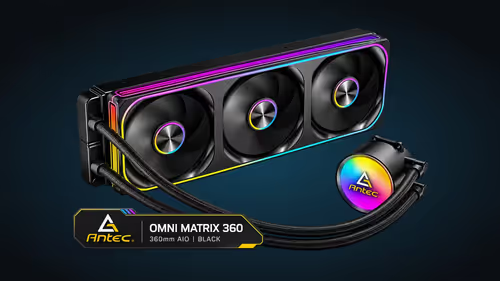
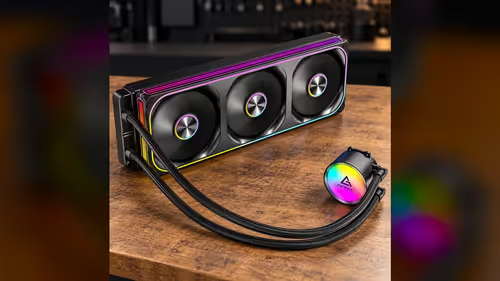
A 360mm AIO and a dual-tower air cooler both move heat off a processor, but they do it in very different places. An AIO carries the heat through a loop to a radiator that sits on the case, while an air cooler keeps a stack of fins right on top of the CPU. The right choice depends on the room you have, the RAM you plan to fit and how the case handles airflow. This guide sets out those trade-offs with the numbers you need to decide.
Quick Answer
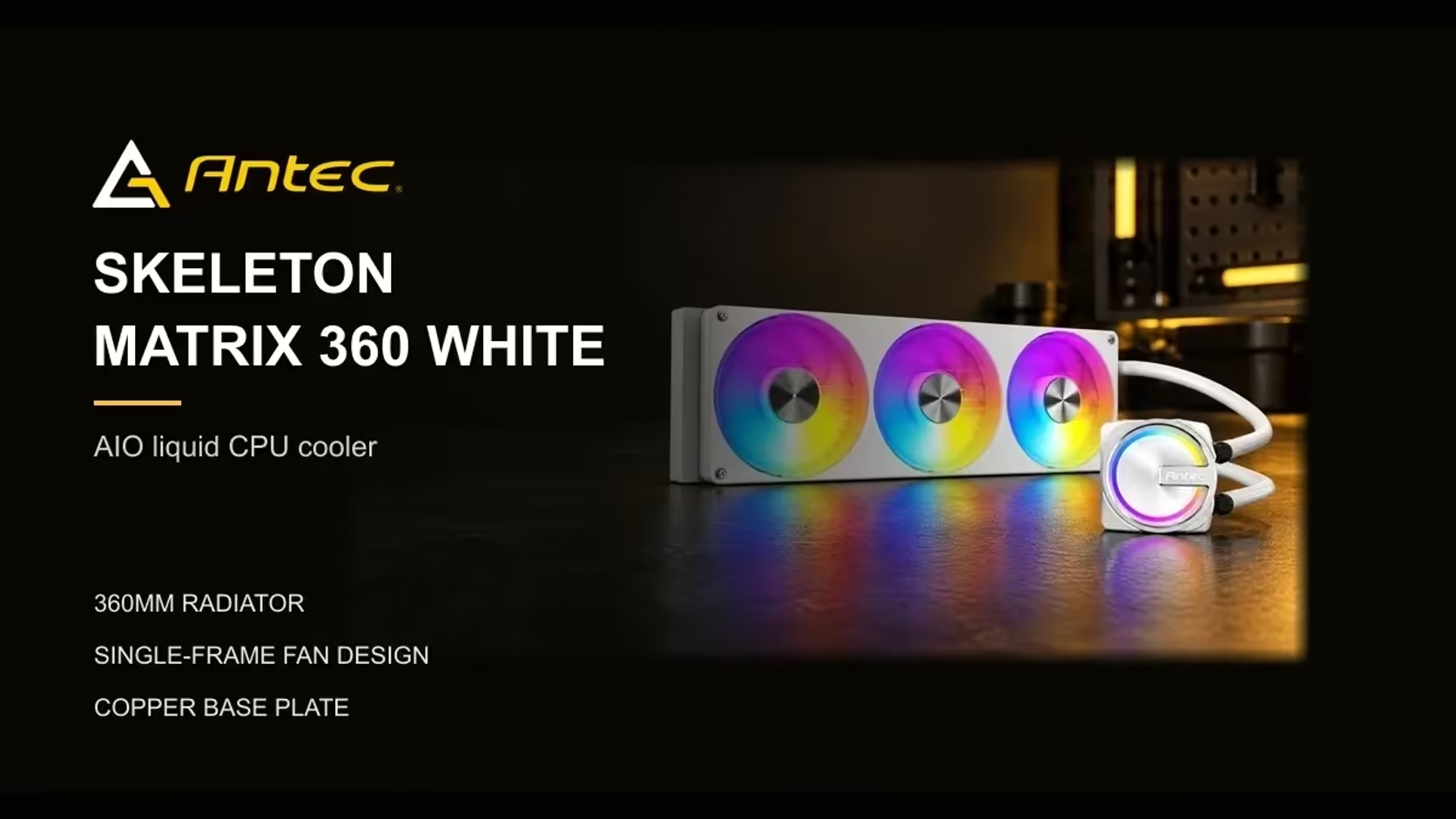
A 360mm AIO needs a 360mm radiator mount in the case, while a dual-tower air cooler needs clearance above the CPU and beside the RAM. The Antec Skeleton Matrix 360 White is an AIO at R1,199 including VAT. Measure the mount and the height above the board before you choose between the two.
🧭 How each design moves the heat
An air cooler sits directly on the processor. Its heat pipes carry heat from the base into a stack of aluminium or copper fins, and a fan blows air through those fins. The heat leaves the case through the fins and the fan's exhaust, with no liquid involved.
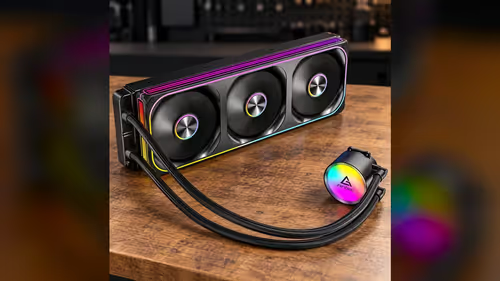
An AIO works through a loop. A copper base plate on the processor takes the heat, a pump moves coolant through a tube, and the coolant carries the heat to a radiator on the case. Fans on the radiator push the heat out of the case. On the Skeleton Matrix 360 White, that radiator is 360mm long, and its single-frame fan runs from 800 to 2400RPM. The processor side of an AIO stays small, and the heat is carried away from the board, which is why AIOs are often chosen for cases where airflow needs to exit through the top or front.
Both designs need airflow through the case. An AIO radiator needs fresh air moving across its fins, while an air cooler needs a path for the warm air from its fins to leave. A case with no airflow will run either cooler hotter than its rating suggests.
📏 Size, height and what the mount has to allow
The radiator runs 360mm end to end and is typically 27mm deep, so the case needs a matching slot at the front or top. Before you buy an AIO, check that the mount exists, that the radiator fits its thickness and that the tubing has room to route away from the fans. A 360mm radiator with no mount is just a box you cannot use.
Dual-tower air coolers stand tall, often around 160mm above the board, and their fins commonly sit under a 120mm or 140mm fan. The height matters most for clearance under the side panel and for tall RAM heatsinks, which the fins can sit on top of or beside. An AIO removes that problem by moving the heat exchanger away from the RAM, leaving only a small block on the processor.
The Skeleton Matrix 360 White covers Intel LGA 1851 and 1700 plus AMD AM5 and AM4, so the radiator mount in your case is the first thing to measure against your motherboard. The socket is only half of the fit, though. The radiator mount in the case decides whether the cooler goes in at all.
🌡️ Summer heat and the Highveld dust problem
Summer afternoons in a South African room without aircon can reach 27C to 30C, and the cooler has to shed heat into that air. An AIO sends its heat through a radiator that breathes the room air, so a warm room raises the radiator temperature and the cooling gets harder. An air cooler works against the same warm air, but its fins sit inside the case, where the heat has fewer places to go.
Dust is a second issue, and it is a Highveld one. Dry months put a layer of fine dust on any radiator or fin stack, and that dust cuts airflow whichever design you pick. An AIO radiator is often placed where the air comes in directly, so it collects dust fast. Clean the radiator and the case filters regularly, and check the fins before the hottest months.
💸 What R1,199 buys, and what to compare it with
A complete AIO at R1,199 including VAT is a modest line item next to a case or a processor, but price is only one part of the decision. If the case has a 360mm mount and you want the processor side to stay small, an AIO is the cleaner choice. If the case has no radiator mount, an air cooler is the better buy, even if its price is higher.
Compare the two options on the things that will change your build. Check the RAM height, the case mount and the socket support, then look at how much airflow the case offers. A cooler that fits and gets fresh air will outperform a cooler that looks better on paper but blocks a fan.
The 360mm AIO coolers and CPU cooler range pages on Evetech show both designs, so you can compare the height and mount options side by side. The full CPU coolers category adds the rest of the range.
🧪 A simple test for your own case
Measure three things before you choose. First, the mount: does the case have a 360mm slot on the front or top? Second, the height above the board: how much room is there above the processor before the side panel? Third, the RAM: do your sticks have tall heatsinks that would collide with an air cooler's fins?
If the mount is there and the RAM is tall, an AIO solves the clearance problem. If the mount is missing and the case is tall, an air cooler often gives you the simpler build. Run the cooler for 15 minutes under load once it is installed, and check the temperature and the fan noise together. The room and the case will tell you more about the outcome than any single figure.
Frequently Asked Questions
Is an AIO always better than an air cooler?
No. An AIO suits a case with a radiator mount and a need to keep the processor area clear. An air cooler suits a case without a 360mm mount or where the RAM and height need the least fuss.
How tall is a typical dual-tower air cooler?
Many dual-tower air coolers stand around 160mm tall above the board. Check the height your case allows before you order, because the side panel and tall RAM heatsinks decide the fit.
Does the Skeleton Matrix 360 White fit my board?
Compare your board's socket with the cooler's socket support, then check the radiator mount in your case before you buy.
Do I need to clean the radiator in a dusty month?
Yes, check the fins and filters regularly in dry months. Dust on the fins cuts airflow whichever cooler type you choose.
Ready to choose between an AIO and an air cooler?
Browse Evetech's CPU cooler range, then measure your case mount and RAM height before you order.