A fixed-speed fan spins at one rate whatever the CPU is doing, while a PWM fan changes speed when the motherboard sends it a control signal. That difference decides whether your cooler is loud at idle, quiet on a long download, or ramping up only when a game needs it. Here is how the two types behave, and what each one does to CPU temperatures.
Quick Answer
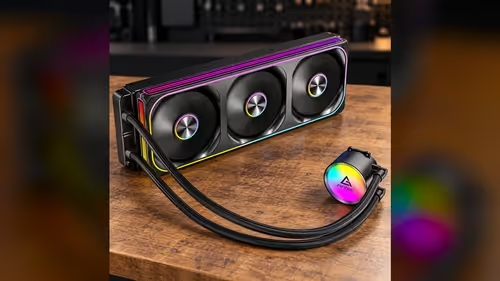
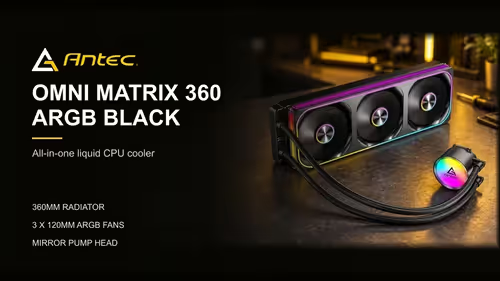
A PWM fan changes speed on a signal from the motherboard, while a fixed-speed fan runs at one rate all the time. PWM lets a fan curve ramp up under load and stay quiet at idle, which is the setup most builders want. The Antec Omni Matrix 360 at R999 uses PWM fans, so the board can set their speed against the CPU temperature.
🌀 What a PWM signal actually does
PWM stands for pulse-width modulation. The motherboard sends a control signal that switches the fan's power on and off many times a second, and the share of each cycle that the fan is powered sets its speed. A fan given 30 percent of each cycle runs slower than one given 80 percent, and the board can adjust that share as often as the sensor reports a change.
A fixed-speed fan has no control signal. It gets a steady supply, runs at its rated speed, and stays there whether the CPU is idle or pushing its limit. That keeps the wiring simple, and it suits a case fan on a PC that always runs hard. It also means the fan is at full noise even when the CPU is idle and nothing needs the airflow.
🌡️ How the two affect CPU temperatures
On a cooler with a radiator, the fans are what move heat out of the loop, and the CPU coolers range shows how many fans different radiators need. With PWM, the board can run them slowly while the CPU sits at idle, then raise the speed when the temperature climbs, so the cooling follows the load. A fixed-speed fan cannot do that. It moves the same air whether the chip is cool or hot.
The practical gap appears under sustained load. A PWM curve set to ramp from 40C toward 70C can hold a CPU at a steady temperature without the fans jumping to full speed at the first spike. A fixed fan at a middle speed keeps the chip cool under load, but it runs loud in quiet moments, and at its top speed it is loud all the time.
Our case fans range shows which models offer the PWM control described above, and the fan category lists the wider set of sizes.
Setting the curve is where most of the benefit comes from. In the BIOS or your board's utility software, choose a gentle slope at low temperatures and a steeper one above the level you see under a game. Test the result with a real load, because a curve that looks right at idle can still run too slow when the CPU is busy.
🏠 A quiet curve in a shared Durban flat
In a small Durban flat with a shared lounge, a PC is rarely the only thing making noise. A fixed fan that runs at 1800RPM all evening gets heard in the next room, which is why idle quiet matters more than peak airflow in that setting. A curve that holds the fans near 800RPM until the CPU passes 60C, then climbs to full speed by 80C, keeps the household on your side while a game still gets the airflow it needs.
Pick a curve that you would be happy to hear for the whole evening, not one that only sounds good on a bench.
Frequently Asked Questions
Are PWM fans always quieter than fixed-speed fans?
Not always. A PWM fan is quieter at low speed, but a fan curve that ramps to a high speed under load can be just as loud as a fixed fan at the same rpm. The benefit comes from the curve, not the signal alone.
Can a fixed-speed fan go on a PWM header?
It can connect, but the board cannot control its speed, so the header gives you no curve to set. The fan will run at its rated speed whatever the header is set to.
Does PWM use more power than a fixed fan?
Not in any way a builder will notice. The fan draws less power at low speed, which means a PWM fan on a quiet curve uses less than the same fan held at full speed.
Which fan header should a cooler use?
Use a PWM fan header for any fan you want the board to control. Check the label on the board, since the header for the pump or the case fans can differ from the CPU fan header.
Looking for quieter case fans?
Browse our case fans and pick PWM models if you want the board to control the speed.