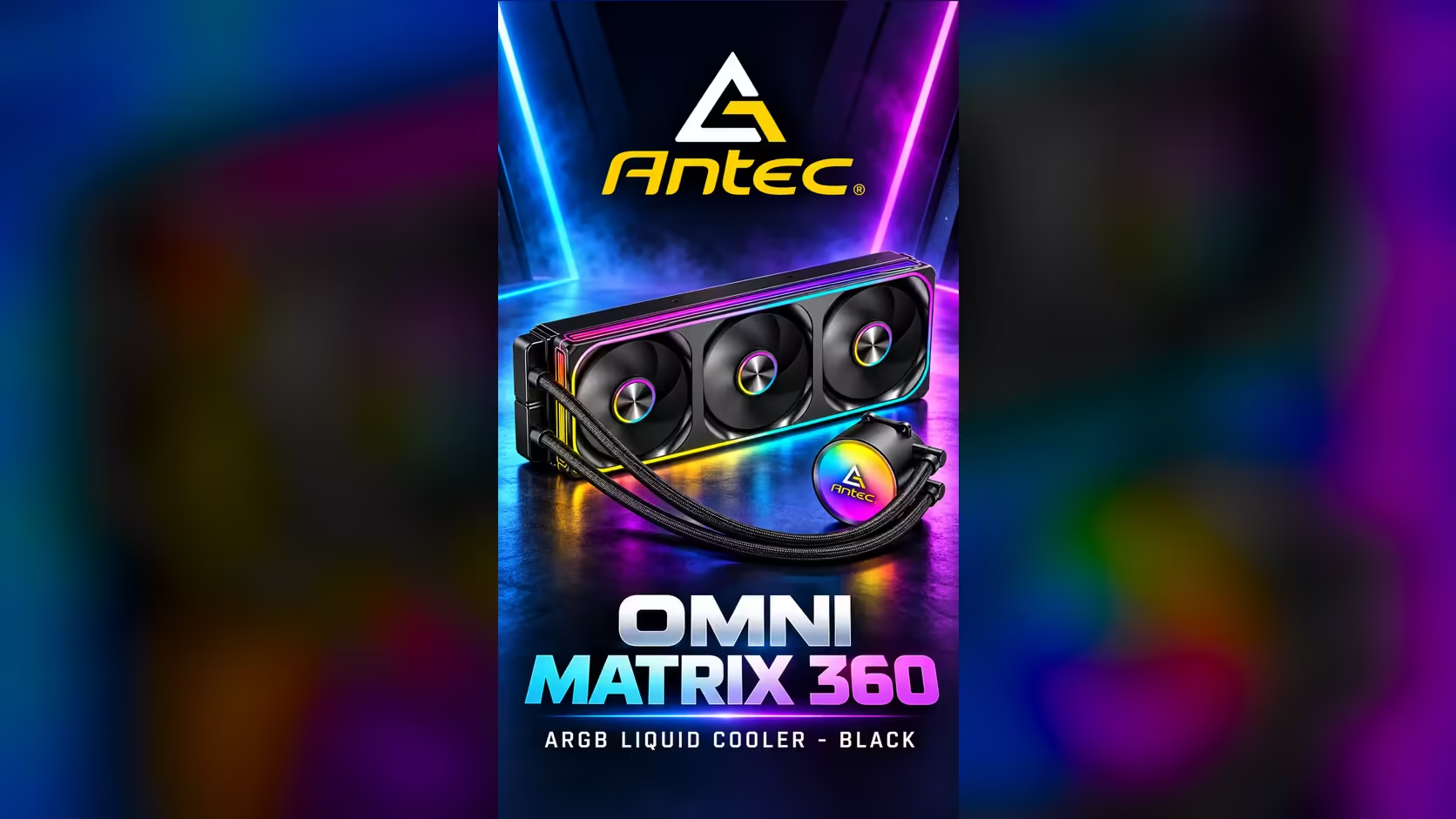
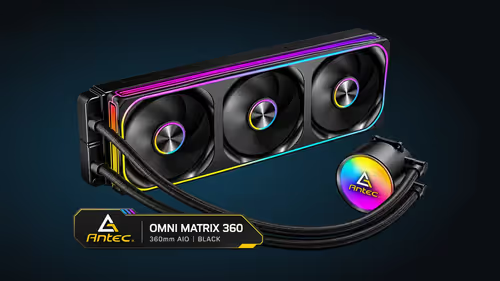
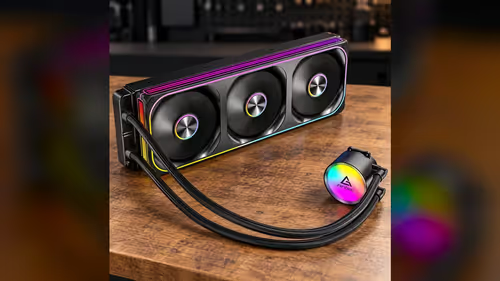
A 360mm AIO is a practical upgrade when the case has the room and the processor runs hot under a long load. On a student budget in a res room, though, the sums are tighter and the space is smaller. The cooler has to fit the case you can afford, the noise has to suit a shared room, and the money has to leave room for the rest of the build. Here is how to decide whether the larger cooler earns its place, or whether a smaller one is the better buy.
Quick Answer
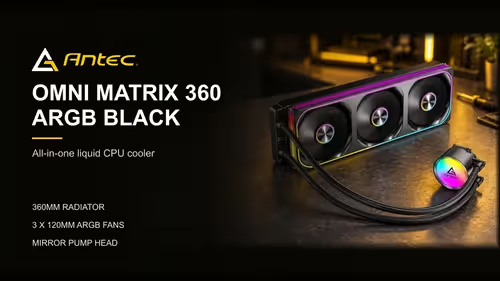
A 360mm AIO is practical when the case has radiator room and the CPU runs warm under load. On a student budget in a res room, a smaller cooler is often the better choice, since it fits more cases and keeps the noise down. At R999, the Antec Omni Matrix 360 is the larger option to weigh up against the rest of the build.
💰 What the extra money buys
A 360mm cooler costs more than a smaller one, and the difference buys a larger radiator and three fans. The extra cooling only helps if the processor produces the heat to use it. A chip that runs cool under a light workload gains little from a bigger radiator.
Count the other costs too. A 360mm loop needs a case with a full slot, and a case with that slot often costs more than a compact one. If the case budget rises, the cooler is no longer the only extra expense.
Ask what the money would do elsewhere. Extra memory or a faster drive may help a student more than a bigger cooler, especially if the processor stays within its limit on a smaller one.
🏠 Fitting a res room
A res room is small, and a student desk is often shared with a monitor, a keyboard and a stack of books. A 360mm radiator needs a full slot and a few centimetres of clear space around it, which many res desks cannot offer. A 240mm radiator, or a good tower, takes less room and sits more easily in a cramped setup.
The room is also shared. A 360mm radiator with three fans can be audible in a quiet res at night, so a smaller cooler with a sensible fan curve is often the kinder choice for the people sleeping nearby.
Check the case before you buy the cooler. A small case with a front fan and a drive cage may not have a full 360mm slot, and a cooler that does not fit is money wasted.
🧭 Deciding whether it is worth it
Ask three questions. Does the case have a full 360mm slot? Does the processor run hot under the games or work you do? Will the noise suit the room? If all three answers are yes, the 360mm cooler is a reasonable upgrade. If any answer is no, a smaller cooler is likely to serve the build better. Ask first whether the case has a full slot of at least 394mm.
Our liquid CPU coolers range shows the 360mm and 240mm options, and the CPU coolers category covers the air coolers too. Compare the sizes against your case before you add anything to the basket.
Frequently Asked Questions
Is a 360mm AIO worth it for a student?
Only if the case has a full slot and the processor runs hot under load. Otherwise a smaller cooler or a good tower is the better buy.
Will a 360mm cooler fit a res desk?
Often not. It needs a full-length slot and clear space around the radiator, which many cramped desks cannot offer.
Is a 360mm AIO louder than a smaller cooler?
It can be, depending on the fan curve. A quiet floor setting keeps the fans low at rest, which matters in a shared room.
What should I spend the money on instead?
That depends on the build. If the processor stays within its limit on a smaller cooler, extra memory or storage may give more to the work you do.
Building on a student budget?
Browse our liquid CPU coolers and check the case slot before you choose a radiator size.