


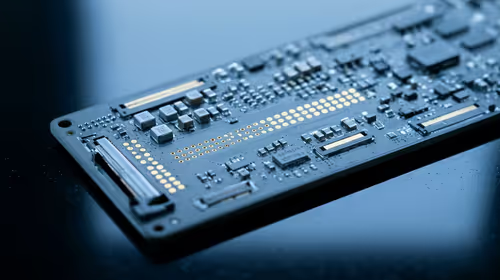
Hot-Swappable PCB Architecture in Modern Keyboards: Guide
Learn hot-swappable PCB architecture in modern keyboards—what it is, how sockets and traces work, and how to pick the right board. Speed up swaps, reduce risk, and upgrade faster 🔧⚡
Read more512-bit memory bus explains how wider GPU memory interfaces boost bandwidth for gaming and content-creation workflows, showing measurable fps and render gains, trade-offs, and upgrade advice. 🎮⚙️
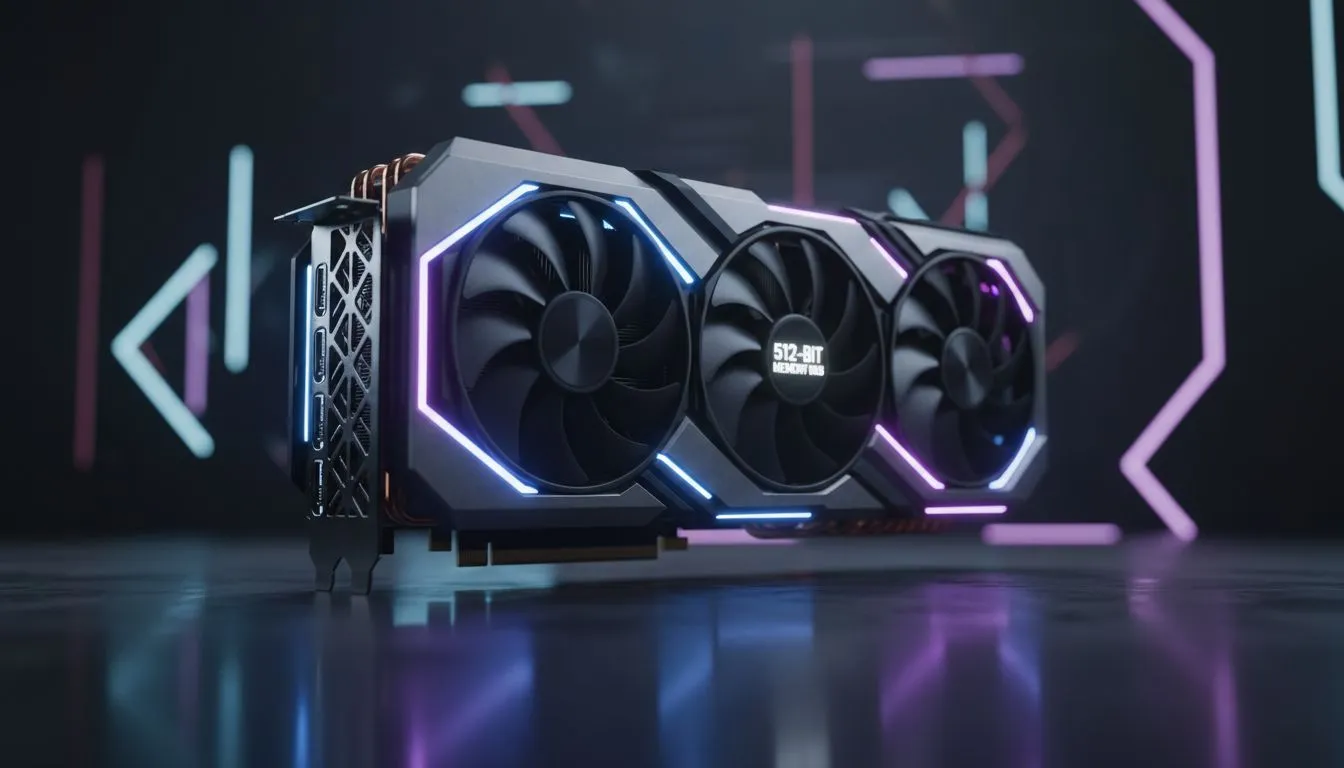
If you’re buying a GPU in Johannesburg, Cape Town or anywhere in South Africa, the phrase "512-bit memory bus" might sound like marketing fluff. It isn’t. A wider memory bus can mean smoother texture streaming and fewer stutters when you push settings at 1440p and 4K. Think of it as a highway for frame data — wider lanes move more traffic. Ready for the quick read that actually helps you pick hardware? 🚀
A 512-bit memory bus increases potential memory bandwidth, which matters most when VRAM and texture sizes are huge. For most competitive esports at 1080p, driver efficiency and core clocks dominate. But for open-world titles, ray-traced scenes and ultrawide monitors, bandwidth becomes a bottleneck. If you're comparison-shopping, browse our full GPU range to see how different memory subsystems are paired with GPUs and VRAM capacities: Evetech’s main graphics listing is a good place to start.
https://www.evetech.co.za/components/nvidia-ati-graphics-cards-21?category=GeForce+Graphics+Cards
When testing bandwidth differences, use a consistent scene (same resolution, textures and settings). Monitor VRAM usage and frame-time variance rather than peak FPS. This highlights stutters that a wider memory bus can reduce.
Don’t assume a 512-bit bus automatically equals better gaming. GPU architecture, memory type (GDDR6, HBM), cache, and drivers all shape outcomes. For example, a modern 256-bit GDDR6 card with faster memory clocks can outpace an older 512-bit card. To compare current models and see how manufacturers pair memory buses with cores and clocks, check Evetech’s central graphics hub — it lists both GeForce and Radeon families.
https://www.evetech.co.za/components/nvidia-ati-graphics-cards-21
Content creators benefit from memory bandwidth in timelines and high-resolution export tasks. When working with 4K ProRes, heavy colour grading or multi-layer timelines, sustained bandwidth keeps viewport scrubbing responsive. If you favour AMD’s ecosystem for certain apps, look at Radeon options that pair high memory bandwidth with large VRAM pools for editing. Browse the Radeon selection to find cards optimised for heavy workloads. ✨
https://www.evetech.co.za/components/nvidia-ati-graphics-cards-21?category=Radeon+Graphics+Cards
Budget, local stock and warranty matter here in SA. If you want a specialist build with an emphasis on memory throughput, consider brand-specific models that improve cooling and power delivery. MSI models often offer factory-tuned cooling and power for sustained bandwidth-heavy loads — worth checking when you need stable performance under long renders. Find MSI options at Evetech. 🔧
https://www.evetech.co.za/components/nvidia-ati-graphics-cards-21?brands=MSI
If you play at 1080p and stream, a 512-bit bus is rarely essential. If you run multi-GPU workflows, edit large 4K timelines, or max out textures at 4K, wider memory paths and faster VRAM matter more. Match your use case; don’t chase specs alone. Need help sizing a GPU to your budget in ZAR? We’ll help you balance cost, performance and local availability.
Ready to Find Your Perfect Match? The Mac vs Windows debate is complex, but for maximum power, choice, and value in South Africa, Windows is hard to beat. Explore our massive range of laptop specials and find the perfect machine to conquer your world.
A 512-bit memory bus is a GPU memory interface width that enables greater memory bandwidth, improving data flow between VRAM and the GPU core for high-res workloads.
A 512-bit memory bus raises memory bandwidth, which can improve high-resolution and high-texture gaming FPS when memory bandwidth was the bottleneck.
Wider buses often deliver more bandwidth, so 512-bit vs 256-bit memory bus yields gains in bandwidth-bound gaming and rendering, but real gains depend on other GPU specs.
Yes—video editing, 3D rendering and complex compositing often benefit from increased GPU memory bandwidth provided by a 512-bit memory bus.
High-end workstation and enthusiast GPUs usually feature a 512-bit memory bus; check manufacturer specs when searching for best GPUs with 512-bit memory bus.
No—memory bandwidth (512-bit) speeds data transfer, while VRAM capacity stores larger assets; both matter for heavy content-creation workflows.
Upgrade if you run bandwidth-limited high-res gaming or large video/3D projects and your current GPU causes stalls; review benchmarks first.
Learn hot-swappable PCB architecture in modern keyboards—what it is, how sockets and traces work, and how to pick the right board. Speed up swaps, reduce risk, and upgrade faster 🔧⚡
Read more
Mechanical switch lifespan explained—what the 50 million keystroke rating really means, plus tips to extend switch life and reduce double-press issues 🔧⌨️
Read more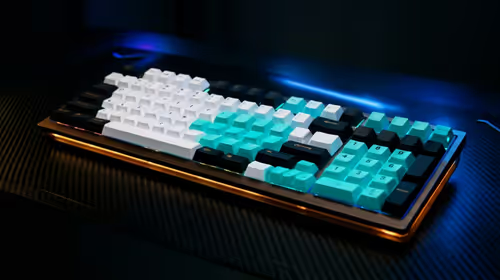
60-percent vs full-size mechanical keyboard layouts—learn what each layout includes, who it suits, and how to choose the right fit 🧩⌨️ for typing, gaming, and productivity.
Read more
Double injection keycaps last far longer than standard printed keycaps in most setups. Learn typical lifespan ranges, what shortens them, and how to maximize durability for smoother daily typing and gaming 😊⌨️
Read more
Full-key anti-ghosting: does it stop missed inputs during fast-paced gaming? We break down latency, polling, and key matrix limits so you can buy smarter 🎮⚡
Read more
Protect mechanical keyboard switches from South African dust and summer humidity with practical cleaning and storage habits. Keep your switches smooth, reduce failures, and extend lifespan. 🌬️💧
Read more
Wondering if a TKL wireless mechanical keyboard is worth it for everyday productivity? We break down latency, battery life, comfort, and workflow gains for real work. ⚡⌨️

Maximise battery life on a fanless 15-inch laptop using efficiency core architecture. Cut idle drain, tune power profiles, and improve thermals for longer runtime. 🔋⚙️
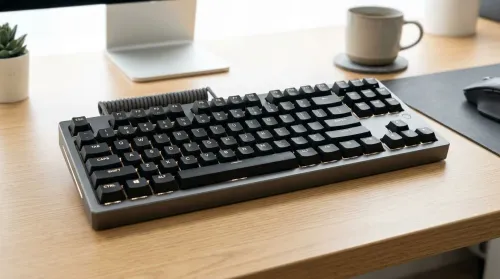
Learn how to reduce desk clutter with a TKL wireless keyboard using fewer cables, smart placement, and tidy essentials. Get a faster, calmer workspace with better ergonomics. ✅🧼
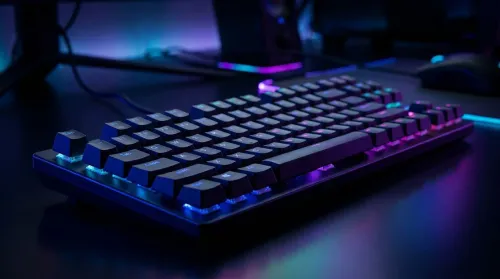
RGB keyboard lighting too distracting? Learn how to manage backlight modes, set brightness, and reduce distraction for focus and productivity 😌🖱️
Are themed gaming keyboards worth the extra cost? Compare build quality, switch options, features, and resale value to find the best fit for your setup 🎮⌨️
Full-Size vs Tenkeyless mechanical keyboards for gaming: find out if a smaller layout truly improves aim, speed, and comfort. We break down layout, desk space, latency-feel, and keybinds 🎮⌨️

Dedicated media rollers vs function key shortcuts: learn which setup gives you better workflow control, faster media access, and fewer mistakes. 🖱️🎧
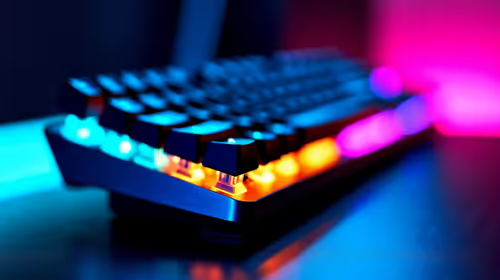
Best Mechanical Switch Type for Gaming: Clicky vs Linear vs Tactile. Find your feel, speed, and noise balance with practical guidance for FPS, MOBA, and productivity 😄🎮
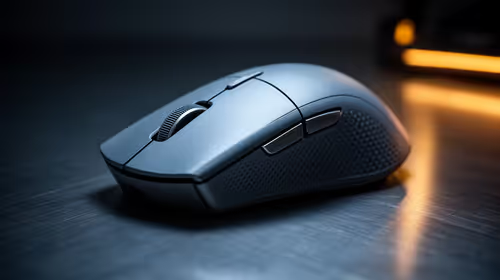
Direct mouse answer: Mouse not keeping up with your work? Everything that matters about dual-mode 2.4GHz + BT 5.0: DPI behaviour, channel switching, battery curves and per-app button mapping. Covers when 2.4GHz USB wins (low-latency desk) and when BT 5.0 wins (laptop, d
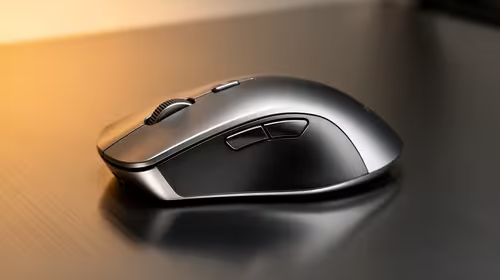
Plain wireless mouse guide: Mouse not keeping up with your work? Everything that matters about wireless productivity mouse: DPI behaviour, channel switching, battery curves and per-app button mapping. Includes DPI tuning tips, channel switch shortcuts, and ZAR-aware fea
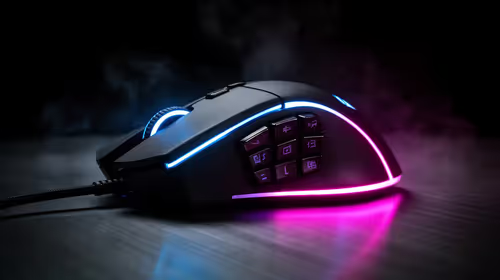
Real productivity numbers: Set up your wireless mouse in this order: everything that matters about wireless productivity mouse: DPI behaviour, channel switching, battery curves and per-app button mapping. Includes DPI tuning tips, channel switch shortcuts, and ZAR-aware
Pen not feeling like paper? Stylus lag and skipping usually trace to old drivers, dirty nibs, or display refresh mismatches, not the pen itself. Covers pressure curve tuning, tilt thresholds, nib swap timing, and SA pricing brackets.