


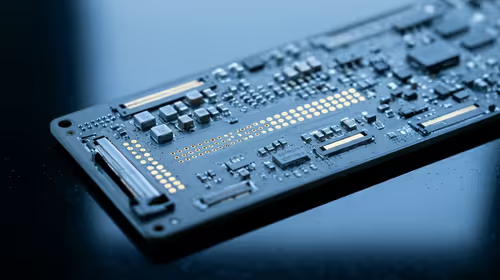
Hot-Swappable PCB Architecture in Modern Keyboards: Guide
Learn hot-swappable PCB architecture in modern keyboards—what it is, how sockets and traces work, and how to pick the right board. Speed up swaps, reduce risk, and upgrade faster 🔧⚡
Read moreWant a 96% keyboard layout explained? Learn how 96% sits between full-size and 60% for productivity and gaming—plus what to expect from key count, function layers, and desk feel. ⌨️✨
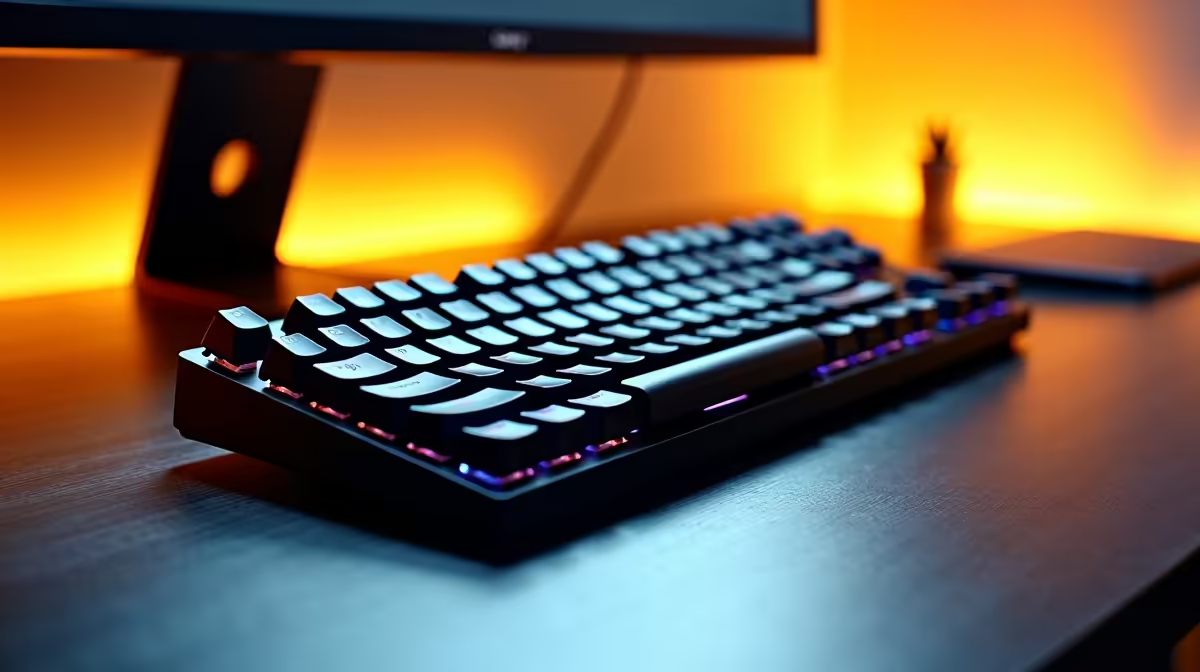
If you’re tired of hunting between “too cramped” and “too bulky,” 96% keyboards might be your next upgrade. In South Africa, where your setup needs to survive LAN nights, desk life, and late-night ranked sessions… layout matters. A 96% board feels familiar like a full-size keyboard, but it frees up space for your mouse and movement. That extra desk real estate can mean faster reactions and a more comfortable posture. So where exactly does a 96% layout fit between 60% and full-size? Let’s break it down.
Keyboard sizes are mostly about what’s removed (and what’s kept). A 60% keyboard typically removes the entire function row and most navigation keys. Full-size keeps everything: the numpad, function row, navigation cluster, and more.
A 96% keyboard layout usually keeps:
Where it fits:
Why SA gamers care: console-style movement isn’t the only use for keys. Voice chat shortcuts, push-to-talk, replay controls, and Discord/mixer hotkeys add up. A layout that’s predictable helps muscle memory stick.
A 60% board asks you to lean on layers. Layers are fine… until you’re mid-fight and your brain is already doing too many tasks. With a 96% layout, you typically reduce how often you must “think” about where something lives.
Full-size is comfortable for long sessions, especially if you type a lot or use spreadsheets. The trade-off is physical footprint.
A 96% board aims to keep comfort and reduce the “desk tax.”
Here’s what “96%” often protects you from losing, compared to smaller layouts:
If you stream or edit clips, this is even more noticeable. Your shortcuts are only fast when they’re consistent.
The main “feel” benefit is simple: a 96% keyboard usually leaves more room for your mouse than full-size. That can help with:
No magic… just better ergonomics.
Before you buy, decide how you want the keyboard to connect and how you’ll use it.
Evetech carries both wired and wireless keyboard options, depending on the model and connectivity attributes. Start by checking current availability here:
If you specifically want wired, you can browse this filtered page:
And if you’re leaning wireless:
South Africa pricing can swing based on stock and promotions. That’s why it’s smart to:
If you want quick guidance on deals:
If you’ve never used a 96% board, don’t guess. Use this quick checklist when you’re comparing products:
On Windows, use the PowerToys FancyZones utility to create custom snap layouts for your windows. It's a lifesaver for managing multiple apps on an ultrawide monitor, letting you organise your timeline, preview window, and asset folders perfectly for video editing.
A keyboard upgrade feels even better when your mouse workflow matches it. If you’re shopping in the same budget window, consider pairing:
And if you’re still narrowing down the keyboard choice, you can revisit the full keyboard options page:
For most people who want one keyboard that covers gaming, typing, and productivity… 96% is a strong “no drama” middle ground. It usually gives you the familiar keys you need, while freeing desk space compared to full-size boards. And if you’ve been burned by compact layouts that demand layers, this size often feels like relief.
If you’re building a South African setup that’s both practical and competitive, 96% is the layout that makes sense.
Ready to Find Your Perfect Match? The Mac vs Windows debate is complex, but for maximum power, choice, and value in South Africa, Windows is hard to beat. Explore our massive range of laptop specials and find the perfect machine to conquer your world.
A 96% keyboard keeps most productivity keys while removing some extras. It’s a compact layout that typically preserves navigation and function access.
It depends on your workflow. 96% usually offers easier access to nav and common shortcuts, while 60% leans more toward maximum compactness.
96% is smaller than TKL, often closer to 75% in footprint, and usually retains more dedicated keys than 75% for everyday productivity.
Many 96% boards use layered keys for removed functions. The layout aims to minimize friction, but exact behavior depends on the model.
Look for arrow keys placement, navigation cluster behavior, dedicated function keys, and whether modifiers are accessible without constant layer switching.
Yes, especially if you want compact space savings without giving up fast navigation or dedicated keys. Choose responsive switches and a stable layout.
A 96% layout is often an easier transition than 60% because it preserves more of the familiar key structure, reducing relearning time.
A 96% keyboard saves space while keeping important keys in reach. It pairs well with smaller mice, extended mousepads, and cleaner desk layouts.
Learn hot-swappable PCB architecture in modern keyboards—what it is, how sockets and traces work, and how to pick the right board. Speed up swaps, reduce risk, and upgrade faster 🔧⚡
Read more
Mechanical switch lifespan explained—what the 50 million keystroke rating really means, plus tips to extend switch life and reduce double-press issues 🔧⌨️
Read more
60-percent vs full-size mechanical keyboard layouts—learn what each layout includes, who it suits, and how to choose the right fit 🧩⌨️ for typing, gaming, and productivity.
Read more
Double injection keycaps last far longer than standard printed keycaps in most setups. Learn typical lifespan ranges, what shortens them, and how to maximize durability for smoother daily typing and gaming 😊⌨️
Read more
Full-key anti-ghosting: does it stop missed inputs during fast-paced gaming? We break down latency, polling, and key matrix limits so you can buy smarter 🎮⚡
Read more
Protect mechanical keyboard switches from South African dust and summer humidity with practical cleaning and storage habits. Keep your switches smooth, reduce failures, and extend lifespan. 🌬️💧
Read more
Wondering if a TKL wireless mechanical keyboard is worth it for everyday productivity? We break down latency, battery life, comfort, and workflow gains for real work. ⚡⌨️
Maximise battery life on a fanless 15-inch laptop using efficiency core architecture. Cut idle drain, tune power profiles, and improve thermals for longer runtime. 🔋⚙️
Learn how to reduce desk clutter with a TKL wireless keyboard using fewer cables, smart placement, and tidy essentials. Get a faster, calmer workspace with better ergonomics. ✅🧼
RGB keyboard lighting too distracting? Learn how to manage backlight modes, set brightness, and reduce distraction for focus and productivity 😌🖱️
Are themed gaming keyboards worth the extra cost? Compare build quality, switch options, features, and resale value to find the best fit for your setup 🎮⌨️
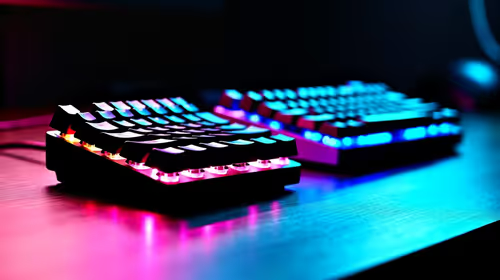
Full-Size vs Tenkeyless mechanical keyboards for gaming: find out if a smaller layout truly improves aim, speed, and comfort. We break down layout, desk space, latency-feel, and keybinds 🎮⌨️
Dedicated media rollers vs function key shortcuts: learn which setup gives you better workflow control, faster media access, and fewer mistakes. 🖱️🎧
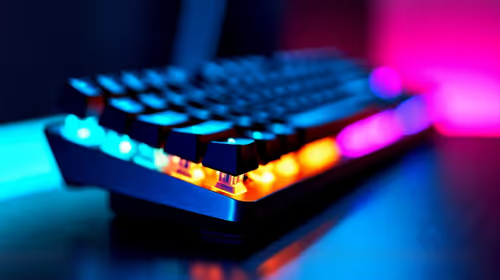
Best Mechanical Switch Type for Gaming: Clicky vs Linear vs Tactile. Find your feel, speed, and noise balance with practical guidance for FPS, MOBA, and productivity 😄🎮
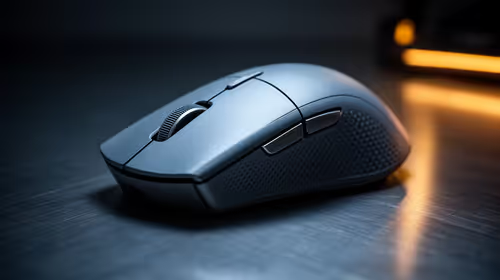
Direct mouse answer: Mouse not keeping up with your work? Everything that matters about dual-mode 2.4GHz + BT 5.0: DPI behaviour, channel switching, battery curves and per-app button mapping. Covers when 2.4GHz USB wins (low-latency desk) and when BT 5.0 wins (laptop, d
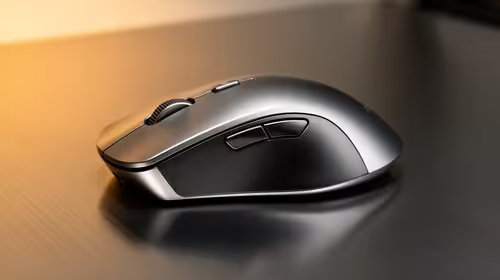
Plain wireless mouse guide: Mouse not keeping up with your work? Everything that matters about wireless productivity mouse: DPI behaviour, channel switching, battery curves and per-app button mapping. Includes DPI tuning tips, channel switch shortcuts, and ZAR-aware fea
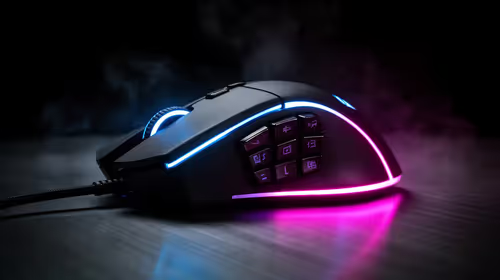
Real productivity numbers: Set up your wireless mouse in this order: everything that matters about wireless productivity mouse: DPI behaviour, channel switching, battery curves and per-app button mapping. Includes DPI tuning tips, channel switch shortcuts, and ZAR-aware
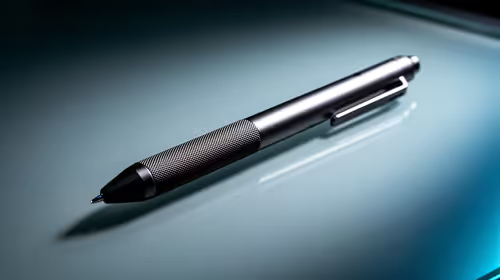
Pen not feeling like paper? Stylus lag and skipping usually trace to old drivers, dirty nibs, or display refresh mismatches, not the pen itself. Covers pressure curve tuning, tilt thresholds, nib swap timing, and SA pricing brackets.