Quick Answer
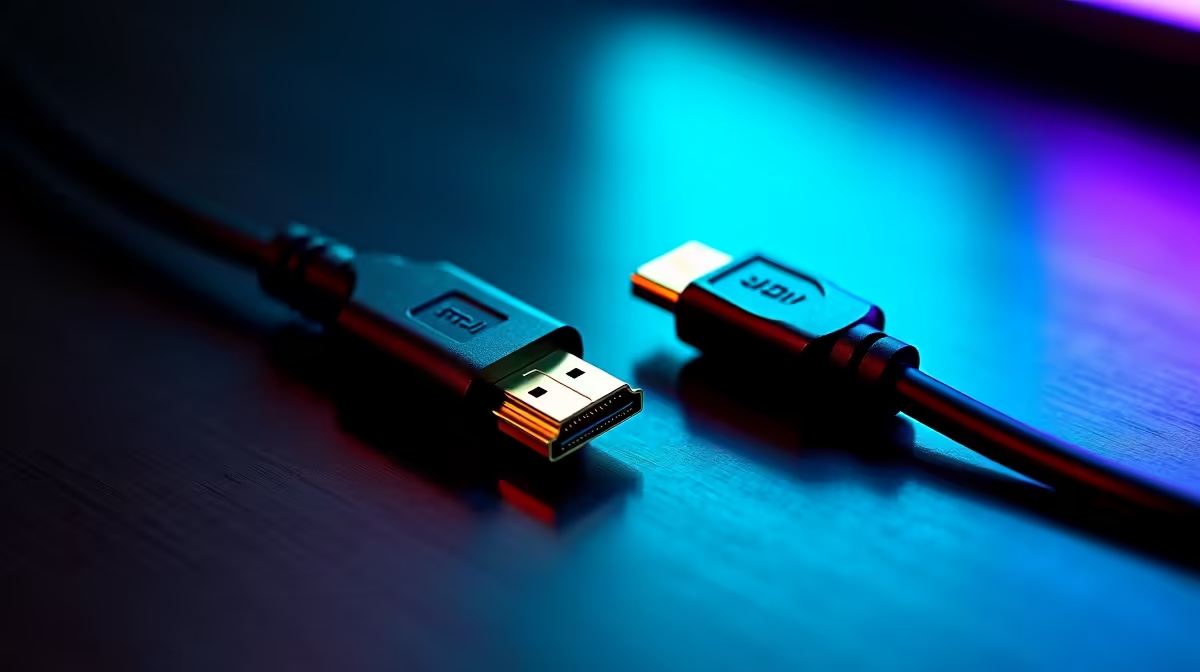
18Gbps is the maximum data transfer rate of an HDMI 2.0 cable, sufficient to carry 4K video at 60 frames per second with HDR10 colour metadata. It is the minimum bandwidth specification required for a full-quality 4K 60Hz HDR signal, and it is the spec SA buyers should verify before purchasing a 4K cable.
How HDMI Bandwidth Translates to Real-World Video 📊
The 18Gbps figure represents the total payload capacity across three TMDS (Transition-Minimised Differential Signalling) channels, each running at 6Gbps. A 4K 60Hz frame at 4:4:4 chroma and 8-bit colour contains roughly 17.82Gbps of raw video data, which fits inside the 18Gbps envelope by a small margin. At 10-bit HDR colour depth (used by HDR10 and Dolby Vision), the raw data exceeds 18Gbps, so the signal uses 4:2:0 chroma subsampling to compress it down to fit. This compression is the engineering compromise inside HDMI 2.0: you get true 4K 60Hz HDR, but chroma precision is reduced from full-bandwidth 4:4:4 to a format that is visually identical on most consumer TVs. For gaming and streaming in South Africa, this distinction has zero practical impact.
Comparing 18Gbps to Other HDMI Generations 📈
HDMI 1.3 and 1.4 both operate at 10.2Gbps. This is why 4K 30Hz is their ceiling for video output: a 4K 30Hz signal at 8-bit 4:2:0 consumes roughly 8.9Gbps, just within reach. At 60Hz that same signal doubles to approximately 17.8Gbps, beyond what 10.2Gbps can carry. HDMI 2.1 pushes bandwidth to 48Gbps across four bonded channels, enabling 4K 120Hz and 8K 60Hz. The jump from 18Gbps to 48Gbps matters for PS5 and Xbox Series X users who want to use 4K 120Hz modes in titles like Gran Turismo 7 or Call of Duty. For the majority of SA gamers running a 4K 60Hz TV, the 18Gbps HDMI 2.0 cable remains the cost-efficient and technically correct choice at R150 to R300 per unit.
Bandwidth Overhead and Why It Matters for SA Users 🔧
Beyond video, HDMI carries audio (up to 32 channels at HDMI 2.0) and CEC control signals. These consume under 0.5Gbps for standard 7.1 audio. The video signal dominates available bandwidth. For SA users connecting a PS5 or RTX 5070 PC to a 4K HDR TV, the 18Gbps envelope covers all simultaneous data streams without compromise.
Cross-Check the Cable and the Port Version ⚡
A genuine 18Gbps cable connected to an HDMI 1.4 port on an older TV still maxes out at 10.2Gbps throughput, because the port is the bottleneck, not the cable. Before assuming your cable is underperforming, confirm which HDMI version your TV's ports support. Most SA-market TVs released after 2018 have at least one HDMI 2.0 port; check the spec sheet or the port markings on the rear panel.
FAQ
If 18Gbps barely fits 4K 60Hz, will I see signal dropouts at the bandwidth limit?
No, provided the cable is genuinely certified at 18Gbps. HDMI carries a small overhead buffer and uses error-correction at the electrical level. Dropouts occur when a cable is fraudulently marked as HDMI 2.0 but is actually built to HDMI 1.4 tolerances. Buying from reputable SA retailers minimises this risk.
Does cable length affect available bandwidth at 18Gbps?
Not in a linear way at lengths up to 5m. A quality passive HDMI 2.0 cable delivers the full 18Gbps spec to 5m. Beyond that, conductor resistance reduces signal amplitude and effective bandwidth begins to degrade, which is why active cables are recommended beyond 5m.
Is 18Gbps fast enough for 4K streaming from Showmax or Netflix?
Yes. Netflix and Showmax deliver 4K HDR at compressed bitrates typically under 25Mbps, which is a tiny fraction of the 18Gbps (18,000Mbps) cable capacity. The cable is never the bottleneck for streaming; your internet connection from Vumatel, Openserve, or another SA fibre provider is the relevant limiting factor.
Need a verified 18Gbps cable for your 4K setup?
Evetech stocks certified HDMI 2.0 cables in multiple lengths, available for delivery across South Africa.