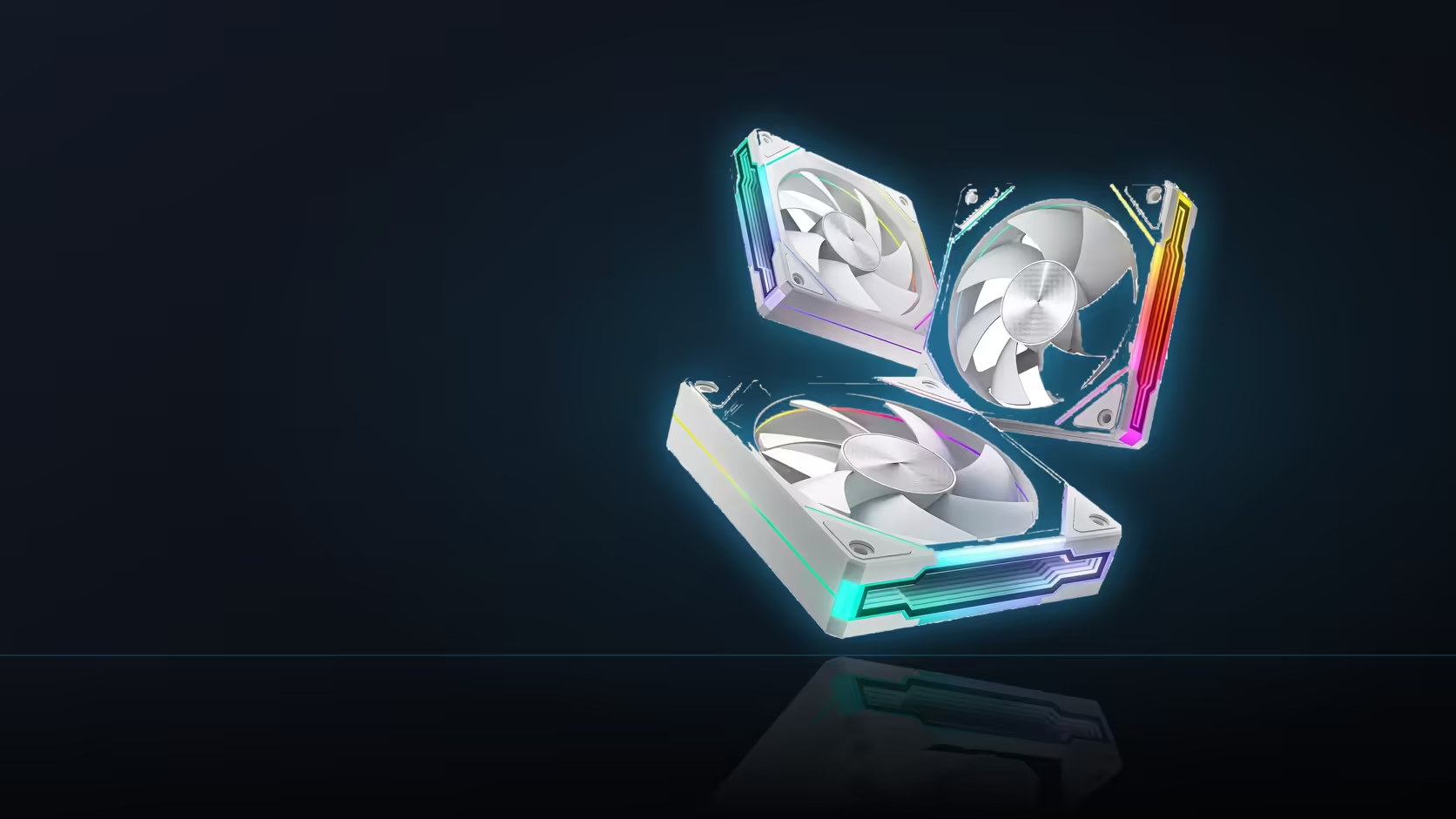
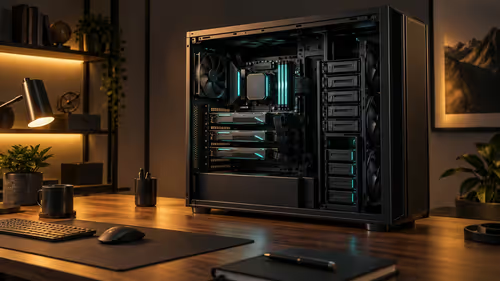
Repeating one bright lighting effect across every fan position in a case tends to flatten the whole build visually, leaving nothing for the eye to land on. Pairing a quieter Amici Pro fan at the rear with a brighter fan up front gives a case two distinct levels of lighting instead of one uniform wash - a contrast that often reads better than three identical effects repeated everywhere.
Quick Answer
Using an Amici Pro as a rear exhaust and a brighter fan up front creates deliberate visual hierarchy rather than uniform repetition - the pack of three costs R399 with VAT folded in, and like any price quoted here it can move. The ring marks the exhaust position quietly, while a fuller lighting effect leads the front of the build where it gets the most attention.
🎭 Why varying lighting levels works
A case with three identical bright fans repeated across every position tends to look busy rather than considered - there is no focal point, and the eye has nowhere obvious to rest. Introducing a quieter element, like the Amici Pro's ring-only design, gives the composition breathing room. The contrast between a restrained rear fan and a fuller front display can read as more intentional than matching brightness everywhere.
Where the quieter fan belongs
The rear exhaust position suits the Amici Pro particularly well - it is usually smaller in the overall frame of what a case window shows, and less central to the build's primary visual focus than the front intake row. A subtle ring there marks the position without competing with whatever leads the front of the case.
💡 What leads the front row
A fan with a larger lit area works well as the front-row centrepiece - the Amici 5GT, with its 24-LED infinity mirror, is one option within the same family if a fuller front display is what the build calls for. Pairing models within the AsiaHorse range keeps a consistent brand language across the build even while lighting intensity varies by position.
Keeping it looking intentional, not inconsistent
Mixing models can look accidental rather than deliberate if the rings differ obviously in colour or effect between positions. Matching the lighting colour and keeping the same effect scheme running across both models - even though one lights more of the fan than the other - helps the contrast read as a considered choice rather than a mismatch.
🔌 Practical considerations
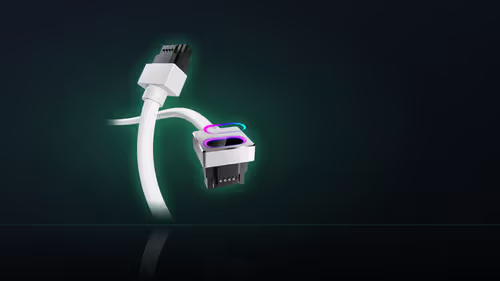
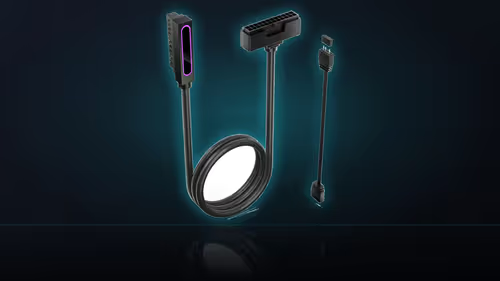
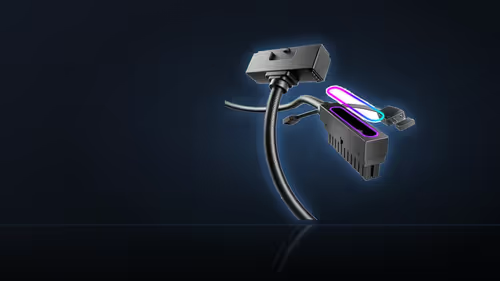
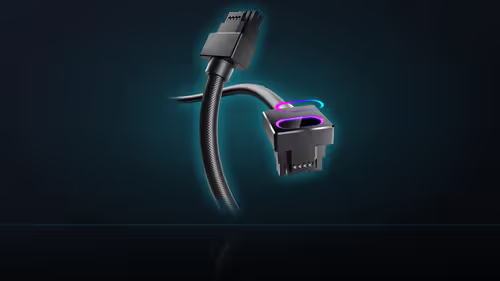
Both models typically connect over 5V 3-pin addressable headers, so board software can drive one consistent lighting scheme across the different fans without needing separate control apps. The Amici Pro's pack size does add a small complication, since it comes only as three - using one fan at the rear leaves two spare for other positions, which is worth planning into the overall layout rather than an afterthought. Browse case fans to plan a mixed-position build, and case accessories for the cabling a multi-model setup often needs.
🧩 Working out the fan count across two models
Amici Pro sells only as a three-pack, and if the plan is a single rear exhaust fan drawn from that pack, two fans are left over once the third is fitted at the rear. Those spares are not wasted - a common layout uses one at the rear and the remaining two on a side or bottom intake position where a quieter, less central lighting element also makes sense, keeping the restrained ring effect consistent across more than one position rather than isolating it to a single fan.
Cooling performance stays comparable between the two roles
Both the Amici Pro and a brighter front-row option in the same range move broadly similar airflow figures, so choosing based on visual role rather than cooling capability is reasonable here - neither position is being under-cooled by picking the quieter-looking fan for the rear. This matters because it means the lighting hierarchy decision can be made purely on appearance, without second-guessing whether the rear exhaust is getting weaker airflow as a result.
A note on ordering both models together
Since these fans are page-hidden until trial-order stock lands and carry no confirmed arrival date, check availability on both models independently before finalising a mixed build plan - a front-row centrepiece fan and a rear Amici Pro landing on different timelines is a real possibility worth planning around rather than assuming both ship together. All AsiaHorse case fans in this range carry the same 1 Year Local Warranty regardless of which model or position they end up in, so reliability cover is consistent across a mixed setup.
Keeping the composition balanced as parts arrive separately
Where two models land on different timelines, it is worth fitting whichever arrives first in a position that still looks finished on its own, rather than leaving an empty bracket waiting for the second model. A rear exhaust running the Amici Pro alone already reads as a considered choice even before a brighter front-row fan joins it later, so a staggered arrival does not force the build to sit half-finished in the meantime.
This approach is not necessarily cheaper than matching everything to one model - it simply lets budget and attention go where the case window actually shows it, rather than spreading identical lighting evenly across every position regardless of visibility.
Frequently Asked Questions
Why vary lighting intensity by fan position instead of matching everywhere?
Repeating one bright effect everywhere flattens the interior, while a quieter element gives the eye somewhere to rest.
Which position suits the Amici Pro's quieter design best?
The rear exhaust, which is usually smaller in the frame and less central to what a case window primarily shows.
Does mixing fan models look inconsistent?
It can if the rings differ obviously - matching colour and keeping a shared effect scheme helps it read as intentional.
What would work well as a brighter front-row option?
A fan with a larger lit area, such as the Amici 5GT with its 24-LED infinity mirror, if a fuller display suits the front.
Can two different AsiaHorse fan models sync together?
Yes, both typically connect over 5V 3-pin addressable headers, letting board software run one scheme across the models.
Is this approach more expensive than matching one model throughout?
Not necessarily - it lets budget go where the lighting actually shows rather than spreading evenly across every position.
Building layered lighting across your case?
Browse Evetech's case fan range to mix and match positions for the right visual balance.