


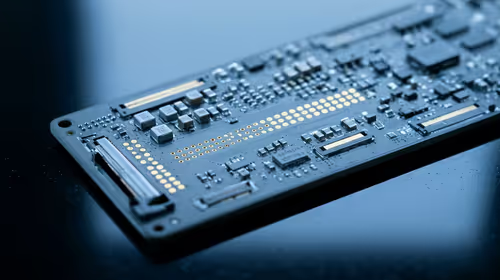
Hot-Swappable PCB Architecture in Modern Keyboards: Guide
Learn hot-swappable PCB architecture in modern keyboards—what it is, how sockets and traces work, and how to pick the right board. Speed up swaps, reduce risk, and upgrade faster 🔧⚡
Read moreATX 3.1 tightens the 12V-2x6 connector spec and updates transient response targets compared to ATX 3.0. Wattage, efficiency tier, and ATX 3.1 readiness shape both your daily power bill and your transient stability.
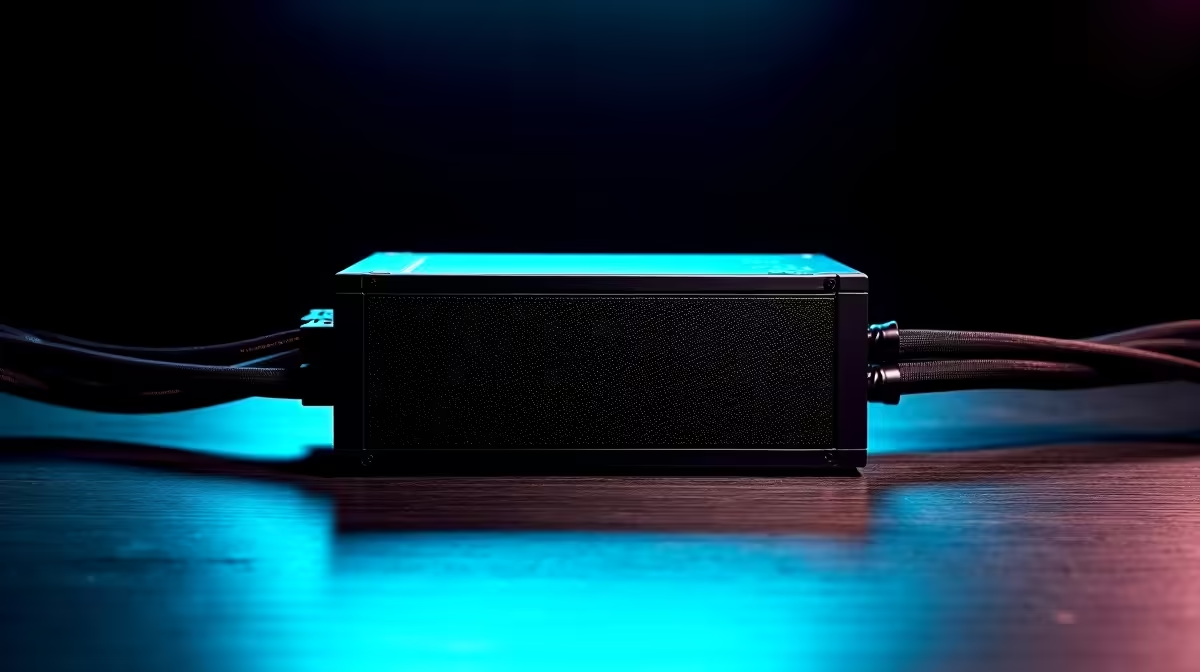
ATX 3.1 improves on ATX 3.0 primarily by raising the PCIe transient spike tolerance from 2x to 3x rated GPU TDP and replacing the 12VHPWR connector with the safer 12V-2x6 (PCIe 5.1) connector. For RTX 5000-series and RX 9000-series builds, ATX 3.1 is the correct standard and worth seeking out over ATX 3.0 units.
ATX 3.0, released in 2022, introduced the 12VHPWR connector and required PSUs to handle transient power spikes of up to 200 percent of the GPU's rated TDP. ATX 3.1, ratified in late 2024, makes three key changes. First, the transient spike tolerance increases to 300 percent of TDP, matching the actual behaviour of RTX 5090 and RTX 5080 cards during heavy shader workloads. Second, the 12VHPWR connector is replaced by the 12V-2x6 connector, which has better pin engagement confirmation and sense-pin communication between the GPU and PSU. Third, ATX 3.1 tightens voltage regulation tolerances on the 12V rail to plus or minus 2 percent across all load conditions, down from the plus or minus 5 percent that some ATX 3.0 units relied on in their specifications.
The original 12VHPWR connector on early RTX 4090 cards attracted attention after incidents of connector melting in 2022, generally traced to partial insertion or use of daisy-chain adapters bundling three 8-pin PCIe cables. The 12V-2x6 design addresses both root causes. The physical housing requires a more pronounced click to confirm full seating. The sense pins detect whether all high-current pins are properly engaged and communicate a reduced power cap to the GPU if any pin contact is marginal. South African builders who transport rigs to LAN events, where physical bumps can shift connectors, benefit meaningfully from the positive-latch design of the 12V-2x6 over the looser 12VHPWR retention.
ATX 3.1 PSUs include all the standard connectors found on ATX 3.0 units: 24-pin ATX, 8-pin EPS12V for CPUs, and standard 8-pin PCIe cables for older GPUs. Upgrading from an ATX 3.0 PSU to an ATX 3.1 unit does not require any motherboard or case modifications. For South African builders currently running RTX 4000-series cards who plan to upgrade to RTX 5000-series within the next two to three years, buying an ATX 3.1 PSU now ensures a smooth transition. Budget R3,000 to R5,500 for a quality 850W ATX 3.1 unit at local retail.
Some older ATX 3.0 units are listed alongside ATX 3.1 products without clear labelling. Check the PSU box image or spec sheet for the explicit ATX 3.1 standard badge. A listing that only says PCIe 5.0 ready without citing ATX 3.1 may still be an ATX 3.0 design with an adapter cable rather than a true 12V-2x6 implementation.
An ATX 3.0 PSU can power these cards technically, but it may not handle the full 300 percent transient spikes the cards can generate. Pairing an RTX 5090 with an ATX 3.0 unit using a 12VHPWR adapter is the least recommended configuration. ATX 3.1 with a native 12V-2x6 cable is the correct choice.
No, in reverse. However, the ATX 3.1 PSU includes standard 8-pin PCIe cables for older GPUs. Use those for older cards and the 12V-2x6 cable for current-gen GPU pairings. The PSU handles both.
The premium for ATX 3.1 compliance has narrowed considerably since the standard launched. Most new PSUs from established brands now ship as ATX 3.1 by default, with only legacy stock still sitting on the ATX 3.0 specification. Price differences are typically small, in the R200 to R500 range for equivalent wattage and efficiency tier.
Upgrading to a next-gen GPU in your South African build? Browse Evetech's ATX 3.1 power supplies and ensure your power delivery is fully rated for RTX 5000-series and RX 9000-series cards.
Learn hot-swappable PCB architecture in modern keyboards—what it is, how sockets and traces work, and how to pick the right board. Speed up swaps, reduce risk, and upgrade faster 🔧⚡
Read more
Mechanical switch lifespan explained—what the 50 million keystroke rating really means, plus tips to extend switch life and reduce double-press issues 🔧⌨️
Read more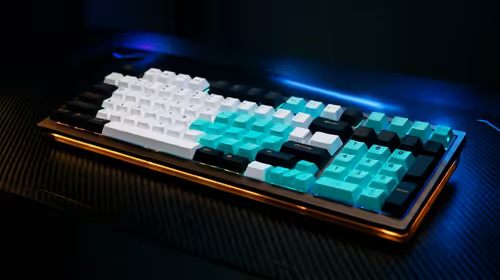
60-percent vs full-size mechanical keyboard layouts—learn what each layout includes, who it suits, and how to choose the right fit 🧩⌨️ for typing, gaming, and productivity.
Read more
Double injection keycaps last far longer than standard printed keycaps in most setups. Learn typical lifespan ranges, what shortens them, and how to maximize durability for smoother daily typing and gaming 😊⌨️
Read more
Full-key anti-ghosting: does it stop missed inputs during fast-paced gaming? We break down latency, polling, and key matrix limits so you can buy smarter 🎮⚡
Read more
Protect mechanical keyboard switches from South African dust and summer humidity with practical cleaning and storage habits. Keep your switches smooth, reduce failures, and extend lifespan. 🌬️💧
Read more
Wondering if a TKL wireless mechanical keyboard is worth it for everyday productivity? We break down latency, battery life, comfort, and workflow gains for real work. ⚡⌨️

Maximise battery life on a fanless 15-inch laptop using efficiency core architecture. Cut idle drain, tune power profiles, and improve thermals for longer runtime. 🔋⚙️
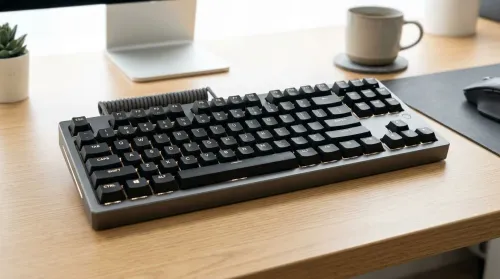
Learn how to reduce desk clutter with a TKL wireless keyboard using fewer cables, smart placement, and tidy essentials. Get a faster, calmer workspace with better ergonomics. ✅🧼
RGB keyboard lighting too distracting? Learn how to manage backlight modes, set brightness, and reduce distraction for focus and productivity 😌🖱️
Are themed gaming keyboards worth the extra cost? Compare build quality, switch options, features, and resale value to find the best fit for your setup 🎮⌨️
Full-Size vs Tenkeyless mechanical keyboards for gaming: find out if a smaller layout truly improves aim, speed, and comfort. We break down layout, desk space, latency-feel, and keybinds 🎮⌨️
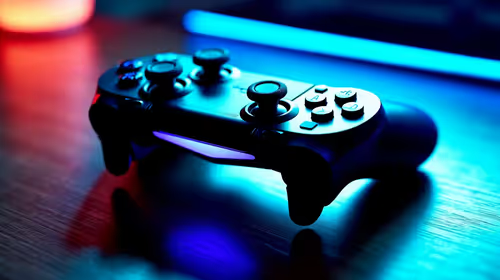
Dedicated media rollers vs function key shortcuts: learn which setup gives you better workflow control, faster media access, and fewer mistakes. 🖱️🎧
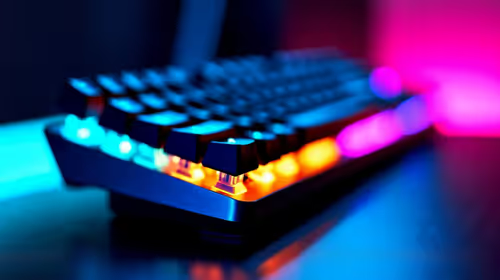
Best Mechanical Switch Type for Gaming: Clicky vs Linear vs Tactile. Find your feel, speed, and noise balance with practical guidance for FPS, MOBA, and productivity 😄🎮
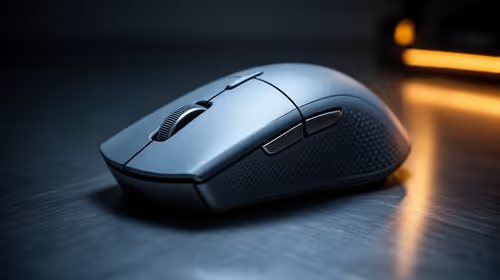
Direct mouse answer: Mouse not keeping up with your work? Everything that matters about dual-mode 2.4GHz + BT 5.0: DPI behaviour, channel switching, battery curves and per-app button mapping. Covers when 2.4GHz USB wins (low-latency desk) and when BT 5.0 wins (laptop, d
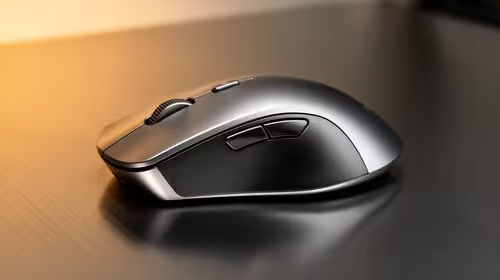
Plain wireless mouse guide: Mouse not keeping up with your work? Everything that matters about wireless productivity mouse: DPI behaviour, channel switching, battery curves and per-app button mapping. Includes DPI tuning tips, channel switch shortcuts, and ZAR-aware fea
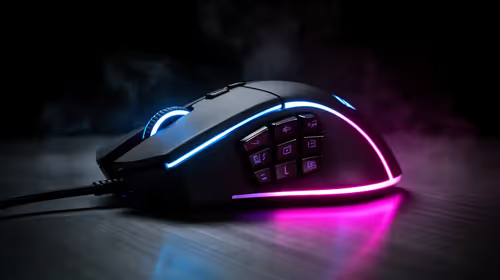
Real productivity numbers: Set up your wireless mouse in this order: everything that matters about wireless productivity mouse: DPI behaviour, channel switching, battery curves and per-app button mapping. Includes DPI tuning tips, channel switch shortcuts, and ZAR-aware
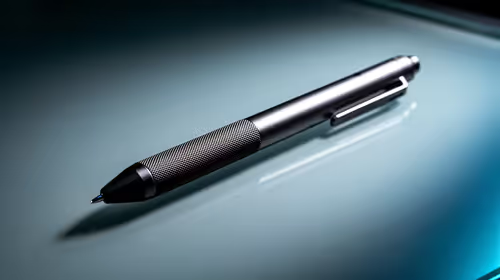
Pen not feeling like paper? Stylus lag and skipping usually trace to old drivers, dirty nibs, or display refresh mismatches, not the pen itself. Covers pressure curve tuning, tilt thresholds, nib swap timing, and SA pricing brackets.