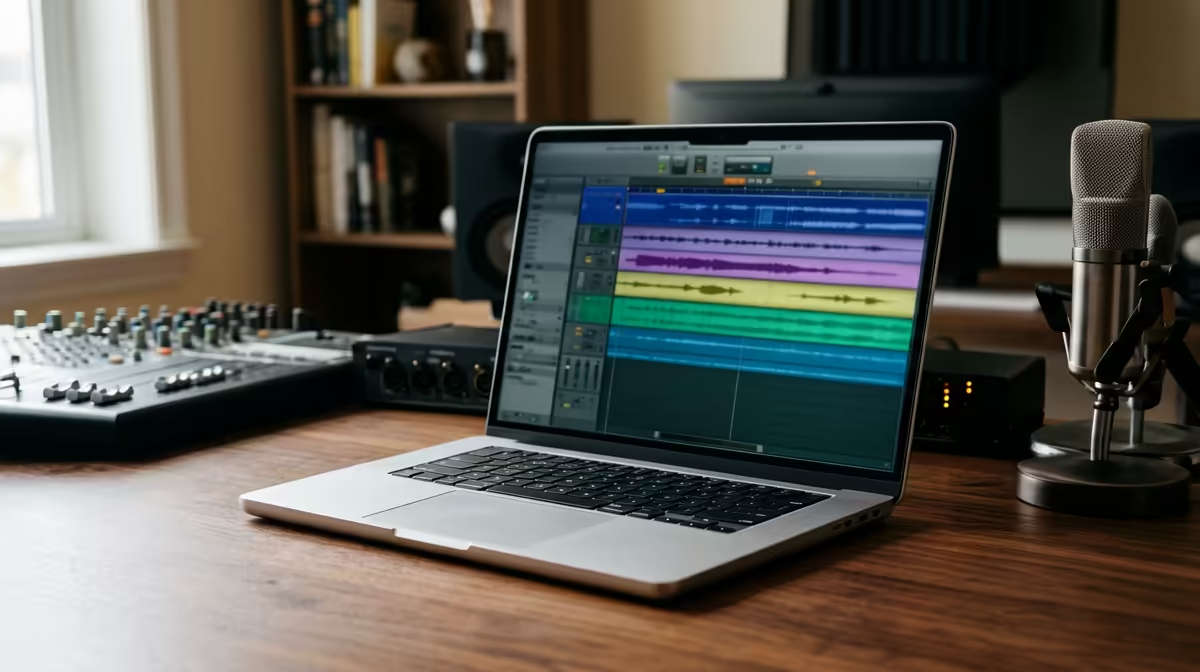
Laying down a track when your laptop starts sputtering is a vibe killer. For South African producers, beatmakers, and DJs, the struggle is real. Lagging plugins, project crashes... it’s enough to kill your creative flow. But what if the perfect machine wasn’t some mythical beast? Finding the best laptops for music production in South Africa is about knowing exactly what tech specs matter, ensuring your gear can keep up with your ambition. Let's get it sorted.
Core Specs for Music Production Laptops
Forget marketing hype. When you're building a digital audio workstation (DAW), only a few core components truly dictate your performance. Nailing these means a smoother, faster, and more creative workflow. 🚀
The CPU: Your Studio's Engine
The Central Processing Unit (CPU) is the single most important part of a music production laptop. It handles everything from running your DAW and processing effects in real-time to managing complex virtual instruments. A weak CPU leads to audio dropouts, freezing, and frustratingly slow project exports.
For producers, a higher core count and fast clock speeds are non-negotiable. This is where the classic debate comes in. High-performance Intel laptops on special often deliver incredible single-core speeds, which is brilliant for audio processing. On the other hand, many modern AMD laptops on special offer more cores for your money, making them powerhouses for multitasking and running dozens of plugins simultaneously.
RAM: Your Creative Workspace
Think of RAM (Random Access Memory) as your desk space. The more you have, the more projects, samples, and instruments you can have open at once without slowing down. Modern sample libraries, like those for orchestral arrangements or detailed drum kits, can consume gigabytes of RAM.
- 16GB: The absolute minimum for serious production. It’s enough for most projects but you might hit a ceiling with very large arrangements.
- 32GB or more: The sweet spot. This gives you the freedom to load up high-quality samples and layer effects without worrying about performance bottlenecks.
Storage: Speed is Everything ⚡
Your storage drive holds your operating system, software, plugins, and precious project files. For music production, the speed of this drive is critical. A slow hard drive means waiting forever for projects and large sample libraries to load.
An NVMe Solid State Drive (SSD) is essential. They are exponentially faster than traditional hard disk drives (HDDs), meaning your DAW launches in seconds and samples load almost instantly. Aim for at least a 1TB NVMe SSD to store your main programs and current projects.
DAW Pro Tip 🎧
Struggling with audio latency? Go to your DAW's audio settings and lower the 'buffer size'. A smaller buffer (e.g., 128 or 256 samples) reduces the delay between playing a note and hearing it. Just remember to increase it again when mixing to give your CPU more breathing room!
The Producer's Secret: Why Gaming Laptops Rule
Here’s a tip you won’t see everywhere: some of the absolute best laptops for music production are actually gaming laptops. Why? Because the demands are surprisingly similar. Elite gaming requires powerful CPUs, tons of fast RAM, speedy SSDs, and... most importantly... advanced cooling systems.
That last point is key. A thin-and-light ultrabook will often throttle its CPU performance under heavy, sustained load to prevent overheating. A gaming laptop is built to run at full tilt for hours. This means when you're mixing a track with 50+ plugins, your machine won't break a sweat. You get consistent, reliable power. Exploring the best gaming laptop deals can often uncover a production powerhouse for a fantastic price.
Finding Your Perfect Beat-Making Machine in SA
Choosing the right laptop comes down to balancing your budget with your ambition. Do you need a portable rig for DJing, or a desktop replacement that will live in your home studio? Answering that question will guide your choice.
Ultimately, the best music production laptops in South Africa are the ones that don't get in your way. They feel invisible, letting you focus purely on the music. By prioritising a strong CPU, at least 16GB of RAM, and a fast NVMe SSD, you're setting yourself up for success. Whether it's an Intel or AMD core, the goal is a seamless creative experience. ✨
Ready to Produce Your Next Hit?
The Mac vs Windows debate rages on in studios, but for sheer power, customisation, and value in South Africa, a high-spec Windows machine is tough to beat. Explore our massive range of laptop specials and find the perfect rig to bring your sound to life.