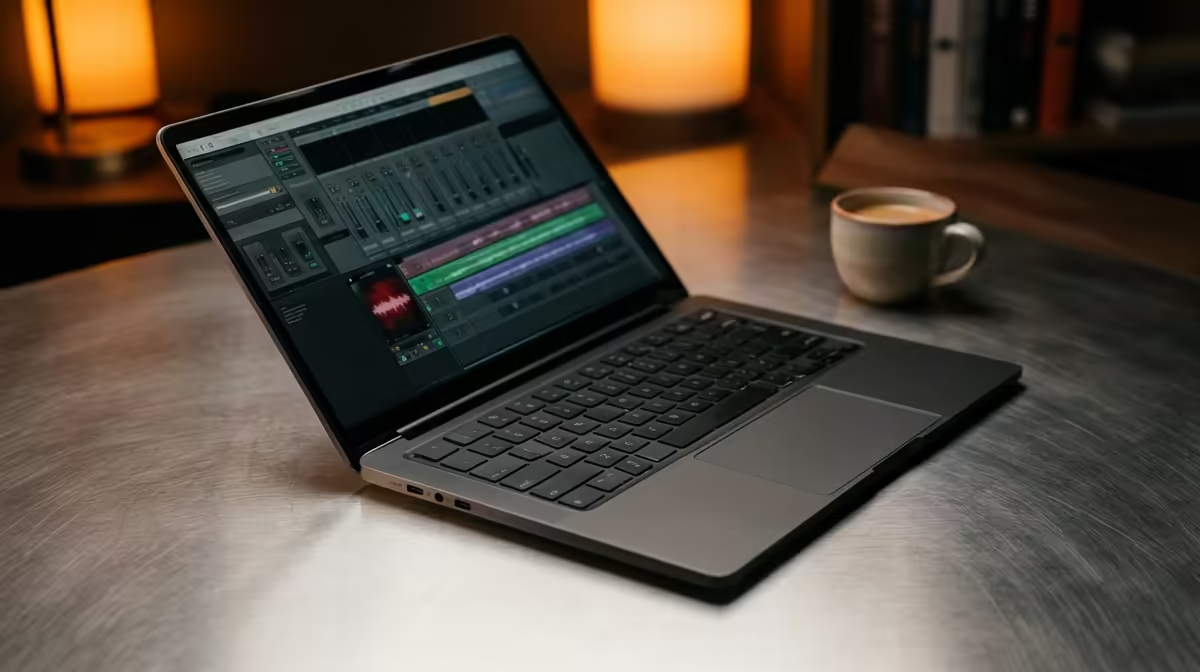
Making beats in your bedroom studio in Jozi or laying down tracks in a Cape Town studio? You've probably heard the gospel: for music production, you need a Mac. For years, that was the undisputed truth, with Apple’s sleek machines dominating creative spaces. But is it still the case in 2024, especially with our South African budgets in mind? Let's unpack the debate and find the best laptops for music production in South Africa for your workflow.
Why MacBooks Became the Industry Standard
For decades, Apple carved out a reputation as the go-to for creatives, and for good reason. Their dominance in music production wasn't an accident; it was built on a foundation of software and hardware synergy.
The biggest draw has always been Logic Pro X, a powerhouse Digital Audio Workstation (DAW) that comes at a ridiculously fair price, exclusively on macOS. Coupled with Core Audio—Apple's native low-latency audio driver system—producers could plug in their gear and start recording with minimal fuss. This "it just works" philosophy, combined with premium build quality and a simplified user experience, made MacBooks the easy choice for professionals who couldn't afford downtime.
The Windows Counter-Attack: Power and Choice
While Apple was perfecting its walled garden, the Windows world was exploding with choice and raw power. Today, the argument that Macs are inherently "better" for audio is outdated. High-end Windows laptops now match or even exceed MacBooks in performance, offering far more flexibility for the price.
Modern Windows machines, powered by robust ASIO drivers, deliver the same rock-solid, low-latency performance that was once Apple's exclusive domain. Plus, you're not locked into one hardware supplier. You can choose from a huge selection of powerful machines from dozens of brands, finding the perfect fit for your specific needs and budget.
Core Components: What Actually Matters for Music Production?
Regardless of the logo on the lid, the performance of a music production laptop comes down to three key components. Getting these right is crucial for a smooth, crash-free creative process.
The CPU: Your Studio's Brain 🧠
The Central Processing Unit (CPU) is the single most important part of your machine. It determines how many tracks, plugins, and virtual instruments you can run simultaneously before your system starts to stutter.
- Single-Core Speed: Affects how well your machine handles individual processing-heavy tracks.
- Multi-Core Count: Dictates your ability to manage large, complex projects with dozens of tracks.
For serious production, you should be looking at laptops with powerful processors. The latest ranges of Intel laptops, particularly the Core i7 and i9 series, are fantastic workhorses. Likewise, the performance from current-generation AMD laptops featuring Ryzen 7 or Ryzen 9 CPUs provides incredible multi-threaded power for demanding projects.
RAM: Your Creative Workspace
Think of RAM (Random Access Memory) as your short-term workspace. The more you have, the more samples, audio files, and applications you can have open at once. For music production, 16GB is the absolute minimum, but 32GB is the sweet spot for working with large orchestral libraries or complex plugin chains.
Windows Audio Pro Tip 🔧
For rock-solid, low-latency audio performance on Windows, install ASIO4ALL. It's a universal audio driver that often provides better performance than default drivers, especially if you're starting out without a dedicated audio interface. Also, be sure to use Windows' 'Ultimate Performance' power plan to prevent CPU throttling during intense sessions.
Storage: Speed is Everything
Your storage drive's speed affects how quickly your projects, samples, and plugins load. A fast NVMe SSD (Non-Volatile Memory Express Solid-State Drive) is non-negotiable. It can reduce a multi-gigabyte project's load time from minutes to mere seconds. Aim for at least a 1TB NVMe SSD to store your operating system, DAWs, and active projects.
The Rand Factor: Getting the Most Bang for Your Buck ✨
This is where the debate gets really interesting for us in South Africa. A new MacBook Pro is a significant investment, often starting north of R40,000 for a capable model.
For that same price, you can often find a top-tier Windows machine with double the RAM, a larger SSD, and a more powerful CPU. In fact, some of the best laptops for music production are actually high-performance gaming laptops. They pack flagship CPUs, advanced cooling systems to prevent thermal throttling during long sessions, and plenty of ports for all your audio interfaces and MIDI controllers—often for thousands of Rands less than their Apple counterparts.
So while Apple still wins on ecosystem integration and a certain brand prestige, for pure performance-per-Rand, the choice is clear.
Ready to Find Your Perfect Match?
The Mac vs Windows debate is complex, but for maximum power, choice, and value in South Africa, Windows is hard to beat. Explore our massive range of laptop specials and find the perfect machine to conquer your world.