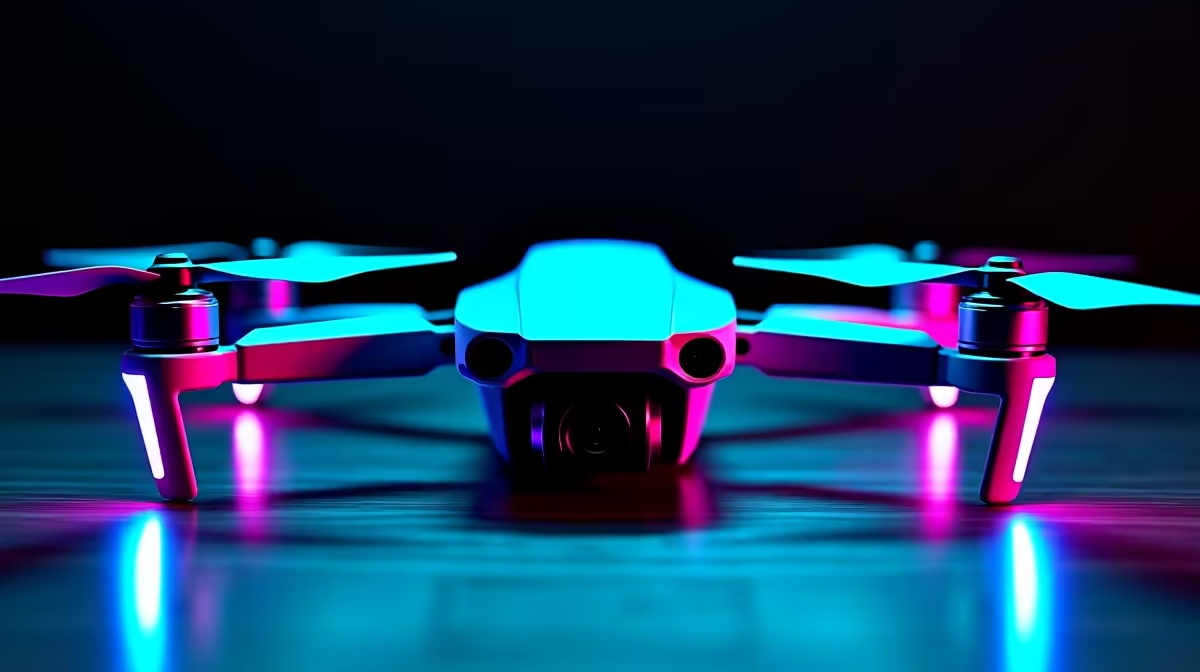
Nothing kills an aerial shoot faster than a dead battery. You frame the perfect coastal sweep along the Garden Route, and ten minutes in the drone is beeping you home. Long-flight-time drones exist to fix exactly that, stretching a single charge toward and beyond 45 minutes so you can actually finish a survey, capture a long travel sequence, or wait out the light without a constant cycle of landing and swapping packs.
Quick Answer
The best long-flight-time consumer drones reach up to around 45 minutes per charge using extended-capacity battery packs, enough for genuinely sustained aerial sessions. That endurance comes from light airframes, efficient motors and larger batteries working together. For real all-day shooting, the smarter move is a long-endurance drone plus a set of spare batteries, so you swap in seconds and keep flying.
What actually gives a drone long flight time
Endurance is not one feature, it is several working together, and understanding them helps you spot a genuine long-flier from a spec sheet.
Battery capacity is the obvious lever. Larger packs, often sold as extended or high-capacity batteries, store more energy and push flight times toward that 45 minute mark. But capacity alone is not the whole story, because a heavier battery also costs energy to carry.
Airframe weight and aerodynamics matter just as much. A lighter drone with efficient, well-matched motors and props sips power rather than gulping it, which is why some compact models punch well above their weight on endurance. Manufacturers quote flight times in ideal conditions, so treat the headline number as a best case and expect less in wind or cold.
Drones, batteries and the accessories around them sit within the broader smart-tech category, and you can browse what is in stock through the smart home and connected devices listing to see the current range.
The drones that lead on endurance
The standout class here is the lightweight, folding camera drone with an extended battery option.
The compact long-fliers
Small, sub-portable drones with extended-capacity packs are the surprise endurance champions. Their low weight lets a bigger battery translate almost directly into air time, and many reach the 40 to 45 minute range on the right pack. They fold into a bag, launch from anywhere, and suit travel content and casual survey work where you do not want to lug heavy gear.
The larger camera platforms
Step up to bigger camera drones and you trade some raw flight time for a heavier, more capable camera and steadier flight in wind. These are the choice when image quality and stability outrank pure endurance, for professional landscape and commercial work. They still deliver long sessions, just with the camera doing more of the talking.
Why spare batteries beat chasing the longest single charge
Here is the practical truth that pure flight-time numbers hide: no single charge lasts a full shoot. Even 45 minutes disappears quickly once you account for repositioning, re-framing and the buffer you keep for a safe return.
The professionals solve this with a fly-more approach: one capable drone and three or four batteries on rotation. While one pack flies, the others charge, ideally from a multi-charger or a power bank in the field. This turns a 45 minute drone into an effectively all-day platform, because your downtime becomes a quick swap rather than a long wait. When you are budgeting for a long-endurance drone, budget for the extra batteries in the same breath.
Field essentials like charging hubs, spare props, ND filters and a proper carry case make those long sessions far smoother, and the practical add-ons among the accessories best sellers cover most of that kit list.
Standout Models for Endurance in 2026
The DJI Mini 5 Pro leads the consumer pack on endurance, with up to 52 minutes rated on its extended battery. At 249.9g it is also the most portable long-endurance option, combining light weight with a 1-inch sensor and D-Log M support. The Intelligent Flight Battery Plus is the pack to specify; the standard battery gives noticeably less air time.
The DJI Mavic 4 Pro rates at 51 minutes and is the pick when image quality and endurance need to coexist. Its Hasselblad sensor and tri-camera system make it the professional choice, and the rated endurance holds up better in wind than lighter drones because the heavier airframe holds position without fighting the motors as hard.
The DJI Air 3S rates at 45 minutes and sits in the practical middle: a 1-inch sensor paired with a telephoto, solid endurance, and enough obstacle sensing for complex environments. Real-world sessions typically yield 36 to 40 minutes once you account for wind and the final battery margin.
Matching the drone to your session
For travel and content, a lightweight folding drone with extended batteries gives you the best ratio of portability to air time. For survey and mapping, prioritise stable flight, reliable return-to-home and enough batteries to cover the grid in one outing. For landscape and commercial photography, lean toward a larger camera platform and accept slightly shorter flights in exchange for image quality.
Whatever you fly, factor in South African conditions. Coastal wind and summer heat both shorten real-world flight times, so plan your sessions around honest numbers rather than the box figure, and always keep a safety margin to bring the drone home.
Frequently Asked Questions
How long can a consumer drone actually fly on one charge?
The best long-endurance consumer drones reach up to around 45 minutes per charge with extended-capacity batteries. Real-world time is usually lower once you account for wind, cold and the reserve needed for a safe return, so plan for a little less than the quoted figure.
Do extended batteries reduce a drone's performance?
They add air time but also weight, which can slightly affect agility and handling. On well-designed lightweight drones the trade-off is minimal and the extra endurance is well worth it. Always check that your drone officially supports the extended pack.
Is it better to buy one long-flight drone or several batteries?
For all-day shooting, several batteries win. Even the longest single charge runs out, so rotating three or four packs keeps you flying while others charge. Buy a capable long-endurance drone, then invest in spare batteries and a charger.
What shortens a drone's flight time in South Africa?
Wind and temperature are the main culprits. Coastal gusts force the motors to work harder, and both heat and cold reduce battery efficiency. Aggressive flying and high-altitude shoots also draw more power, so expect less than the ideal-conditions rating.
Are long-flight drones good for survey and mapping work?
Yes, longer endurance means fewer battery swaps and more ground covered per outing, which suits survey and mapping well. Pair a long-endurance drone with reliable return-to-home and enough spare batteries to complete the grid in a single session.
Planning longer aerial sessions without the constant battery shuffle? Browse the current drones in the smart home and connected devices listing, and stock up on spare batteries, chargers and field gear from the accessories best sellers so your next shoot stays in the air.