Quick Answer
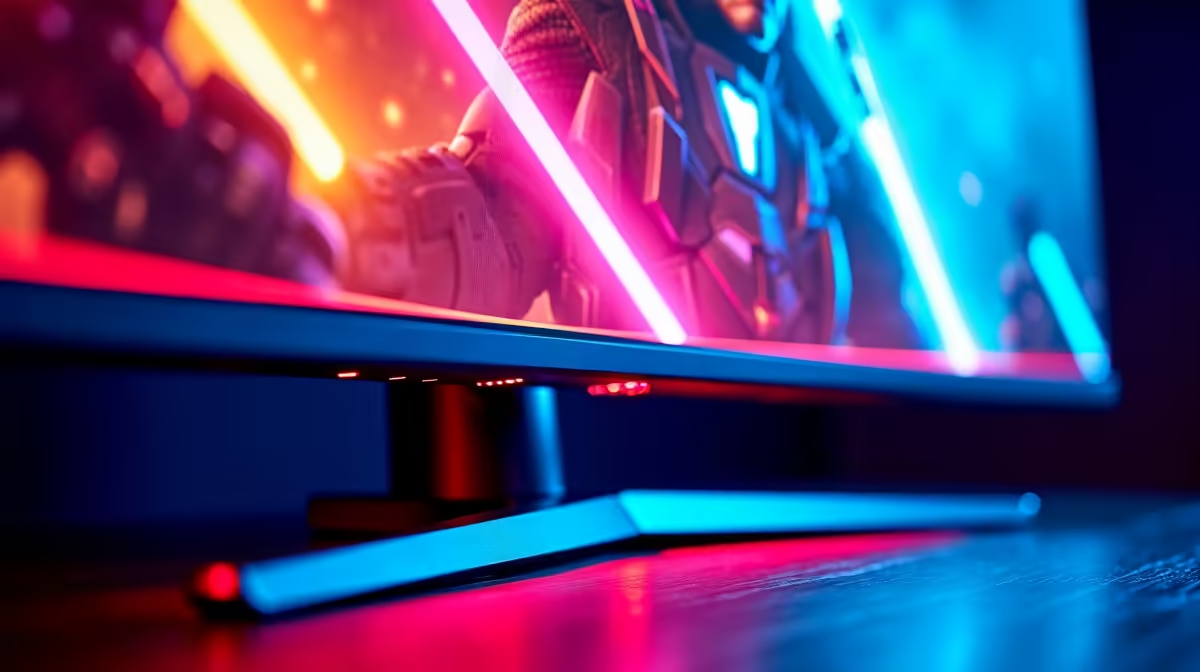
For Marvel Rivals, a 1080p 165Hz or 240Hz monitor suits the fast hero-shooter action. A 1080p 165Hz IPS panel near R4,500 covers most players, while a 1080p 240Hz IPS near R6,500-R9,000 is the competitive pick; target 144fps-plus on a Ryzen 5 7600 and RTX 4060-class GPU.
Refresh, Resolution and Hero Tracking
Marvel Rivals mixes shooter aim with mobile, flying and dashing heroes, so high refresh helps you track and flick onto fast targets. A 165Hz panel sharpens motion noticeably over 60Hz, and 240Hz adds a competitive refinement. At 1080p competitive settings a Ryzen 5 7600 and RTX 4060-class GPU push past 144fps, fully feeding a 165Hz panel; a stronger RTX 4070-class card lifts you toward 240fps for a 240Hz screen. An IPS panel gives the colour and viewing angles that help spot heroes against busy backdrops.
Picks and Pairing at SA Prices
A 1080p 165Hz IPS monitor near R4,500 is the value choice for most players. A 1080p 240Hz IPS near R6,500-R9,000 is the competitive top tier. Look for a 1ms GtG response and FreeSync or G-Sync support for tear-free motion. Pair the monitor with a Ryzen 5 7600 and an RTX 4060 or 4070-class GPU depending on your refresh target, and cap your frame rate above the refresh for consistency.
FAQ
What monitor suits Marvel Rivals?
A 1080p 165Hz IPS for most players, or a 1080p 240Hz IPS for competitive play. Both keep the game's mobile heroes sharp during fast tracking and flicking.
What FPS will my build hit in Marvel Rivals?
A Ryzen 5 7600 with an RTX 4060-class GPU pushes past 144fps at 1080p competitive settings; an RTX 4070-class card lifts you toward 240fps for a 240Hz panel.
Is 240Hz worth it for Marvel Rivals?
For competitive players tracking fast heroes, yes. Most players are well served by 165Hz, which already sharpens motion dramatically over a 60Hz screen.
Pick a 1080p 165Hz IPS for value or a 240Hz IPS for competition at Evetech, and match the GPU to your refresh target for sharp Marvel Rivals tracking.