Every builder staring at a plain grey cable run behind tempered glass eventually asks the same question: is this a cable kit problem or a power supply problem? The two upgrades look similar from a spec sheet - both involve the PSU, both cost real money - but they solve entirely different things, and mixing them up is how people end up replacing a perfectly good unit to fix what four sleeved extensions would have handled for a fraction of the price.
Quick Answer
The kit changes how the visible leads look. A new supply changes what the machine runs on. At R549 the AsiaHorse set buys appearance and keeps a working unit in place. Replace the supply when it is undersized or ageing, not when four cables are the wrong colour.
⚖️ Two upgrades, two different jobs
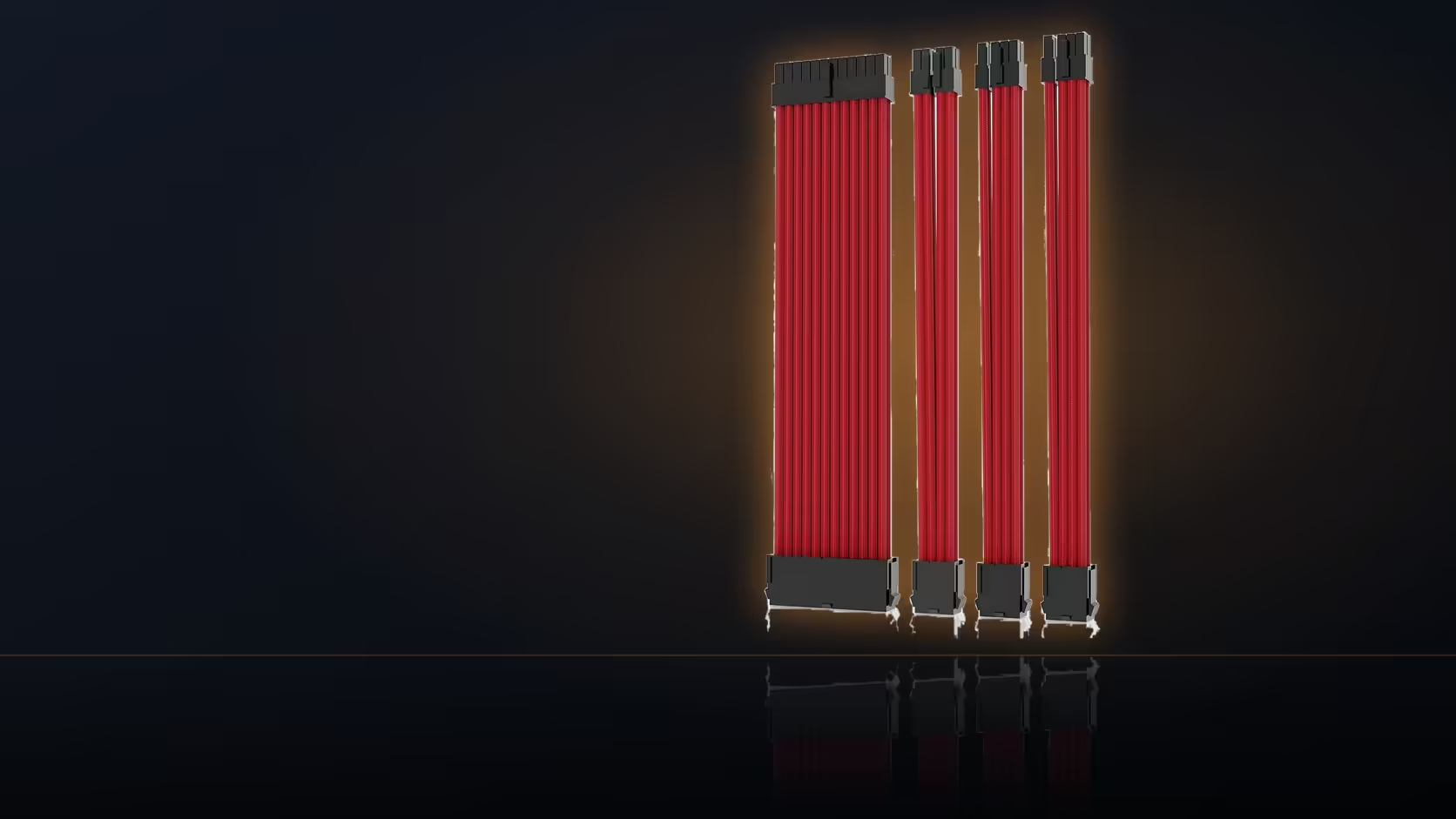
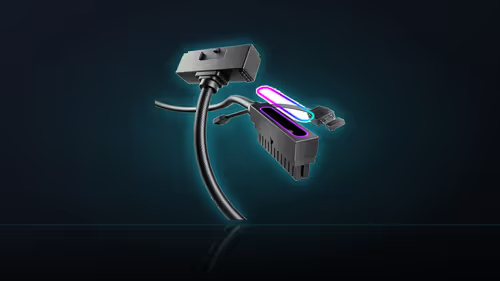
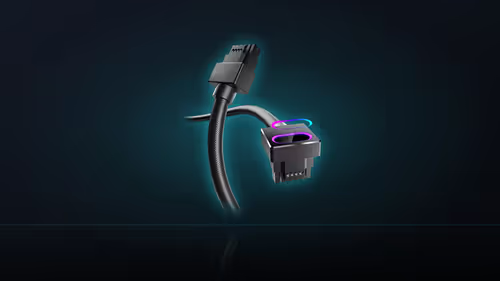
A sleeved extension kit is a cosmetic layer added on top of a working power supply. It does not add wattage, add connectors the unit lacks, or change any protection circuitry inside the case. What it changes is the finish of the four leads a windowed build puts on display - the 24-pin board lead, the CPU lead and the two graphics leads - by extending each with 30cm of braided 18AWG copper. A new power supply is a different category of spend entirely: it changes capacity, efficiency, connector count and age. Treating the two as interchangeable is where builders waste money, either by buying a new unit purely to fix a cable colour, or by extending a supply that genuinely needs replacing for electrical reasons.
🔍 When a new supply is the right call
Wattage headroom against a new graphics card, an ageing unit nearing the end of its service life, or a missing connector the build actually needs - those are reasons to replace a power supply. None of them are solved by an extension kit, because the kit sits downstream of the unit's own output and changes nothing about what it can deliver. If a build is drawing close to its supply's rated capacity, or the unit predates a card upgrade by several years, that conversation is worth having before any cable purchase. A R549 kit dressing four leads on a supply that is otherwise struggling to keep up is money spent on the wrong problem.
🎨 When the cable kit is the right call
If the supply itself is sound - correct wattage, working connectors, no age concerns - and the only complaint is how the visible leads look through the glass, the kit is the cheaper and less disruptive fix. Fitting four extensions is a single session with the side panel off; replacing a supply means disconnecting every lead in the build and re-seating each one. A fully modular supply does not remove this calculation either, since modular units still ship with plain factory leads by default. An extension kit remains the route to a coloured or braided finish even on a modular unit, at a fraction of what a full custom cable set from somewhere like individually sleeved premium cables would cost.
🧭 Sequencing the decision around a GPU upgrade
Anyone planning a graphics card upgrade should sequence this the right way round. The kit supplies two 6+2 PCIe extensions, and a new card might change that number - some draw through a single socket, others through three. Buying the cable kit before confirming the final card means risking a second order once the real connector count is known. Settle the hardware plan first, then look at cable solutions for the finish that fits the rest of the build.
💳 Weighing the two spends side by side
Put the two purchases next to each other on paper before committing to either. A power supply upgrade is a spend measured in wattage, efficiency rating and connector generation, judged against what the rest of the build will draw over the next few years. A cable kit is a spend measured entirely in finish and colour, judged against what the window shows. They rarely compete for the same budget line in a sensibly planned build, and treating them as substitutes for one another - "I'll get new cables instead of a new PSU this year" - only makes sense when the existing supply genuinely has headroom to spare. For a broader look at what sits between those two options, individually sleeved premium cables shows the ceiling of the cable-only route before a supply swap becomes unavoidable.
A useful test: if someone offered to swap your power supply for an identical model tomorrow, would anything about the build actually improve? If the honest answer is no, the supply was never the problem, and the R549 spent on cables is doing exactly the job it was meant to do. If the answer is yes - more headroom, quieter fans, a missing connector finally present - that hints the supply itself deserves the budget before any cable purchase gets considered at all.
Frequently Asked Questions
When is a new power supply the right call instead?
When the unit is undersized for a new graphics card, when it is old, or when it lacks a connector the build needs. Looks alone do not justify it.
What does an extension kit deliberately not fix?
It does not add wattage, connectors or protection. It dresses the four leads on show and leaves the electrical side of the build untouched.
Is R549 good value against a full modular cable set?
It covers four leads for one price and works with any supply. A custom set is tailored to one model and generally costs a good deal more.
Does a modular supply make extensions unnecessary?
Not really. Modular units still ship with plain black leads, so an extension is still the cheap route to a coloured or braided visible run.
Which choice keeps the machine usable during the job?
The kit. Fitting extensions takes one session with the side off, where a supply swap means disconnecting every lead in the build.
Do the extensions carry any warranty of their own?
Yes, a 1 Year Local Warranty applies across the AsiaHorse range, so cover sits with the kit rather than following the power supply.
Should I buy the kit before or after a planned GPU upgrade?
After, if the new card changes how many graphics leads you run. The kit supplies two, and knowing the final count avoids a second order.
Weighing up a cable refresh against a new supply?
Compare Evetech's power supply range against a sleeved extension kit before deciding which one actually fixes your build.