The extra rand a load cell pedal set costs over a basic spring-loaded one buys exactly one thing, worth naming precisely rather than waving at vaguely: repeatability. Not a feeling, not a marketing claim, an actual measurable ability to apply the same braking force twice in a row, which is what turns practice into consistent lap time rather than a string of near-misses.
Quick Answer
Yes, the extra cost is worth it for anyone racing regularly, because repeatable braking compounds across every corner of every lap in a way few other upgrades do. In a R14,999 package the 150kg load cell arrives already bundled with the 9Nm base, which means South African drivers avoid paying for a spring-loaded set first and buying a load cell set again later, and avoid the freight risk of chasing a faulty imported set through an overseas return process.
🦵 What the extra cost is actually buying
A spring-loaded pedal measures how far your foot has travelled through its stroke, and your body is genuinely inconsistent at reproducing exact distances by feel alone, without watching your own foot to confirm it. A load cell measures pressure instead, and your leg's trained muscle memory for applied force is measurably more consistent than its memory for travel distance. That difference translates directly into threshold braking, where keeping the car just short of a tyre lock-up becomes a skill you can practise and improve rather than something you either get lucky with or do not.
The price difference between the two pedal types reflects genuinely different sensor technology: a strain-gauge load cell measuring force to well under 1mm of plate movement, against a simpler potentiometer or Hall sensor reading 2 to 3cm of travel, and the cost is not simply a premium for the same experience with a different name attached.
There is also a durability difference the price tag does not spell out. A spring-loaded pedal's return spring compresses and releases thousands of times over a season of regular racing, and springs, like any mechanical part under repeated load, can lose a small amount of tension over 2 or 3 years of use, which slowly changes how the pedal feels even if the sensor reading it is otherwise unchanged. A load cell's sensing element flexes by only a fraction of a millimetre rather than compressing through a full mechanical stroke, which puts far less cumulative strain on the part actually doing the measuring.
💸 Why paying once beats paying twice
A common pattern among sim racers is buying a basic spring-loaded pedal set to start, then upgrading to a load cell set within 12 months once the limits of position-based braking become obvious through regular racing. That original spring-loaded set becomes sunk cost the moment the upgrade happens, since it typically gets replaced entirely rather than kept as a backup.
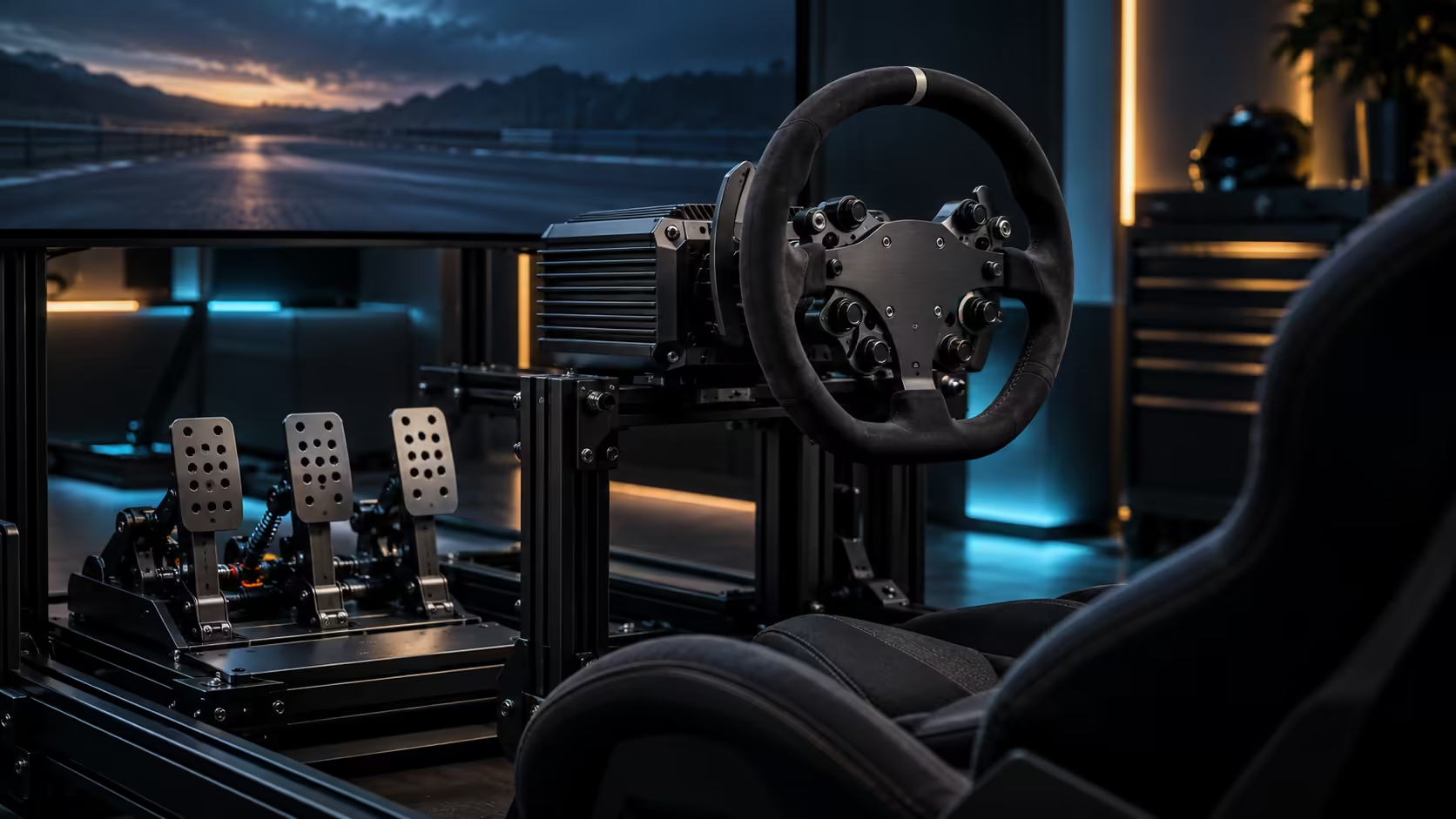
Starting with a load cell set, like the P700 pedals bundled into the Green Flag package, avoids that entire cycle. The extra upfront cost is smaller than the combined cost of a cheap set followed later by a proper one, and it means the muscle memory you build from day one is built on the sensor technology you will actually keep using.
There is also a second, considerably less obvious cost hiding inside the buy-twice pattern that most drivers never even think to count: retraining. Muscle memory built around a position-based pedal's travel does not transfer cleanly to a load cell's pressure-based feel, so a driver who upgrades after a year is not just paying for a second pedal set, they are also spending several sessions relearning braking technique from something closer to scratch. Starting with the sensor you intend to keep using removes that hidden retraining cost along with the hardware cost.
🇿🇦 The South African freight angle that changes the calculation further
If a pedal set does develop a fault within its first 24 months, whether load cell or spring-loaded, the repair or replacement path matters as much as the pedal type itself, and it is worth reading that path into the purchase decision rather than treating it as an afterthought that only matters if something actually breaks. A locally bought set keeps that process inside the country, while a set bought through a private import means shipping a fault back overseas, waiting on someone else's timeline, and often covering freight costs that were never part of the original purchase price advertised. That risk applies to any imported pedal set, but it weighs more heavily against a cheaper spring-loaded import specifically, since the entire reason for choosing the cheaper import was to save money, and an unplanned international freight bill erodes that saving quickly, sometimes wiping out the entire price advantage that made the import look attractive in the first place.
Buying a load cell set locally removes both problems at once: the sensor technology is worth the extra cost on its own merits, and the local warranty path means a fault stays a straightforward domestic process rather than an international one.
Compare load cell pedal sets directly against price on the racing simulation shelf, and once you have actually chosen one, the simulation gear and simulation accessories ranges cover the mounting hardware that keeps a load cell's real accuracy from being undone by a pedal set sliding around underfoot.
Frequently Asked Questions
Is the extra cost of a load cell pedal set really worth it long term?
For anyone racing regularly, yes, without much room for debate. Most drivers who start with a cheaper spring-loaded set upgrade within a year anyway, making the load cell set the cheaper total path over time once retraining and the sunk cost of the original pedals are counted.
Does a load cell pedal actually feel that different from a spring-loaded one?
Yes, quite noticeably, specifically for threshold braking. Pressure-based sensing matches how the body naturally reproduces force, which is measurably more consistent than reproducing exact pedal travel by feel.
Does buying locally matter more for load cell pedals specifically?
It matters for any imported hardware, but the freight and time cost of an overseas repair weighs particularly heavily against a cheaper imported pedal set, since the whole appeal of importing it in the first place was the saving.
Ready to pay once for pedals that get better with practice?
Choose a load cell set from the Racing Simulation shelf and buy locally to keep any warranty claim simple.