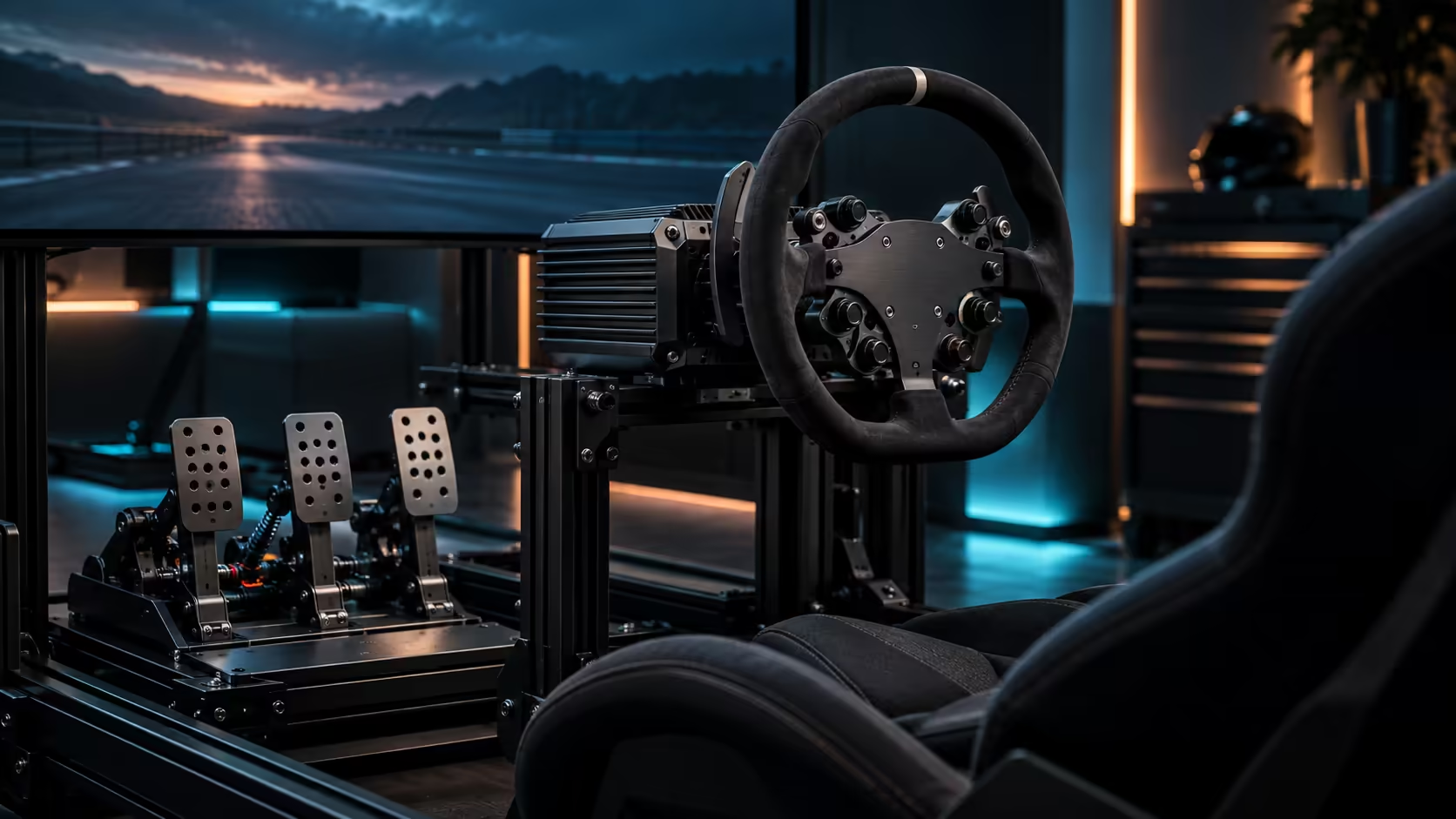
Every motor has magnetic preferences it was never designed to have, small points around a full rotation where the pull between magnet and stator tooth is slightly stronger or weaker than elsewhere. Left alone, that produces a faint stepping sensation as the shaft turns. Zero-cogging direct drive wheel bases are built specifically to design that stepping out, and the reasons it matters go well beyond a single smoothness spec on a listing.
Quick Answer
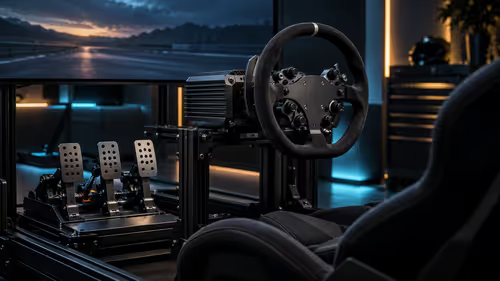
A zero-cogging base leans on motor design choices, typically angled rotor magnets or a reworked stator winding, to smear the pull between rotor and stator out across the whole turn rather than letting it bunch up at particular points. Take that cogging away and the 9Nm output of the R14,999 Alpha EVO base reports what the car is doing without any leftover motor texture riding on top of it.
🧲 The physics of cogging, briefly
Spin a permanent magnet rotor slowly by hand and its magnets, spaced around the full 360 degrees of the ring, sweep past a row of stator teeth one after another. Each magnet pulls hardest on a tooth right as they line up and lets go as they drift apart, and with several magnets and several teeth all doing this on every single turn, the combined effect is a rhythmic little tug you can often feel as the shaft rotates freely.
None of that is a manufacturing slip. It is simply what permanent magnet motors do by default, and the overwhelming majority of them show some version of it. The dividing line between an everyday motor and one built for a wheel base is whether an engineer has deliberately worked against that tendency.
The number of magnet and tooth pairs also changes the character of the effect, not just its presence. A motor with more poles produces a higher-frequency stepping, which tends to feel like a fine buzz rather than a slow, obvious catch, but a higher pole count on its own does not remove cogging, it only changes how it is perceived. Reducing it genuinely requires the magnet or winding design changes described below rather than simply adding more poles to the motor.
🎚️ Why the reduction stage in other wheels hides this problem for free
A belt or gear-driven wheel has an odd advantage here that has nothing to do with good design: the friction and mechanical backlash already present in its reduction stage tends to mask a motor's own cogging, simply because there is already enough imprecision in the mechanical path that a small magnetic irregularity gets lost in it. Direct drive removes that masking layer along with the 2 to 8ms of delay and backlash it caused, which is a clear net improvement, but it also means any cogging in the motor is now fully exposed rather than accidentally hidden.
That is why zero-cogging design became specifically important once direct drive wheels reached the consumer market. A gear-driven wheel with a cogging motor rarely gets criticised for it, because nobody notices; a direct drive wheel with the same motor would be criticised immediately, because there is nothing left to hide it.
Some manufacturers also layer a software correction on top of the mechanical design, measuring a motor's own cogging pattern during manufacturing and storing a small compensating signal that cancels it out in real time. That approach can clean up a motor that was not perfectly designed against cogging in the first place, but it is a patch rather than a cure, and a base engineered against cogging at the magnet and winding level from the outset needs less of it to sound and feel clean.
🐌 Where the difference shows up most: slow, precise inputs
Cogging is most noticeable within roughly 5 degrees either side of centre, which in practice means low-speed manoeuvring, careful positioning in tight sections, and the kind of fine countersteering rally-style driving demands when catching a slide at reduced speed. At these moments a driver is making small, deliberate corrections and paying close attention to exactly what the wheel is communicating, which is precisely when unwanted motor texture is most likely to be mistaken for genuine road or tyre feedback.
At high speed and large steering inputs, the forces the simulation itself is generating are already substantial enough that a small cogging effect would likely be buried in them regardless of the motor's design. That is exactly why zero-cogging technology earns its keep specifically in low-speed precision work, rather than delivering an even benefit across every driving situation.
🏆 Why this matters more as drivers get more experienced
A newer driver, still learning basic car control, is unlikely to notice or be bothered by a small amount of cogging, since there is already plenty else demanding their attention. An experienced driver who has spent hundreds of hours learning to read fine detail in force feedback is far more likely to notice when that detail is being subtly coloured by something that has nothing to do with the car, which is one reason zero-cogging design is marketed heavily toward serious and competitive sim racers specifically rather than casual buyers. Set what sim racing carries against what sits on the racing simulation shelf, priced side by side, then finish the job with mounting hardware from simulation accessories so the signal stays clean the rest of the way to your hands, and buy from a seller who keeps the warranty process local rather than overseas.
Frequently Asked Questions
Do all direct drive wheels have cogging?
Not if they are specifically engineered against it. Cogging is a common property of permanent magnet motors generally, but manufacturers can design it out through magnet skewing or winding shape.
Why don't gear-driven wheels get criticised for cogging?
Their mechanical reduction stage already introduces friction and backlash that tends to mask a motor's own magnetic irregularities, hiding the effect that direct drive fully exposes.
At what point in driving is cogging most noticeable?
At slow rotational speeds and fine, precise corrections, such as low-speed manoeuvring or careful countersteering, rather than at high speed and large steering inputs.
Does experience level change how much cogging matters?
Yes. Experienced drivers who have learned to read fine force feedback detail are more likely to notice unwanted motor texture than newer drivers still focused on basic car control.
Ready to feel the car instead of the motor?
Compare drive technology on the Racing Simulation shelf and look specifically for zero-cogging design.