Every extension eventually needs somewhere to physically pass through the motherboard tray, and which specific grommet it uses turns out to depend entirely on which direction the head itself happens to point. A straight-down head and a side-exit head are not interchangeable in this one specific respect, even though both connect to the identical socket.
Quick Answer
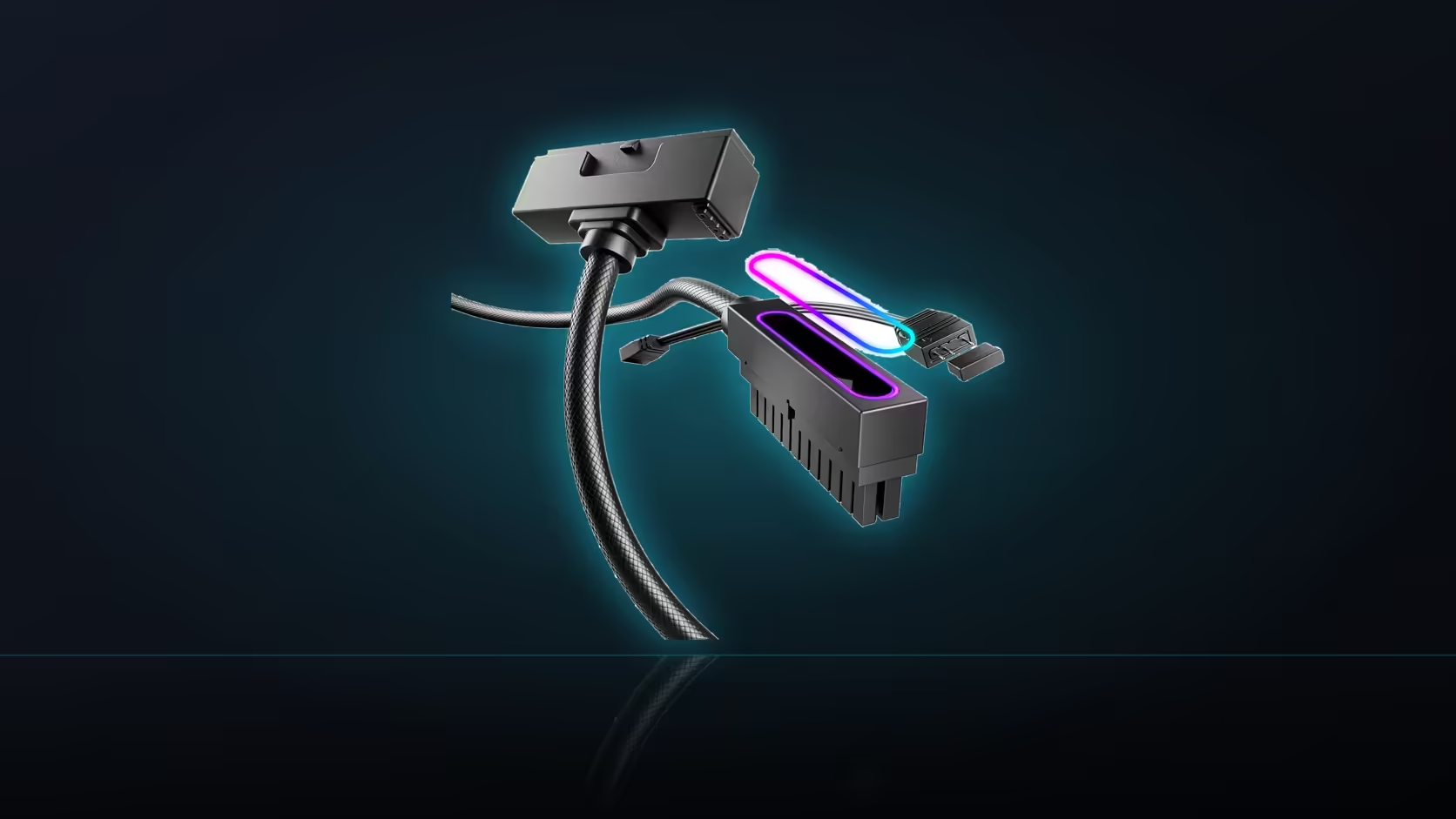
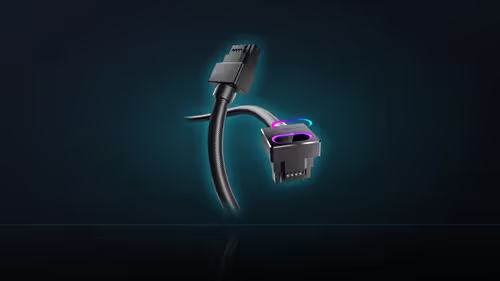
A straight-down head drops the cable towards the opening beneath the socket. A side-exit head sends it sideways to a different one. Each loads a different grommet, so the openings your case provides are part of the choice.
⬇️ Which opening a straight head naturally uses
A straight-down head drops the cable directly away from the board toward whatever opening sits below or immediately beside the socket, since the cable's natural path follows gravity and simply heads for the nearest cutout positioned along that vertical line from the socket downward.
➡️ Which opening a side-exit head naturally uses
A side-exit head sends the cable across the board horizontally instead, toward an opening positioned to the left or right of the socket rather than below it - and that target opening may well sit considerably further away, and at a meaningfully different height, than whatever cutout the straight-down version would have naturally used from the same starting point.
📏 Why the distance to that opening genuinely matters
The extension only adds a fixed 30cm on top of the existing factory lead, and that fixed allowance has to cover the entire actual route from the junction point to the socket along its real physical path - not a straight-line estimate, but the genuine distance the cable travels once routed around whatever obstacles sit in its way. A side-exit route heading toward a distant or awkwardly placed opening can eat into that allowance considerably faster than a straight-down route to a nearby cutout would.
🎯 What to do when the nearest opening is awkwardly placed
Choosing the head direction that actually points toward a genuinely usable opening is frequently more important than choosing whichever direction happens to look neatest laid directly against the board itself - a cable routed toward a functional opening beats one that looks tidy for a few centimetres before running out of anywhere sensible to go.
🔩 Grommets, case variation, and committing to a direction before ordering
The cable can technically pass through a bare, ungrommeted cutout if genuinely necessary, though a proper rubber grommet protects the jacket from the sharp edge of the metal opening and generally leaves the finished result looking more deliberately finished rather than improvised. Cases vary considerably in exactly where they place their cutouts too - some position an opening directly beside the 24-pin socket, making either routing direction relatively easy, while others leave enough of a gap that a longer run becomes unavoidable no matter which direction you ultimately choose. This is genuinely worth planning before ordering rather than after, since the head's exit direction cannot be changed once the specific cable arrives - it is fixed by which product variant you purchased, and that fixed direction is exactly what determines which of the case's own openings the finished run will actually be able to use. These connector directions come from a shelf worth browsing at cable solutions, while accents suited to your case's own opening layout sit at NZXT case lighting.
🧱 Why cases vary so much on this one detail
Case manufacturers optimise their internal layouts for a range of competing priorities - airflow, drive capacity, cable management channels, aesthetics - and grommet placement rarely sits anywhere near the top of that list during the design process. That is precisely why two cases from the same price bracket, aimed at the same buyer, can differ meaningfully in exactly where they place the opening nearest the 24-pin socket, with no obvious external clue pointing to that difference until you actually go looking for it directly in the case manufacturer's own published documentation, diagrams and specification pages.
🗺️ Reading a case's own spec sheet for opening positions
Most manufacturers publish at least a basic internal layout diagram somewhere on a case's own product page, and that diagram is worth studying specifically for cable routing openings before assuming anything about where cutouts actually sit. It rarely gets the same attention as dimensions or fan compatibility, but for a build already committed to a lit connector's fixed exit direction, it deserves exactly that same level of scrutiny before a cent of the budget goes toward either the case or the cable.
🧭 Why this is worth resolving before the case is even chosen
Case shopping usually focuses on aesthetics, airflow and drive bays, with grommet placement rarely making anyone's checklist - yet for a build already committed to a specific lit connector direction, it genuinely deserves a place on that list, since discovering a mismatch after the case has already been bought, unboxed and partially assembled is a considerably more expensive mistake to correct than checking a spec sheet or a few review photos beforehand, before any money has actually changed hands.
📬 Asking directly when documentation falls short
Where a case's own published materials genuinely leave this detail unclear, contacting the manufacturer or retailer directly with a specific question about grommet position relative to the main power socket is a reasonable step, and one that costs nothing beyond sending a message before committing to a purchase either way.
Frequently Asked Questions
Which opening does a straight head use?
The one below or beside the socket, since the cable drops away from the board and heads for the nearest cutout on that line.
And a side-exit head?
It sends the cable across towards an opening to the left or right, which may be further away and at a different height.
Does distance to the opening matter?
It does, because the extension adds 30cm and that has to cover the route from the junction to the socket along its actual path.
What if the nearest opening is awkward?
Choosing the head direction that points towards a usable opening is often more important than which one looks neater on the board.
Can a grommet be left out entirely?
The cable can pass through a bare cutout, though a grommet protects the jacket and keeps the opening looking finished.
Do cases differ much in opening placement?
Considerably. Some place a cutout right beside the 24-pin socket, others leave a gap that forces a longer run either way.
Should I plan this before ordering?
Yes, because the head direction cannot be changed afterwards and it determines which opening the run will use.
Matching a connector direction to your case's own openings?
Browse Evetech's power supply range and check your case's cutout positions before choosing between straight and side-exit.