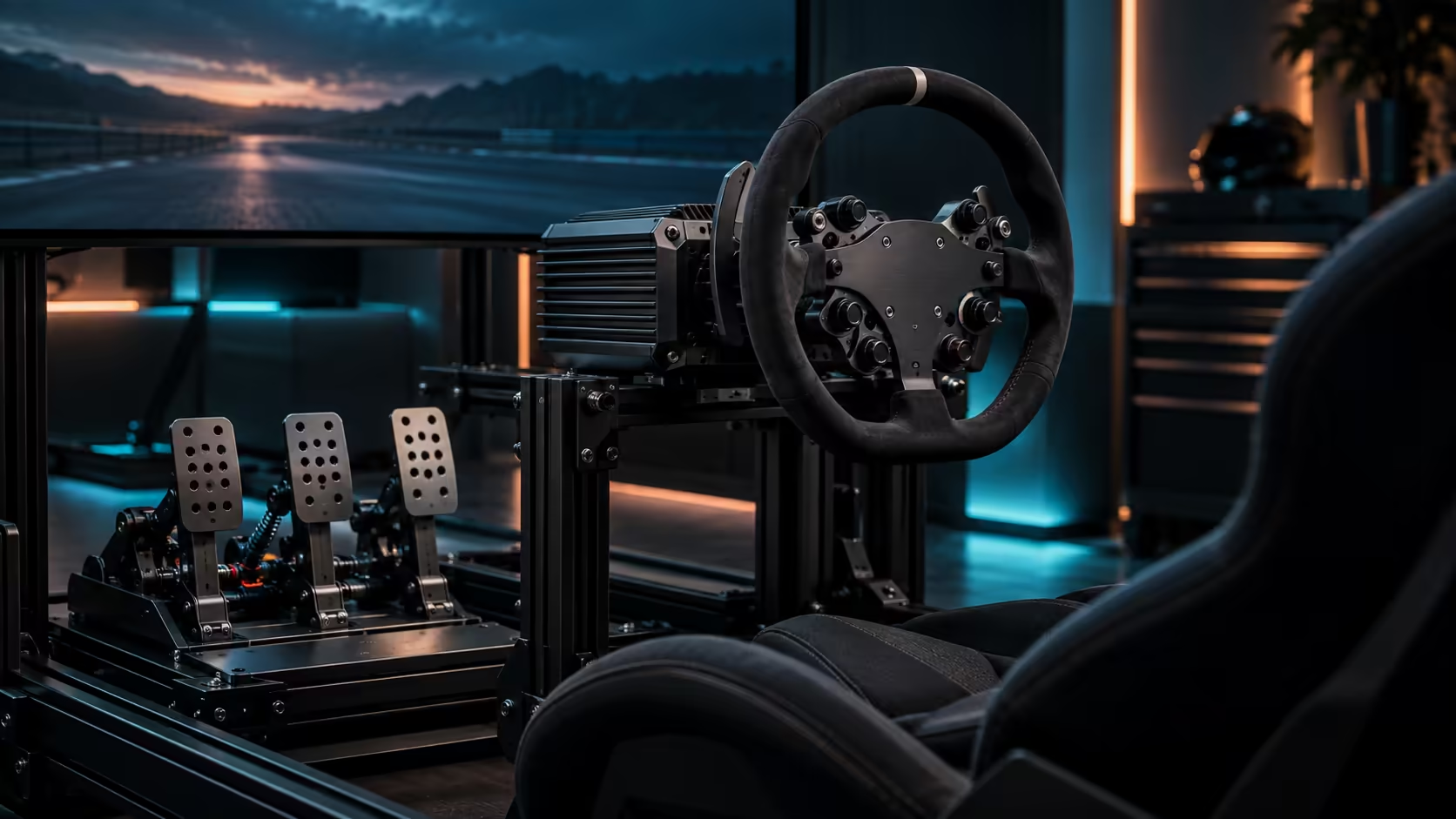
Everything else in a sim racing setup can be adjusted around a compromise, a rim you get used to, a torque setting you tune down. Braking is different, because it is the one input where inconsistency directly costs you a corner rather than just feeling slightly off. Load cell brake pedals exist to remove that inconsistency, and understanding how they work, how to calibrate them and how to keep them accurate is worth more than any other single piece of sim racing knowledge.
Quick Answer
A load cell measures the actual force your leg applies against a nearly rigid pedal plate, rather than measuring how far the pedal has physically travelled. The P700 set inside the R14,999 bundle reads to 150kg and carries 35 adjustment points, which together let you shape the sensor's response, the plate's position and your own brake resistance to match how you actually drive.
🔩 What a load cell is and how it differs from a spring pedal
A spring-loaded or elastomer pedal measures travel: how far your foot has pushed the plate through its range of motion, using a potentiometer or Hall sensor to read that distance. A load cell pedal, by contrast, hardly travels at all. A strain-gauge sensor sits behind a nearly fixed plate and measures the force bending it by well under 1mm, which mirrors how braking actually works in a real car, where hydraulic pressure rather than pedal travel does the stopping.
This distinction matters because the human body reproduces applied force far more consistently than it reproduces exact travel distance without visual feedback, which is the core reason load cell braking becomes more consistent with practice in a way position-based braking struggles to match.
For context, a real race car's brake pedal can need anywhere from 40kg to well over 100kg of leg force under heavy braking, depending on the car and whether it has power assistance, while most sim load cell pedals are calibrated to a working maximum well below that. That gap is deliberate: the goal is repeatable pressure at a force your leg can sustain lap after lap, not replicating the exact number a real driver's leg produces.
🧮 Calibration: the step that makes everything else meaningful
Before any other adjustment, calibrate the pedal so the software knows what zero pressure and your chosen maximum pressure actually mean. Press to a firm, comfortable maximum during this process rather than your absolute hardest single effort, since that figure becomes the ceiling every subsequent brake input is measured against.
Recalibrate whenever the pedal's spring, elastomer or physical mounting changes, a process that takes about 2 minutes, since all three affect how force translates into the sensor's reading. Skipping recalibration after a physical change is the single most common reason a load cell pedal that used to feel accurate suddenly does not.
🎯 Setting your working range and shaping the curve
Keep your maximum brake reading somewhere around 70 to 80 percent of your true physical limit rather than the hardest push you can manage once, since that spare headroom covers adrenaline and keeps a normal brake zone sitting comfortably under the ceiling. Chase your absolute limit as the target and you end up racing against a number only your freshest attempt can hit, which shows up as inconsistency the moment fatigue sets in.
Once that range is settled, start the response curve as close to linear as the software allows, since a flat curve leaves the pedal's own character alone while you get a feel for what the sensor itself is reporting. More bite near the top or a softer first section can suit particular cars, but change one setting at a time and drive several identical corners before deciding it helped.
🔧 Adjustment geometry: making the pedal fit you
Beyond the sensor itself, the 35 points of physical adjustment on the P700 set, several with under 5mm of travel between settings, cover plate height, angle and spacing, all of which change how consistently force actually reaches the sensor from your leg. Getting plate height close to your natural resting ankle position matters as much for braking accuracy as any software setting, since a foot pressing at an awkward angle applies force less consistently even when the leg effort behind it is identical.
🛡️ Mounting, maintenance and keeping accuracy over time
A load cell can only measure force accurately if nothing else is moving. A pedal set that shifts or slides during a hard brake mixes leg force with pedal motion in the sensor's reading, which undoes the exact consistency the sensor exists to provide. Bolting the set to a rig, a heavy plate, or at minimum a solid non-slip mat removes that variable, and it is worth testing directly by watching the pedal base during a genuinely hard brake rather than assuming it is secure.
Over months of use, check the pedal's calibration periodically even without an obvious physical change, since minor drift can occur gradually and is easy to miss until braking starts feeling subtly inconsistent for no clear reason. If the sensor itself ever needs attention beyond a simple recalibration, a set bought from a local retailer keeps that warranty process inside the country rather than turning into an overseas shipping problem. The racing simulation and simulation gear ranges cover mounting solutions worth pairing with any load cell set, and the simulation accessories shelf carries the smaller hardware like non-slip plates that make the difference between a well-mounted pedal set and one quietly undermining its own sensor.
Frequently Asked Questions
How is a load cell different from a normal spring pedal?
It measures force against a nearly rigid plate rather than distance through a spring's travel, which more closely mirrors how a real car's hydraulic brakes actually work.
Do I need to recalibrate a load cell pedal regularly?
Any time the mounting, spring or elastomer changes, and periodically otherwise, since minor drift can occur gradually even without an obvious cause.
Should I calibrate my brake ceiling to my absolute hardest push?
No. A ceiling of roughly 70 to 80 percent of your genuine maximum builds in room for fatigue and adrenaline, and that margin is what makes a whole session's braking hold together.
Does the pedal's mounting really affect sensor accuracy?
Yes, significantly. A load cell measures force, and any unwanted movement in the pedal itself mixes into that reading, undermining the exact accuracy the sensor is designed to provide.
Ready to brake with real consistency instead of guesswork?
Calibrate properly, set a realistic working range, and mount the pedals somewhere solid before your next session.