Compatibility is the question every sim racing bundle listing gets asked, and it is also the hardest one for a static listing to answer honestly, because platform support is licensed and firmware-gated rather than fixed at the factory. Choosing a sim racing bundle in South Africa means deciding on the wheel base and pedals first, since those specifications hold steady, then treating platform support as its own separate, ongoing question.
Quick Answer
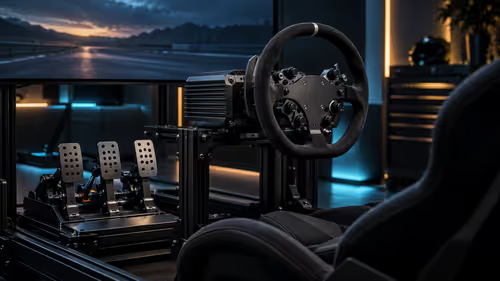
Choose on the brake sensor and the torque ceiling first, since those decide how the bundle performs regardless of what you eventually connect it to, then confirm platform and title compatibility on the manufacturer's own support page before finalising anything. A R14,999 package pairing a 9Nm base with a 150kg-rated pedal set has the hardware side settled from the start, and local warranty cover addresses what nobody plans for until it happens.
🎯 Why the hardware specs should be decided before compatibility is even checked
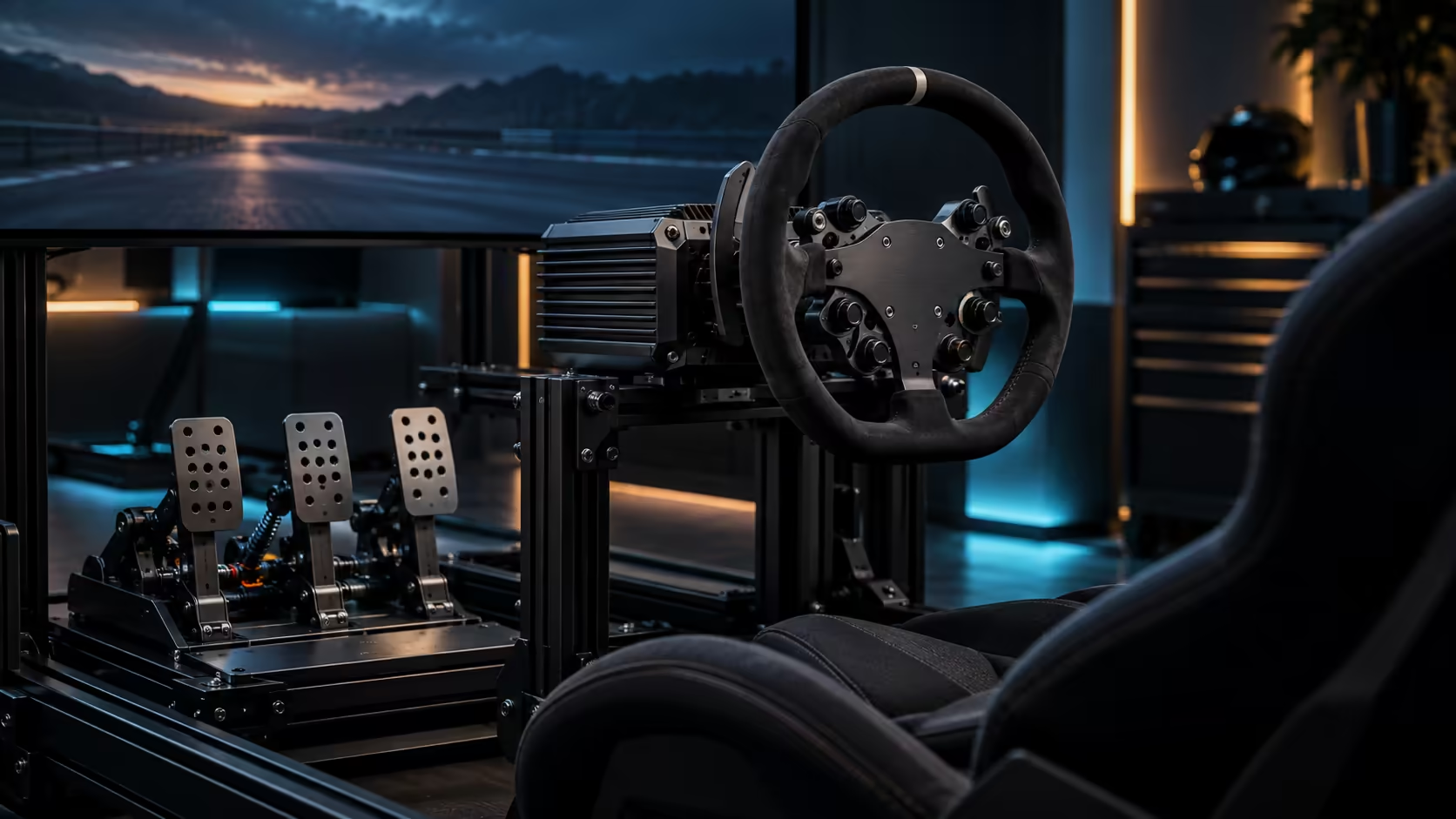
Torque figure and brake sensor type are fixed physical properties of the hardware that do not change after purchase, which makes them the sensible starting point for any real comparison between bundles. A 150kg-rated load cell brake, like the P700 pedal set, measures pressure rather than pedal travel, giving consistent, repeatable braking regardless of which platform or game you eventually connect it to. A 9Nm base, like the Alpha EVO, provides torque headroom across light and heavy driving alike, again independent of any specific title.
Deciding these two specifications first means the bundle is a sound purchase on its own mechanical merits, which matters because compatibility details can and do change after you own the hardware, through firmware updates and new software support, in ways the underlying torque and sensor specs never will.
It also protects you against a specific kind of regret: buying primarily for one platform's certification, then switching platforms a year or two later and finding the hardware itself is still excellent even though the licensing situation has changed. A base bought on the strength of its torque and brake sensor keeps its value under that scenario in a way a base bought purely for one console's certification badge does not.
🔍 Why console support is licensed, not just wired up
Consoles do not let any wheel base connect and work by default. Both major console makers run their own certification programme for racing peripherals, and a base has to be built and licensed against that programme before it will be recognised at all, quite separate from whether the cable physically fits. That is a legal and commercial gate, not a technical one a firmware update alone can open later.
Licensing is also usually granted per console generation rather than carrying forward automatically. A base certified for one generation of console is not guaranteed to work on the next simply because the cable and connector look the same, since the certification programme itself is tied to that generation's specific security and communication protocol. Buyers occasionally try to work around a missing licence with a third-party adapter, and while some of these function, they typically introduce their own small amount of input lag and sit outside any official support path if something goes wrong.
PC support works differently and is generally the more flexible path: a base talks to a Windows 10 or 11 system through a driver, and a title reads its inputs through a standard interface, so PC compatibility usually comes down to driver and firmware version rather than licensing. That is also why a base's supported list can keep growing 3 or 4 years after launch on PC in a way console support mostly cannot, since a new console licence is a business deal, not a software patch.
This is also why a base's manufacturer keeps pushing driver and firmware updates well after launch, sometimes adding steering angle presets or force feedback profiles for titles that did not exist when the hardware first shipped. None of that changes what the base is physically capable of, since torque and response speed are fixed at the motor level, but it can genuinely change how well a specific title reads and interprets that output over time.
🇿🇦 The South African layer: warranty, not just compatibility
Choosing a South African seller over an overseas listing adds a real layer of protection that has nothing to do with compatibility and everything to do with what happens the day the motor itself eventually develops a fault. This is genuine motor engineering, and putting one right typically takes 14 to 21 days of real diagnostic effort rather than a quick counter exchange. Keeping that process inside the country matters far more here than it would on a cheap, easily replaced accessory, given how impractical posting something this heavy back to an overseas seller actually is.
🧭 Putting the decision together
Decide on torque and brake sensor first, since those specifications define the bundle's mechanical quality regardless of platform. Treat console licensing and PC firmware support as the separate, moving question they are, worth confirming directly with the base's maker rather than trusting an older review or a retailer description. Then weigh where you are buying from, since local purchase turns a potential hardware fault from a shipping ordeal into a straightforward local process. Start the hardware comparison on sim racing, check the figures again against racing simulation, and let simulation gear round things out with the mounting side of getting the most from whatever you choose.
Frequently Asked Questions
Should I check compatibility before comparing torque and brake sensors?
Decide on the hardware specifications first, always, since they define the bundle's real quality regardless of platform. Confirm console or PC compatibility separately and specifically, directly with the base's maker, since it is a licensing and firmware question rather than a fixed spec.
Why does a product listing not reliably answer the compatibility question?
Because platform and title support depends heavily on firmware version and changes meaningfully over time. A listing captured at one single point cannot reflect updates made after it was written.
Does buying locally really matter if the hardware specs are the same as an import?
Yes, specifically for how a fault eventually gets resolved. A South African purchase keeps that whole process local, which matters a great deal on hardware this heavy and specialised.
Ready to decide on specs first and confirm the rest properly?
Compare torque and brake sensor on the Racing Simulators shelf, then check compatibility directly with the manufacturer.