


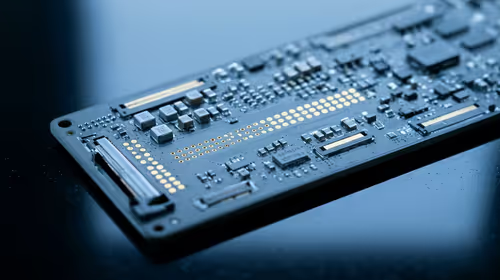
Hot-Swappable PCB Architecture in Modern Keyboards: Guide
Learn hot-swappable PCB architecture in modern keyboards—what it is, how sockets and traces work, and how to pick the right board. Speed up swaps, reduce risk, and upgrade faster 🔧⚡
Read moreTubing length and reinforcement on a 420mm radiator stack dictate which cases fit and how long the cooler survives a shipping run from Joburg to Cape Town without leaks. SA pricing, warranty cover and current stock are factored in.
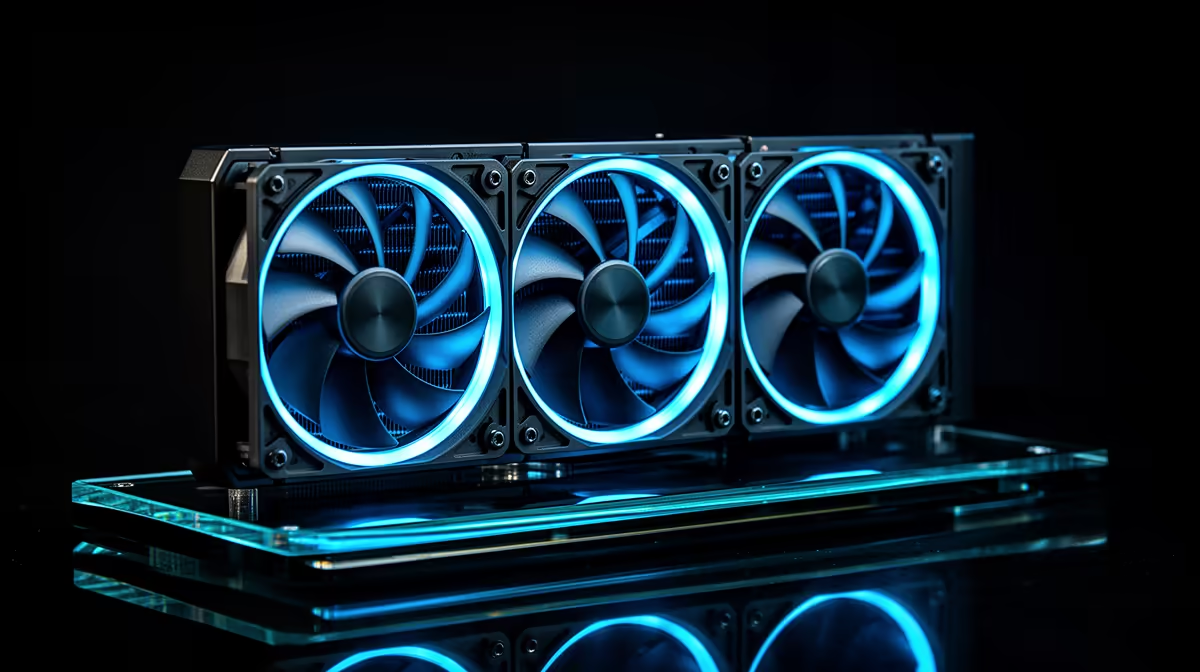
No, a 420mm radiator does not fit in a standard gaming mid-tower case. Most mid-tower cases support a maximum of 360mm (three 120mm fans) or 280mm (two 140mm fans). The 420mm format, which uses three 140mm fans, requires a full-tower or a specifically designed large mid-tower case that explicitly lists 420mm radiator support in its specifications.
The majority of popular gaming mid-tower cases, including the Fractal Design Meshify 2, Lian Li Lancool 216, and NZXT H510 Flow, accommodate a maximum 360mm radiator at the front or top. These cases are designed around 120mm fan multiples. The 420mm format uses 140mm fan spacing, making the radiator physically wider than a 360mm unit and it does not fit in the same mounting space even if the case nominally accommodates a similar length. Confusing 360mm with 420mm support is a common and costly mistake for SA builders who order a cooler without verifying their specific case.
Full-tower cases from Lian Li (PC-O11 Dynamic EVO XL), Fractal Design (Torrent XL, Define 7 XL), and Corsair (7000D Airflow) explicitly support 420mm front or top mounts. Several large mid-towers also accommodate 420mm, including the Fractal Design Define 7 and Lian Li O11 Dynamic EVO when configured without internal cage obstructions. These cases cost R2,500 to R5,000 locally at Evetech. If you specifically need a 420mm AIO, budget for the case alongside the cooler. The combined cost, around R3,500 for a 420mm AIO and R3,000 for a compatible full-tower, places this combination at R6,500-plus before any other components.
For the vast majority of SA gaming builds, a 360mm AIO in a mid-tower case is the correct choice. The 420mm format offers 4 to 7 degrees Celsius better thermal performance on high-TDP chips above 150 watts, but requires a full-tower case and costs more in both the cooler and case. Unless you are running a Ryzen 9 9950X or similar 170-watt-plus CPU in a professional workstation, the 360mm format in a quality mid-tower serves you better at lower total cost. The R4,000 to R5,000 saved on a full-tower case plus premium 420mm AIO buys meaningful GPU or RAM upgrades instead.
Case specifications often list both "maximum radiator length" and "supported fan size" separately. A case may support 420mm length but only with 120mm fans (a rare configuration), or support 140mm fans but only in 280mm arrays. For a 420mm AIO you need both 140mm fan support AND 420mm length support confirmed simultaneously in the case compatibility list.
Modifying a case to accept a 420mm radiator is not practical. The structural mounting points are fixed in the case's steel or aluminium frame, and the fan apertures are stamped to specific dimensions. A 420mm radiator will not mount without fabricating new mounting points, which is beyond typical builder capability and voids any case warranty.
Yes. A 280mm AIO uses two 140mm fans and fits in most mid-tower cases that support 280mm front or top mounts. It delivers better low-RPM airflow than a 240mm unit while remaining compatible with standard case sizes. Many SA gamers find the 280mm format the ideal balance between 140mm fan advantages and standard case compatibility.
The Lancool 215 supports up to 360mm front radiators and 280mm top radiators. A 420mm radiator is not compatible. For compact and mid-tower builds, the 360mm format is the practical maximum in almost all cases.
Need a case that actually fits your radiator size? Evetech stocks PC cases across all sizes with clear radiator compatibility specifications. Browse the cases section on the Evetech site alongside the AIO cooler range to plan your build.
Learn hot-swappable PCB architecture in modern keyboards—what it is, how sockets and traces work, and how to pick the right board. Speed up swaps, reduce risk, and upgrade faster 🔧⚡
Read more
Mechanical switch lifespan explained—what the 50 million keystroke rating really means, plus tips to extend switch life and reduce double-press issues 🔧⌨️
Read more
60-percent vs full-size mechanical keyboard layouts—learn what each layout includes, who it suits, and how to choose the right fit 🧩⌨️ for typing, gaming, and productivity.
Read more
Double injection keycaps last far longer than standard printed keycaps in most setups. Learn typical lifespan ranges, what shortens them, and how to maximize durability for smoother daily typing and gaming 😊⌨️
Read more
Full-key anti-ghosting: does it stop missed inputs during fast-paced gaming? We break down latency, polling, and key matrix limits so you can buy smarter 🎮⚡
Read more
Protect mechanical keyboard switches from South African dust and summer humidity with practical cleaning and storage habits. Keep your switches smooth, reduce failures, and extend lifespan. 🌬️💧
Read more
Wondering if a TKL wireless mechanical keyboard is worth it for everyday productivity? We break down latency, battery life, comfort, and workflow gains for real work. ⚡⌨️

Maximise battery life on a fanless 15-inch laptop using efficiency core architecture. Cut idle drain, tune power profiles, and improve thermals for longer runtime. 🔋⚙️
Learn how to reduce desk clutter with a TKL wireless keyboard using fewer cables, smart placement, and tidy essentials. Get a faster, calmer workspace with better ergonomics. ✅🧼
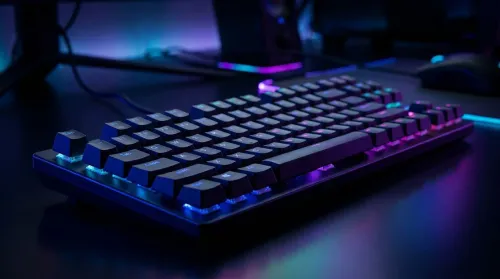
RGB keyboard lighting too distracting? Learn how to manage backlight modes, set brightness, and reduce distraction for focus and productivity 😌🖱️

Are themed gaming keyboards worth the extra cost? Compare build quality, switch options, features, and resale value to find the best fit for your setup 🎮⌨️

Full-Size vs Tenkeyless mechanical keyboards for gaming: find out if a smaller layout truly improves aim, speed, and comfort. We break down layout, desk space, latency-feel, and keybinds 🎮⌨️

Dedicated media rollers vs function key shortcuts: learn which setup gives you better workflow control, faster media access, and fewer mistakes. 🖱️🎧

Best Mechanical Switch Type for Gaming: Clicky vs Linear vs Tactile. Find your feel, speed, and noise balance with practical guidance for FPS, MOBA, and productivity 😄🎮

Direct mouse answer: Mouse not keeping up with your work? Everything that matters about dual-mode 2.4GHz + BT 5.0: DPI behaviour, channel switching, battery curves and per-app button mapping. Covers when 2.4GHz USB wins (low-latency desk) and when BT 5.0 wins (laptop, d

Plain wireless mouse guide: Mouse not keeping up with your work? Everything that matters about wireless productivity mouse: DPI behaviour, channel switching, battery curves and per-app button mapping. Includes DPI tuning tips, channel switch shortcuts, and ZAR-aware fea
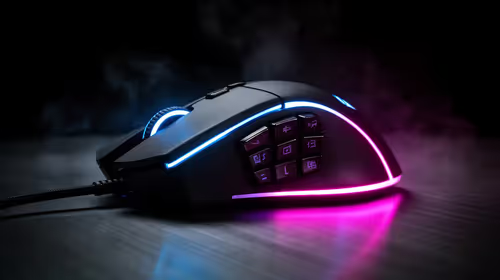
Real productivity numbers: Set up your wireless mouse in this order: everything that matters about wireless productivity mouse: DPI behaviour, channel switching, battery curves and per-app button mapping. Includes DPI tuning tips, channel switch shortcuts, and ZAR-aware
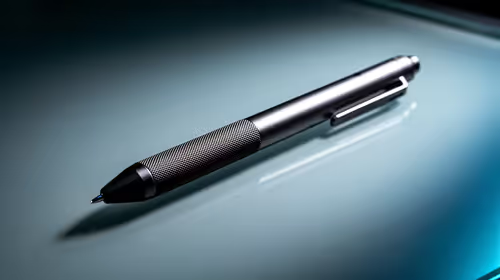
Pen not feeling like paper? Stylus lag and skipping usually trace to old drivers, dirty nibs, or display refresh mismatches, not the pen itself. Covers pressure curve tuning, tilt thresholds, nib swap timing, and SA pricing brackets.