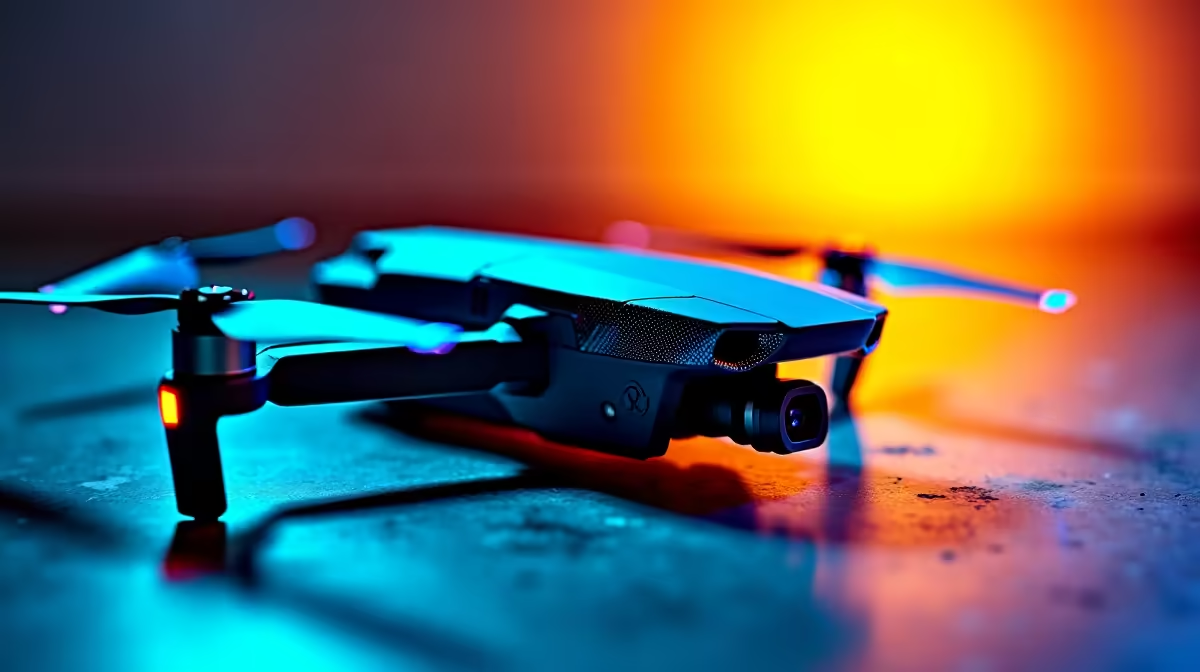
The sub-250g drone class exists because aircraft at that weight face lighter regulatory hurdles, and the DJI Mini 5 Pro vs Mini 4 Pro question is whether DJI just packed a 1-inch sensor and forward-facing LiDAR into that featherweight bracket for the first time, and whether that is worth the price gap. Both aircraft sit at 249.9g. The Mini 5 Pro brings the larger sensor and obstacle-aware LiDAR, while the Mini 4 Pro uses a smaller 1/1.3-inch sensor and no LiDAR. If low-light image quality and smarter sensing matter to you, the upgrade is real.
Quick Answer
The Mini 5 Pro's headline upgrades are a 1-inch sensor and forward-facing LiDAR, both new to the sub-250g class, while staying at 249.9g. The Mini 4 Pro uses a smaller 1/1.3-inch sensor without LiDAR. If you shoot in low light or want better obstacle awareness, the Mini 5 Pro justifies the step up. For bright-light casual flying, the Mini 4 Pro remains excellent value.
The sensor jump is the main story
Sensor size is the single biggest driver of image quality, and the move from 1/1.3-inch to a full 1-inch sensor is a meaningful jump. With a bigger imaging surface, each pixel collects more light, which translates to cleaner footage once the sun starts dropping, stronger dynamic range in contrasty scenes like a Cape Town sunset over the ocean, and richer raw material when you grade the clip. In bright daylight both drones look great. The gap opens up at dawn, dusk and indoors.
Forward LiDAR and obstacle sensing
The Mini 5 Pro adds forward-facing LiDAR, which the Mini 4 Pro does not have. LiDAR measures distance by timing reflected light, and it works in conditions where camera-based sensing struggles, notably low light. In practice that means more confident obstacle avoidance as the sun drops, which is exactly when many of the best shots happen. For a pilot who flies near trees, structures or in fading light, this is more than a spec-sheet line.
What stays the same
Both aircraft hold the 249.9g weight that keeps them in the lighter regulatory bracket, and both carry DJI's mature flight stack, subject tracking and return-to-home. So the choice is not safety versus risk, it is how much extra image quality and sensing you want on top of an already capable platform. You can browse current drone listings in the drones and smart devices range to compare what is in stock.
Who should buy which
Buy the Mini 5 Pro if you shoot professionally or seriously, work in low light, want the cleanest footage the class can produce, or fly in trickier environments where LiDAR sensing helps. Buy the Mini 4 Pro if you fly mostly in good light, want a superb travel and holiday drone, and would rather put the price difference toward a spare battery or a memory card. Neither is a wrong choice, they target different priorities.
Budgeting around the kit
Whichever you pick, plan for the extras that make a drone usable on a trip: spare batteries for longer sessions, fast memory cards and a case. A Fly More style bundle often works out better than buying batteries one at a time. The accessories best sellers make it straightforward to sort out cards and spares alongside the aircraft purchase.
Video Specifications: Where the Numbers Diverge
The sensor upgrade cascades through the video specs. The Mini 5 Pro shoots 4K at up to 120fps for ultra-smooth slow motion, compared to 4K at 100fps on the Mini 4 Pro, a modest improvement but a step up for those who want the smoothest possible slow-motion clips. Both record in 10-bit D-Log M for flat-profile grading, so the colour flexibility is matched; the Mini 5 Pro just has more detail baked in from the larger sensor.
The Mini 5 Pro also adds 42GB of internal storage, which the Mini 4 Pro lacks entirely. For a travel shoot where you have forgotten or exhausted your cards, that built-in buffer is a genuine convenience rather than a headline spec. In practice it holds several minutes of high-bitrate footage, enough to capture a sunrise sequence while your main card is back at the accommodation.
Transmission and Range
Both drones use DJI's O4 video transmission system, though the Mini 5 Pro upgrades to O4+, which DJI rates for up to 20km in open conditions compared to the Mini 4 Pro's 20km O4 ceiling. In real-world South African flying the difference is academic since recreational rules require visual line of sight and the 120m altitude ceiling, but a stronger transmission link also helps in congested radio environments like Cape Town suburbs or coastal towns where Wi-Fi and device interference can affect the connection quality.
Battery Life and Session Length
Flight time is a meaningful practical spec, not just a bragging number. The Mini 5 Pro rated flight time is 36 minutes on the standard battery and up to 52 minutes on the Plus battery. The Mini 4 Pro manages 34 minutes on standard and 45 on Plus. For a typical shoot those extra minutes are not transformative, but they do reduce the urgency when you are chasing the last of the golden hour and need to nail a shot before the light goes. Either way, two batteries is the minimum sensible travel kit, because time spent charging is time not flying.
Frequently Asked Questions
What is the main upgrade in the Mini 5 Pro?
A 1-inch camera sensor and forward-facing LiDAR, both firsts for the sub-250g class. The larger sensor improves low-light footage and dynamic range, and the LiDAR strengthens obstacle sensing in dim conditions.
Is the 1-inch sensor worth it over the Mini 4 Pro?
If you shoot in low light, at dawn or dusk, or want the most detail for grading, yes. In bright daylight the difference narrows and the Mini 4 Pro's 1/1.3-inch sensor already produces excellent footage.
Do both drones stay under 250g?
Yes. Both the Mini 5 Pro and Mini 4 Pro weigh 249.9g, keeping them in the lighter regulatory class despite the Mini 5 Pro's larger sensor and added LiDAR.
Does the Mini 4 Pro have LiDAR?
No. Forward-facing LiDAR is exclusive to the Mini 5 Pro in this comparison. The Mini 4 Pro relies on its vision-based obstacle sensing, which works well in good light but is less capable as the light fades.
Which is better value for a holiday drone?
For casual travel and daylight flying, the Mini 4 Pro is the value pick and lets you put the saving toward spare batteries or memory cards. Step up to the Mini 5 Pro if image quality and low-light sensing are priorities.
Choose by your light and your flying: the Mini 5 Pro for low-light image quality and LiDAR sensing, the Mini 4 Pro for value in good conditions. See current stock in the Evetech drones and smart devices range and add spare batteries and a fast card so you are ready to fly on day one.