Quick Answer
Yes, gold plating on DisplayPort connector pins genuinely improves signal reliability over time by preventing oxidation that increases contact resistance. The benefit is not instantaneous on a new cable but compounds over months and years of use, particularly in South Africa's humid coastal and high-heat inland environments.
The Oxidation Problem Gold Solves 🔌
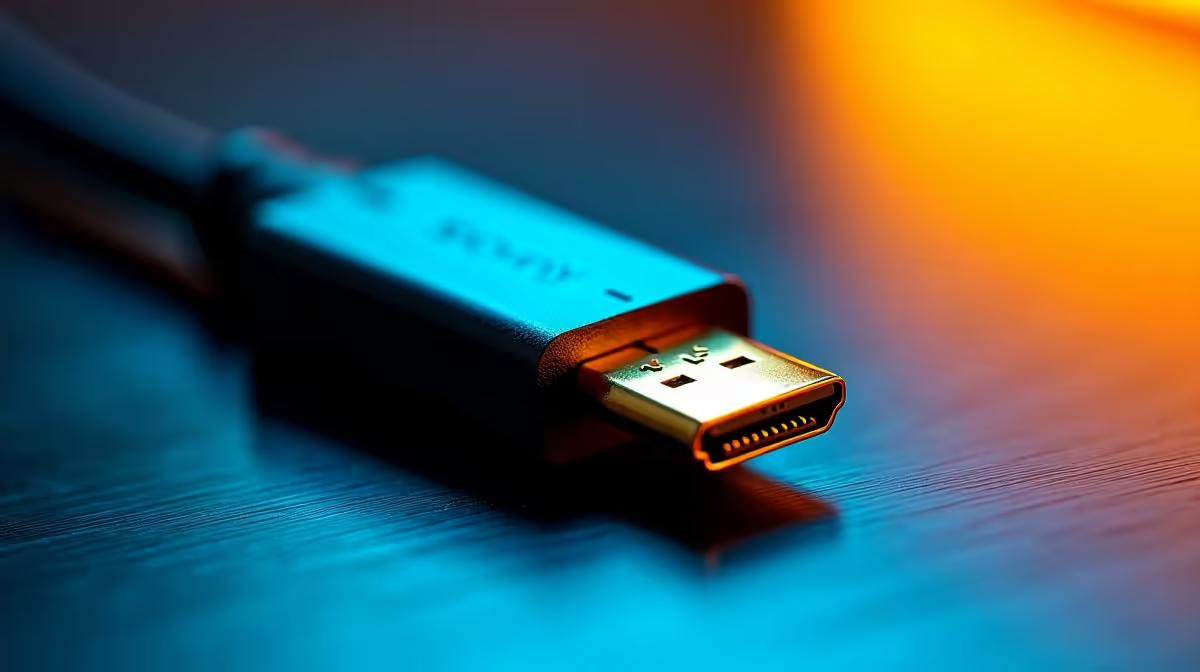
DisplayPort connectors have 20 pins that must maintain contact resistance below 30 milliohms for reliable high-bandwidth signalling. Bare copper pins oxidise within weeks in air; nickel and tin plating slow this process but cannot stop it entirely. Gold, being a noble metal, does not form an oxide layer under normal atmospheric conditions. A 0.5 to 1.0 micron gold plating over a nickel undercoat protects the copper substrate indefinitely. When contact resistance rises above 50 to 100 milliohms on any pin in a 4K DisplayPort connection, the result is not gradual image softening (digital signals do not degrade gracefully): the system either corrects errors via link training or produces visible flicker and disconnects. Gold plating keeps every pin in the low-resistance zone for the cable's entire life.
How Much Does Gold Plating Cost in SA? 💰
The price premium for gold-plated DisplayPort cables over non-gold alternatives is modest. A quality gold-plated DP 1.4 cable at 1.5m to 2m costs R150 to R280 at Evetech. A basic unplated or tin-plated cable costs R80 to R120. The R60 to R160 premium provides years of oxidation resistance, eliminating the need for early replacement in humid coastal environments like Cape Town or Durban. Over a three-year horizon, the total cost of ownership favours the gold-plated cable, particularly when factoring in the diagnostic time spent identifying a degraded connection as the source of intermittent display issues rather than a GPU or monitor fault.
When Gold Plating Matters Most 🌊
Gold plating matters most in three scenarios: cables in coastal SA locations with high salt-air humidity; cables that are regularly disconnected and reconnected; and cables running 4K at 120Hz or above where error correction headroom is tighter. For a fixed inland desktop cable in dry Gauteng air, the benefit is present but less urgent. For a Cape Town video producer pulling a cable in and out of a bag several times a week, gold plating is the clear choice.
Gold Plating Thickness Matters ⚡
Consumer cables typically specify 24K gold plating but do not state thickness. Look for 0.5 micron or greater gold plating on product spec sheets; this thickness provides adequate protection for years of use. Cables that mention gold plating without specifying thickness often apply only a flash coat of under 0.1 micron, which provides minimal durability advantage over nickel plating.
FAQ
Is gold plating on DisplayPort connectors a genuine technical benefit or marketing?
It is a genuine benefit, specifically for long-term contact resistance stability. Multiple independent connector reliability studies confirm that gold-plated contacts maintain lower resistance than nickel or tin alternatives after 1,000 hours of humidity exposure.
Does gold plating affect the audio signal carried by DisplayPort?
DisplayPort carries audio alongside video on the same data lanes rather than dedicated audio pins, so the connector plating affects audio reliability identically to video reliability. Oxidised pins that corrupt video data also corrupt audio data on the same signal.
What is the lifespan of a gold-plated DisplayPort cable under normal use?
For a fixed desktop cable that is rarely disconnected, a quality gold-plated DP 1.4 cable should last five to ten years in inland SA conditions and three to seven years in coastal conditions without any degradation in signal performance.
Looking for a DisplayPort cable that lasts in South African conditions?
Evetech stocks gold-plated DisplayPort cables in DP 1.2 and DP 1.4 specifications. Browse the display accessories section to find the right length for your monitor setup.