You’ve just unboxed a sleek, new ambidextrous gaming mouse. It feels perfect for your left-or-right-handed grip. But then you go looking for the DPI switch... and it's nowhere in sight. 🤔 Is it hidden? Do you need software?
For many South African gamers, the search for DPI LED access in ambidextrous mice can be a frustrating puzzle. Let's solve it and see whether manufacturers are prioritising easy access or clean aesthetics.
Why Ambidextrous Design Can Hide DPI Controls
The core idea of an ambidextrous mouse is perfect symmetry. This means it feels identical in either hand. To achieve this, designers often have to make compromises. Side buttons might be removable, mirrored on both sides, or absent altogether. This design philosophy directly impacts where the DPI adjustment button and its corresponding LED indicator can live.
Unlike their ergonomic right-handed cousins, where buttons have standard placements, ambidextrous models force a rethink. The result? A battle between flawless form and practical function. When browsing the latest gaming mouse models, you'll notice this design variance firsthand. Some bravely place the DPI switch on top, while others tuck it away for a cleaner look.
Common Spots for DPI Switches & LEDs
So, where is that elusive button? The location of your DPI switch often dictates how you'll interact with your mouse mid-game. Understanding the DPI LED access on an ambidextrous mouse is key before you buy.
Top-Mounted: The Gold Standard 🏆
This is the most user-friendly position. A small button sits just behind the scroll wheel, allowing for quick, on-the-fly DPI changes. You can instantly see the colour-coded LED change without lifting the mouse. Many classic wired mouse designs stick to this trusted layout because it simply works.
Bottom-Mounted: The "Set and Forget" Approach
Lately, many manufacturers have moved the DPI switch to the underside of the mouse.
- Pro: You will never accidentally press it during a clutch 1v1 in Valorant or a hectic team fight in Dota 2.
- Con: Changing your sensitivity requires you to stop, lift your mouse, and press a tiny button. It’s not ideal for gamers who switch DPI between different scenarios, like sniping and run-and-gun.
Software-Controlled: The Minimalist's Choice
Some ultra-lightweight or minimalist mice ditch the physical DPI button entirely. Adjustments can only be made through the manufacturer's software. This guarantees a clean, symmetrical shell but sacrifices all physical control.
Pro Tip: Reclaim Your Control 🔧
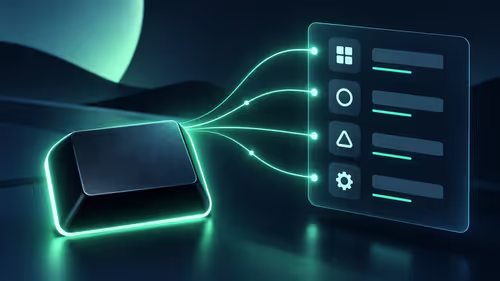
If your mouse has a hidden DPI button, use its software to re-map a side button to "DPI Cycle". This gives you the instant access of a top-mounted switch without compromising your grip. You can create profiles for different games, each with its own button layout!
Does Wireless Change the Game?
Going wireless is all about freedom, but does it affect your DPI access? Not really. The design principles remain the same. The main difference is that the status LED might pull double duty, indicating both your current DPI setting and your battery level.
Many modern wireless mouse options still offer a top-mounted button, but it's always smart to check the product page or a review to be sure. Nothing's worse than finding out your new R2000 mouse has a feature hidden where you can't reach it. And once you have your perfect mouse, you can always enhance it with custom mouse accessories like high-performance skates or grips for an even better feel. ✨
Ultimately, easy DPI LED access in ambidextrous mice comes down to personal preference. Do you value the ability to make instant changes, or do you prefer a clean, uninterrupted design where you set your sensitivity once and focus purely on the game? Knowing the difference is the first step to finding your perfect peripheral.