Quick Answer
Mesh panels win on thermal performance by 5 to 15 degrees Celsius under sustained full-load gaming. Dual tempered glass wins on aesthetics and RGB showcase. For South African conditions where ambient temperatures climb in summer, a mesh front paired with a glass side panel (not dual glass) is the practical recommendation for most gaming builds.
Thermal Differences: What the Numbers Say 🌡️
Independent case reviews consistently show that replacing a solid or glass front panel with a mesh front lowers GPU temperatures by 5 to 12 degrees Celsius and CPU temperatures by 3 to 8 degrees Celsius under sustained load, at equivalent fan speeds. This translates directly to sustained clock speeds: an RTX 5080 running 8 degrees cooler can maintain its full 2.9 GHz base boost clock rather than throttling under prolonged load in games like open-world RPGs that stress the GPU continuously.
In South African cities during summer, ambient temps in poorly ventilated rooms hit 28 to 35 degrees Celsius. A dual glass case in that environment with three intake fans can still run GPU temps 10 degrees higher than an equivalent mesh-front build.
Aesthetics and RGB: The Glass Advantage ✨
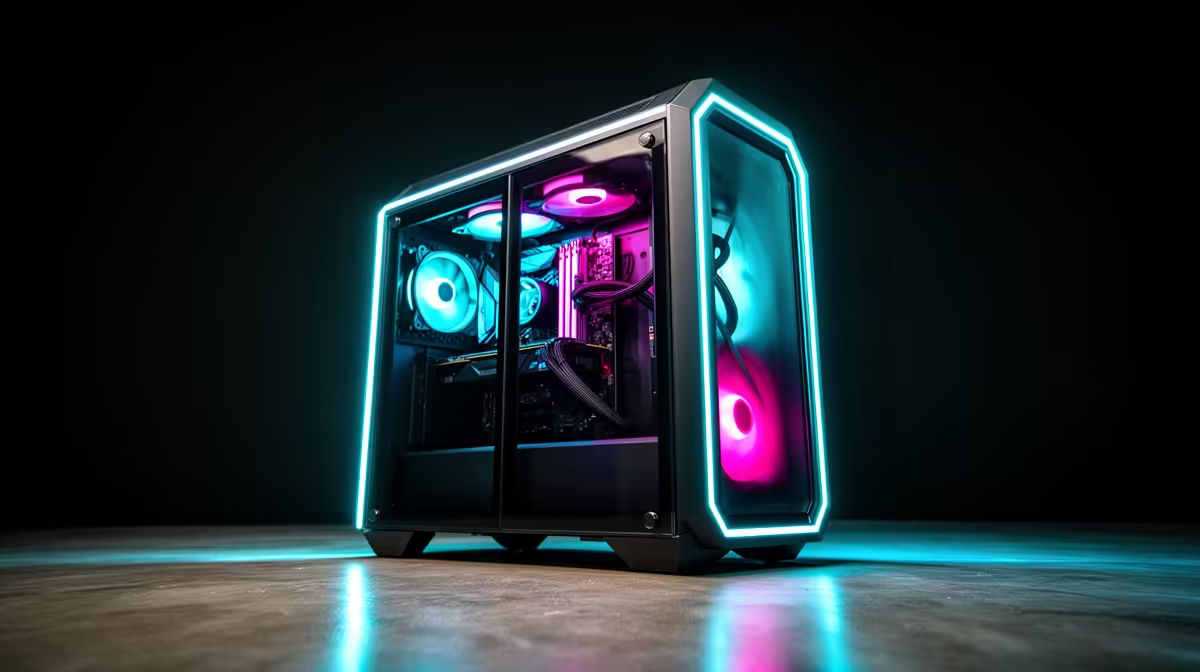
For showcase builds where the visual presentation is a priority (streaming backgrounds, LAN events, or desk setups displayed on social media), dual tempered glass is unmatched. You get full visibility of RGB RAM sticks, illuminated AIOs, argb fans, and custom sleeved cables from multiple angles.
Cases in SA in the R2,500 to R4,500 range from brands stocked at Evetech offer high-quality 4mm tempered glass panels that resist fingerprints better than older 3mm panels, with magnetic tool-free latches on the side panels for easy access.
Dust, Maintenance, and Long-Term Practicality 🧹
Mesh panels collect dust faster because they pass more air. A mesh front case in a typical SA home needs filter cleaning every three to five weeks. Dual glass cases accumulate dust more slowly at intake points but can get glass smudges from fingerprints during maintenance, which require microfibre cloth cleaning to keep looking sharp.
For noise levels, dual glass cases are noticeably quieter because the glass dampens fan noise. If the PC is in a bedroom or shared workspace and acoustics matter, glass-panel builds are meaningfully quieter at equivalent cooling levels (fans can run at lower speeds since the glass traps less heat in short-burst gaming sessions).
Best of Both Worlds Option ⚡
current mid-towers offer a mesh front panel with a tempered glass left side panel as the default configuration. This is the thermal-and-aesthetic sweet spot for most SA gaming builds: full airflow through the mesh front, full showcase visibility from the glass side, without sacrificing cooling for looks.
FAQ
How much hotter does a dual glass case run compared to a mesh case?
In controlled tests under sustained gaming load, dual glass cases run GPU temps 5 to 15 degrees Celsius higher than mesh-front equivalents. The gap widens in warm ambient environments and narrows in air-conditioned rooms.
Can I add more fans to compensate for a dual glass case's restricted airflow?
Partially. Adding fans in a dual glass case improves temps compared to fewer fans, but at equivalent fan counts the mesh case still wins. More fans in a glass case also means more noise since glass does not muffle fan blades the way it muffle sound reflected internally.
Are mesh cases cheaper than glass cases in South Africa?
Not necessarily. Both panel types are available across the R1,200 to R5,000+ price range. The panel material is less a cost driver than the case's overall quality tier. Premium mesh cases can be as expensive as premium glass cases.
Not sure which case design suits your build?
Compare the full range of mesh and tempered glass PC cases at Evetech, with filter options by form factor, colour, and feature set.