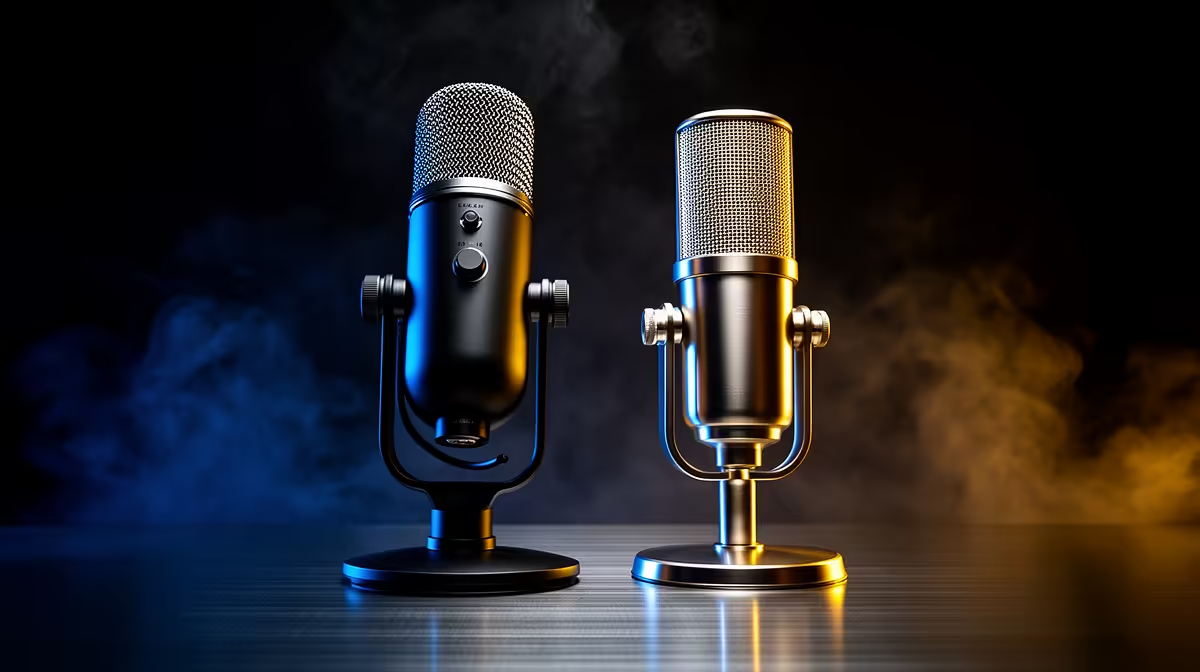
Two microphones can cost the same and produce wildly different recordings in the same room, because they capture sound in fundamentally different ways. A dynamic microphone generates its signal through electromagnetic induction, which makes it less sensitive and unusually good at ignoring everything that is not your mouth. A condenser uses a charged diaphragm that captures far more detail, including the air conditioner, the keyboard and the room echo. Which one suits you comes down almost entirely to how quiet and treated your space is.
Quick Answer
If your room is bare, noisy or shared, choose a dynamic microphone. Its lower sensitivity rejects background noise and forgives an untreated space. If your room is quiet and soft-furnished, choose a condenser for richer, more detailed voice capture. The simple rule: loud room, go dynamic; quiet room, go condenser.
How each type captures sound
A dynamic mic works like a tiny speaker in reverse. Sound moves a diaphragm attached to a coil inside a magnet, and that movement generates the electrical signal directly. It needs no external power, shrugs off very loud sources without distorting, and because it is deliberately less sensitive, it only really hears what is close and in front of it.
A condenser uses a thin charged diaphragm sitting near a fixed backplate. Sound changes the gap between them, which changes the electrical charge and produces the signal. This design is far more sensitive and captures a wider range of detail and high-frequency air, which is what gives condenser recordings their polished, open character. The trade-off is that it captures the room as eagerly as it captures you. Most quality condensers need phantom power supplied by an audio interface or mixer to charge that diaphragm.
If you want to hear yourself back clearly while you work, a good closed-back headset pairs with either type, and the headsets and headphones range at Evetech covers monitoring options across budgets.
The deciding factor: your room
Sensitivity is the whole story for most buyers. A condenser in an untreated bedroom picks up the hum of a fridge, traffic outside, and the slap of sound bouncing off bare walls, so your recording sounds distant and roomy. The same room with a dynamic mic sounds tighter and cleaner, because the mic simply does not hear most of that. This is why dynamics dominate streaming and gaming setups, where the space is rarely treated and a mechanical keyboard sits centimetres away.
A condenser rewards a controlled space. A room with a rug, curtains and a sofa absorbs reflections, and in that environment the extra detail a condenser captures becomes an advantage rather than a liability. For a spare-room studio in a busy household, a dynamic is the safer default; for a dedicated, quiet recording corner, a condenser earns its keep.
Polar patterns and rejection
Both mic types come in multiple polar patterns, but cardioid is the most common and the most useful for home recording. A cardioid pattern listens in a heart shape forward from the capsule and rejects most sound from the rear and sides. This rejection is what makes a dynamic cardioid particularly effective at ignoring a keyboard that is a hand's width away from the capsule. Omnidirectional condensers are the other end of the spectrum: they capture everything in the room equally, which is excellent for capturing a live instrument in a treated space and catastrophic in an untreated one. Matching the polar pattern to the space is as important as the mic type itself.
Gain and preamp requirements
Dynamic and condenser mics also differ in how much gain they demand from the interface or preamp. Condenser mics output a stronger signal, so they reach a healthy recording level at moderate gain settings. Dynamic mics are quieter by design, and some of the most popular broadcast models, like the Shure SM7B, need significantly more clean gain to sit at a proper level without the preamp introducing noise. If you choose a dynamic mic, factor in the gain available from your interface: entry-level interfaces with 50dB of maximum gain will drive most dynamics comfortably, but the quietest broadcast dynamics may need an interface with 60dB or more, or an inline gain booster in the chain. Condenser mics do not have this problem, but they do require phantom power from the interface, a switch that any decent modern unit includes.
Matching the mic to what you do
For live streaming and gaming, a dynamic is the easier win. You can position it close, run a cardioid pattern, and let it reject the fans, the keyboard and the rest of the room. For voiceover, narration or music in a quiet treated space, a condenser captures nuance a dynamic glosses over. Podcasting can go either way: a dynamic forgives an imperfect room and saves cleanup time, while a condenser sounds more refined if you have controlled the space first.
Budget and connection also factor in. Many dynamics and condensers use an XLR connection and want an interface, while plenty of USB models plug straight into a computer. If you are starting from scratch in an ordinary room, a dynamic gets you a usable result faster. Whichever you pick, the best-selling headsets at Evetech are a handy reference for what local creators are pairing with their mics for monitoring.
Frequently Asked Questions
Which microphone is better for a noisy untreated room?
A dynamic microphone. Its lower sensitivity and tighter pickup reject background noise, fans and echo far better than a condenser, so it sounds clean even in a bare or busy space without acoustic treatment.
Do condenser microphones need phantom power?
Most do. The charged diaphragm needs power, typically supplied as phantom power from an audio interface or mixer. Many dynamics need no power at all, which is one reason they are simpler to set up.
Is a condenser always higher quality than a dynamic?
No. A condenser captures more detail, but only sounds better in a quiet, treated room. In a noisy space a dynamic produces a cleaner, more usable recording, so the right room decides the better mic, not the price tag.
Can I use a dynamic mic for music and singing?
Yes, especially for loud sources and live use, where dynamics handle high volume without distorting. For detailed studio vocals in a treated room, many people prefer a condenser, but a dynamic remains a solid, forgiving choice.
What is the simplest rule for choosing between them?
Match the mic to the room. A loud or untreated space calls for a dynamic; a quiet, soft-furnished space lets a condenser show its detail. Sort the room first, then pick the mic.