We’ve all felt that rush. You spot a PC component online for a price that seems too good to be true, and you smash that "add to cart" button. In South Africa, scoring a deal feels like a massive win. But have you ever paused to consider the real price? Beyond the ZAR on your screen lies the environmental cost of cheap PC components, a hidden impact that affects our planet and, eventually, our own wallets.
The Hidden Impact of 'Too-Good-To-Be-True' Deals
The biggest issue with bargain-bin parts is their short lifespan. That unbelievably cheap motherboard might save you a few hundred Rand today, but it’s often built with lower-quality capacitors and weaker soldering. When it fails prematurely, it doesn’t just die alone; it can sometimes take your CPU or RAM with it. This creates a cycle of replacement and waste. Every failed part contributes to South Africa's growing e-waste problem, dumping toxic materials into landfills. 🌍
Building a reliable foundation is crucial. Opting for a well-reviewed motherboard from a trusted brand ensures stability and longevity, reducing the chance you'll be tossing it out in a year. Similarly, while older tech like DDR3 RAM modules might be cheap, investing in current standards means your rig stays relevant for longer, delaying its journey to the scrap heap.
Energy Consumption: The Silent Cost
Beyond physical waste, there's the environmental cost you pay every month on your electricity bill. Cheaper components are often less power-efficient. They draw more watts from the wall to perform the same task as their higher-quality counterparts, generating more heat and costing you more money—a tough pill to swallow with Eskom's fluctuating grid.
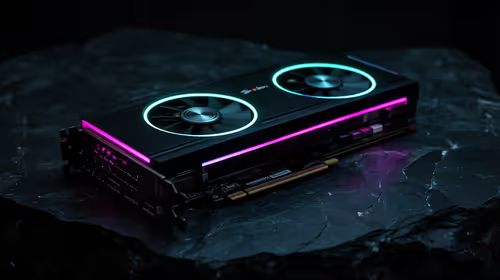
The heart of your rig's efficiency is its Power Supply Unit (PSU). A cheap, unrated PSU can be wildly inefficient, wasting a significant amount of energy as heat. Investing in a quality Corsair power supply with an 80 Plus Bronze rating or higher guarantees a certain level of efficiency. This means less wasted electricity, a lower power bill, and less strain on your components. This is especially important when powering a beastly new NVIDIA or AMD graphics card, which is often the most power-hungry part of your build.
Check the 80 Plus Sticker 💡
When buying a PSU, look for the "80 Plus" certification. It comes in several tiers (White, Bronze, Silver, Gold, Platinum, Titanium). An 80 Plus Gold PSU is at least 87% efficient at 100% load, meaning very little energy is wasted as heat. This simple choice saves you money and is kinder to the environment.
Building Smarter, Not Cheaper
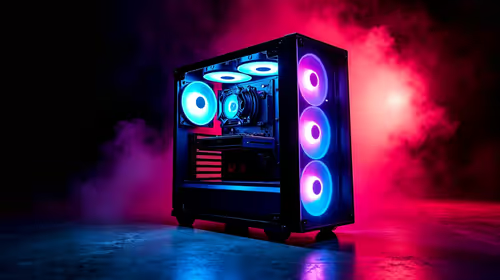
Thinking about the long-term health of your PC is the key to sustainable gaming. High-quality components not only last longer but also perform better. For instance, a well-designed computer case isn't just for looks; it provides superior airflow, keeping your parts cool and extending their lifespan. 🔧
Proper cooling is a direct investment in your PC's future. A budget stock cooler might get the job done, but an aftermarket CPU cooler will run quieter and keep temperatures significantly lower, preventing thermal throttling and long-term degradation of your processor. By choosing reliable parts from the start, you create a stable platform that can be upgraded for years. A great way to start is with one of our balanced Intel and AMD bundle packs, which pair tested components for optimal performance and value.
The true environmental cost of cheap PC components is measured in failed parts, wasted energy, and overflowing landfills. By investing a little more upfront in quality, efficient hardware, you build a rig that not only delivers incredible performance but also respects your budget and our beautiful country. ♻️
Ready to Build a Smarter, More Sustainable Rig?
Choosing quality isn't about spending more; it's about investing wisely. A reliable PC lasts longer, performs better, and is kinder to the planet. Explore our massive range of PC components and build a machine that's powerful, efficient, and built to last.