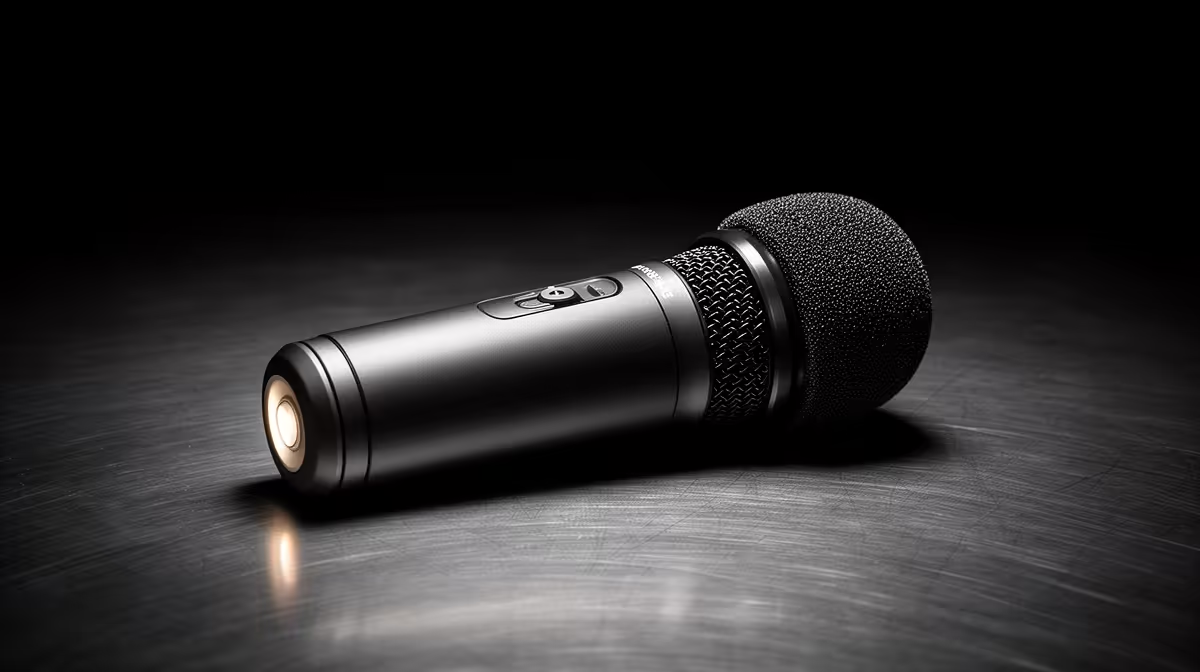
A wireless mic that handles your camera shoots well but fails on stage, or performs perfectly at a conference but cannot feed the camera for a social reel afterwards, is a half-solution. A truly multi-purpose wireless microphone for video and presentations needs to satisfy two quite different technical briefs: on-camera capture where sync and audio fidelity drive the spec, and stage or PA work where range, feedback resistance, and reliable output to a sound system are what matter. The features that make this dual-role possible are specific, and knowing them prevents buying a kit that does one job well and the other awkwardly.
Quick Answer
A wireless mic good for both video and stage presentations needs a 3.5mm TRS camera output, USB-C, a 6.35mm jack or XLR adapter for PA systems, around 100m of reliable range, live level monitoring, and a battery life exceeding 8 hours. The adapter compatibility is what separates a true dual-use kit from a camera-only option.
🔌 Connectivity: The Feature That Defines Dual-Use
The output connector is the make-or-break feature for a kit that needs to cross between camera work and live presentations. A camera-only wireless kit typically ships with a 3.5mm TRS cable. That suits a DSLR, mirrorless, or video camera cold shoe mount. Connecting the same receiver to a stage mixing desk, a conference PA rack, or a laptop running presentation software requires a completely different connector, usually a 6.35mm quarter-inch jack for a standard PA line input or XLR for a professional mixing console.
A genuinely versatile kit solves this with either a multi-output receiver that includes several physical ports or a comprehensive adapter kit that ships in the box. The 3.5mm to 6.35mm adapter costs very little to include but is frequently missing from camera-focused kits, which is an easy oversight that only becomes obvious when you are setting up for a talk in an unfamiliar venue.
USB-C connectivity matters for the growing number of presentation scenarios where audio feeds directly into a laptop running Zoom, Google Meet, or presentation software. A USB-C receiver that presents as a class-compliant audio device covers this path natively, with no driver installation and instant recognition from any modern laptop. That is as useful for a pitch presentation in a Joburg boardroom as it is for a streamed product launch.
🎯 Range: How Much Suits Both Roles?
A camera shoot and a stage presentation have different distance profiles. On a video shoot, the subject is typically within 30m of the camera. On a stage, a 100-seat venue might put the speaker 30 to 50m from the FOH desk or the camera at the back of the room. The two use cases happen to require similar range, which means a 100m-rated kit serves both comfortably.
Paying for a 200m rating for this dual-use scenario is rarely necessary unless the stage work regularly involves large outdoor amphitheatres or sports venues. A 100m-rated system operating at 40m on a stage or at 20m on a shoot is well within its design comfort zone, with enough headroom to handle the signal degradation that walls, bodies, and equipment introduce in both environments.
Frequency agility matters more for stage work than raw range. A stage is a busy 2.4GHz environment with competing wireless systems, lighting rigs, and audience devices. A kit that scans for the cleanest channel before the session starts and uses dual-diversity reception handles that congestion reliably.
⚡ Live Monitoring: Why It Matters Differently for Each Role
An LCD with level metering serves different purposes in the two contexts. On a camera shoot, it shows whether gain is clipping, whether the wireless link is holding, and whether battery levels are adequate before committing to a long take. These are quality-safety checks that protect the recording.
On stage, the monitoring role shifts. The concern is not post-production quality but immediate feedback risk and clear amplified speech. If the transmitter gain is set too high and the PA has its channel also pushed, feedback becomes a risk. A visible level meter on the receiver lets the operator, whether that is you or a sound technician, see where the gain is sitting relative to the PA channel. Setting the transmitter a few dB lower and compensating at the desk is standard practice, and a live meter makes that calibration fast and accurate.
A headphone monitor output is a useful companion feature. For a solo presenter who self-manages audio at a laptop-driven session, hearing the live feed through an in-ear monitor confirms the mic is transmitting cleanly before the first words reach the room.
Pro Tip ⚡
For stage presentations, set the transmitter gain conservatively, around 3dB lower than you would for a video shoot, and ask the sound technician or adjust the PA channel to compensate at the desk. This reduces the chance of an unexpected loud moment clipping the PA channel and protects against feedback if the presenter moves unexpectedly close to a speaker cab.
🔆 Battery Life as a Dual-Use Constraint
Battery life is a practical ceiling that multi-use creators often underestimate. A full day of video shooting might run four to six hours of intermittent recording. An evening presentation adds another ninety minutes to two hours. A kit with only five hours of transmitter battery life can come up short on a full-day event with an evening keynote attached.
The spec to look for in a dual-use kit is 7 to 8 hours of continuous transmitter runtime, plus a charging case that stores at least one full additional charge. With that setup, a day of filming followed by an evening presentation is achievable without finding a wall socket between the two.
Charging case quality matters as much as the runtime figure. A well-designed case charges the transmitter and receiver simultaneously and shows individual charge levels for each component. Some cases include a USB-C passthrough so they can top up from a power bank between sessions.
Frequently Asked Questions
What output connections does a dual-use wireless kit actually need to carry?
A 3.5mm TRS for cameras, USB-C for phones and laptops, and a 6.35mm adapter for PA and mixing console connections covers the majority of scenarios. XLR is useful for professional stage mixing desks. A kit that ships with all of these, even some as compact adapters, removes the need to source compatible accessories separately for each context.
How much range is genuinely enough for both video work and stage presentations?
Around 100m covers both uses comfortably for most creators. A typical indoor shoot stays within 30m, and a 100-seat conference or event venue places the back of the room or the camera at 40m to 60m from the stage. A 200m rating adds headroom for large outdoor venues but is not necessary for the majority of dual-use scenarios.
Why does live monitoring benefit stage work differently from video recording?
On a video shoot, monitoring prevents recording faults, clipping and dropout. On stage, it informs gain staging relative to the PA system and helps prevent feedback. The level meter becomes a communication tool between the presenter and the sound setup, showing when the transmitter gain and the PA channel are balanced correctly before the session begins.
Is battery life a real concern for a creator who uses the mic for both video and presentations on the same day?
Yes. Five hours of transmitter runtime is adequate for a dedicated shoot but can run short if the same day includes an evening talk or a multi-panel event. A kit offering 7 to 8 hours of transmitter runtime plus a charging case that holds at least one top-up charge handles a full day-to-evening dual-use schedule without requiring access to a wall socket mid-session.
What mount options improve versatility across both roles?
A collar clip and cold shoe adapter cover the video side. A lapel clip and a lectern or podium mount accessory handle the presentation side. A kit that includes multiple mount types eliminates buying separate accessories for each context.
Ready to find one wireless mic that covers every shoot and every stage?
Browse the wireless microphone range at Evetech and find a dual-use kit with the connectivity, range, and battery life to handle your video work and your live presentations from a single setup.