Quick Answer
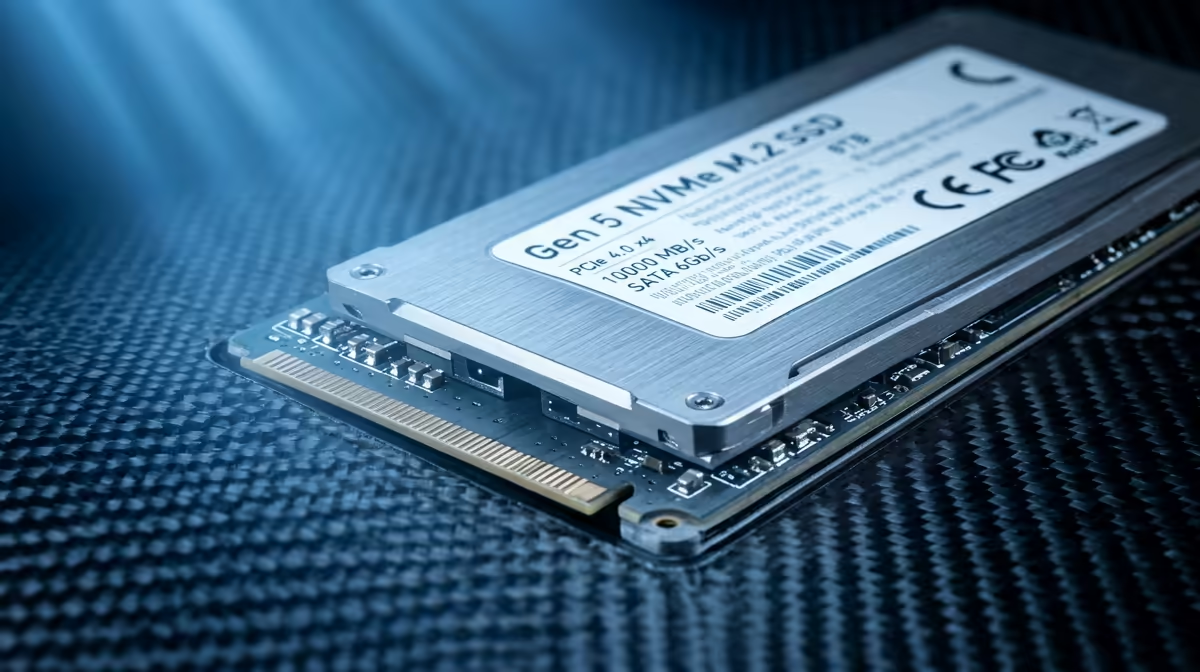
A Gen 5 NVMe SSD makes sense for SA creators and enthusiasts who move large files; for gaming alone a good Gen 4 drive is still the value pick. Gen 5 drives hit 10,000-14,000 MB/s sequential reads versus around 7,000 MB/s on Gen 4, but game load times barely differ between the two.
What Gen 5 Actually Improves
Gen 5 doubles sequential bandwidth, which is real and visible when you copy huge files, edit 4K-8K video, or work with large datasets. Moving a 100GB project folder finishes noticeably faster. For gaming, however, load times are limited by other factors, so a Gen 5 drive saves only a second or two over Gen 4 in most titles.
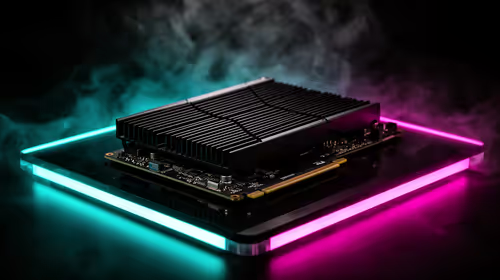
The trade-off is heat. Gen 5 drives run hot and usually need a substantial heatsink or active cooling to avoid thermal throttling. Confirm your motherboard ships a Gen 5 M.2 heatsink or budget for one.
Choosing Between Gen 5 And Gen 4
For a gaming-first SA build, a 1TB or 2TB Gen 4 drive at around 7,000 MB/s delivers the experience for less money and less heat. Choose Gen 5 when your workflow is bandwidth-bound: video editing, 3D, AI datasets, or frequent large transfers. Make sure your board has a Gen 5 M.2 slot, since installing a Gen 5 drive in a Gen 4 slot caps it at Gen 4 speeds.
FAQ
Is a Gen 5 SSD worth it for gaming?
Not really. Game load times are similar between Gen 4 and Gen 5, so the extra bandwidth goes unused. A Gen 4 drive is the better value for a gaming-first build.
Do Gen 5 SSDs need a heatsink?
Yes. They run hot and will thermal throttle without a large heatsink or active cooling. Many boards include a Gen 5 M.2 heatsink; confirm yours does.
What read speeds do Gen 5 drives reach?
Around 10,000-14,000 MB/s sequential reads, roughly double a Gen 4 drive's 7,000 MB/s. The gain matters most for large file transfers and creator workloads.
motherboard manual for which M.2 slot is Gen 5. Installing a Gen 5 drive in a Gen 4 slot silently caps it at Gen 4 speeds.