Quick Answer
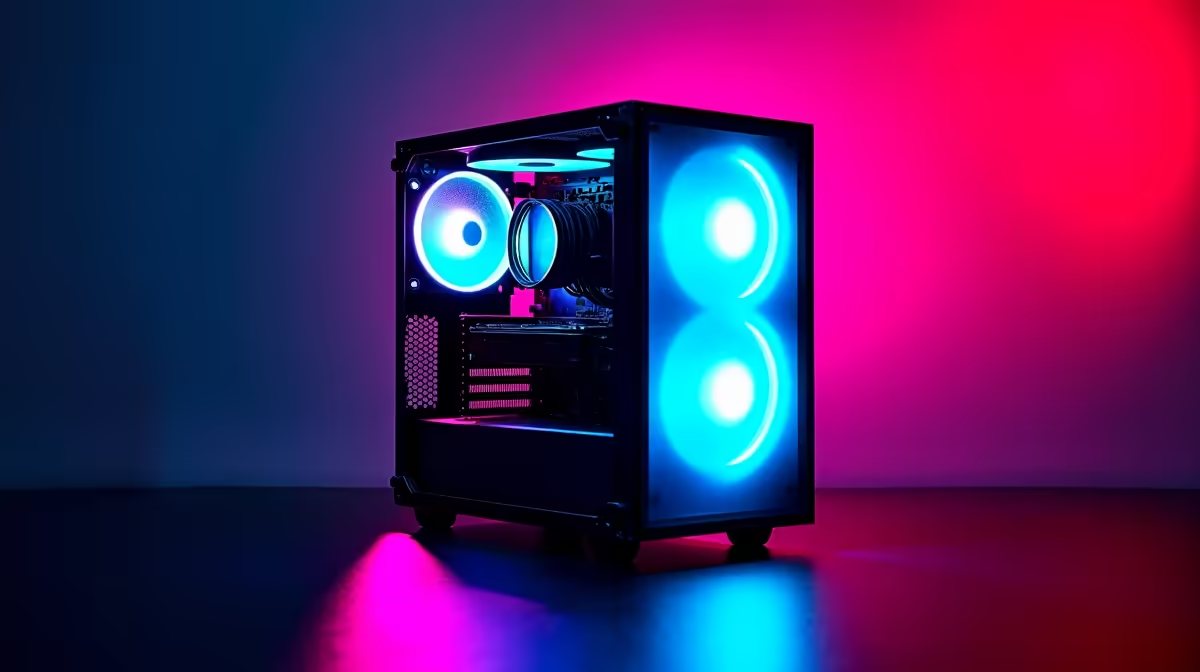
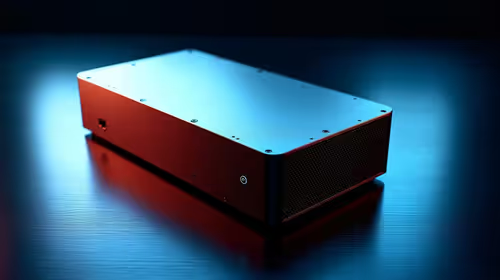
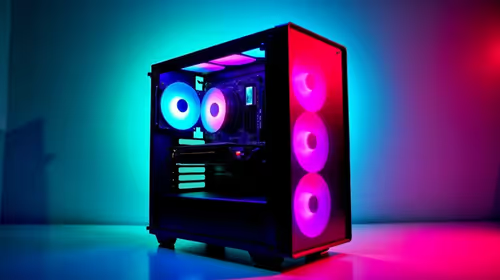
The best ITX gaming cases in SA balance compact size with airflow and GPU clearance, typically costing around R1,500-R3,500. A quality ITX case fits a full-length 330mm graphics card and a 240-280mm AIO in a sub-20-litre footprint, letting you build a powerful small-form gaming PC that suits a tight desk or a lounge setup.
What Makes A Good ITX Case
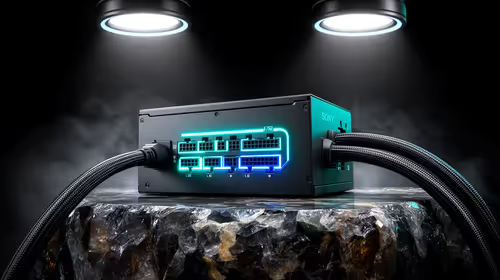
The key specs are GPU clearance (in millimetres), cooler height or AIO support, and airflow. Top ITX cases take a full-length RTX 4070 Super or RX 7800 XT (around 300-330mm) and a 240-280mm radiator, while keeping mesh panels for cooling. Watch PSU type: many ITX cases need an SFX power supply (around R1,800-R2,800) rather than a standard ATX unit.
Airflow In A Small Box
Small volumes trap heat, so mesh-front ITX cases with direct intake to the GPU run cooler than glass-heavy designs. Plan cable routing carefully, since ITX builds are tight, and choose components that match the case's clearance limits before buying. A blower-style or compact dual-fan GPU often fits more easily than a triple-fan card.
Matching Parts To The Case
Confirm GPU length, cooler height and PSU form factor against the case spec sheet. An ITX board, an SFX PSU and a compact air cooler or 240mm AIO make assembly far easier than forcing oversized parts into a small chassis.
FAQ
What GPU fits in an ITX case?
Good ITX cases take a full-length 300-330mm card like an RTX 4070 Super. Always check the case's GPU clearance in millimetres against your chosen card before buying.
Do ITX cases need a special PSU?
Many do. Compact ITX cases use SFX power supplies (around R1,800-R2,800) rather than standard ATX units, so check the case's PSU form factor before ordering.
Will an ITX build run hot?
It can if airflow is poor. Choose a mesh-front case with direct GPU intake and a 240-280mm AIO or compact air cooler to keep temperatures in check.
an ITX case, confirm GPU length, cooler height and PSU form factor against the spec sheet; many ITX cases need an SFX power supply.